NASA trains Artemis II astronauts to capture scientifically useful space photos
NASA did not leave Artemis II photography to chance. The crew spent about 20 hours learning to shoot the Moon, Earth, and Orion with training built like a mission-critical skill.
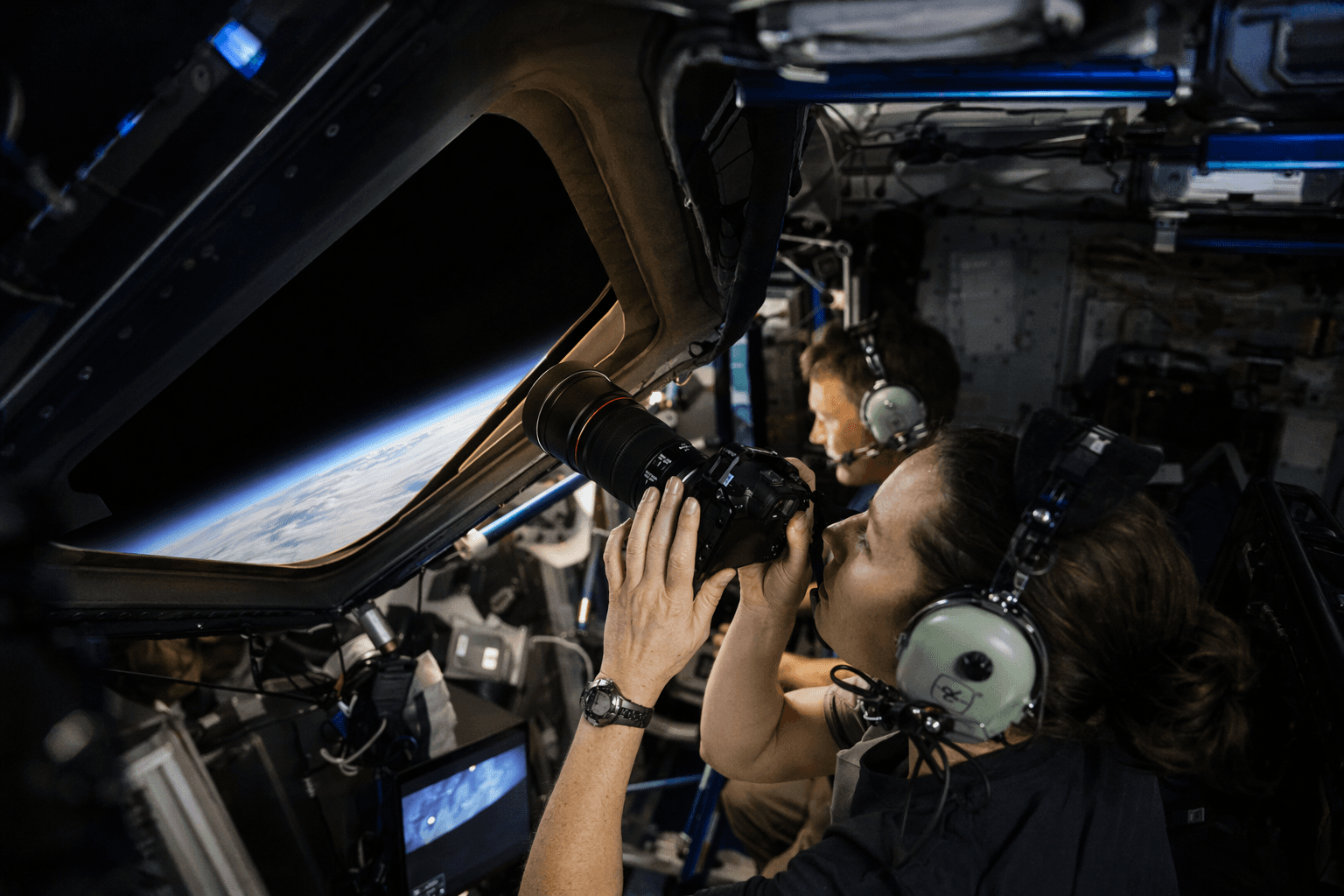
Artemis II turned astronaut photography into a practiced craft, not a lucky byproduct of the view. Reid Wiseman, Victor Glover, Christina Koch, and Jeremy Hansen flew a 10-day crewed lunar flyby that launched on April 1, 2026, splashed down on April 10, and marked NASA’s first crewed trip around the Moon in 50 years.
Behind the camera work were Paul Reichert and Katrina Willoughby, NASA flight operations imagery instructors who spent about two years training the crew before launch. NASA gives astronaut candidates a basic introduction to photography, then expands that instruction once they are assigned to a mission. For Artemis II, that meant about 10 classes, or roughly 20 hours, built around the actual gear, the mission’s constraints, and the kind of images the flight would need to produce.
The training was hands-on in the best possible way. The crew practiced with an Orion mock-up and even used a large inflatable Moon to rehearse the framing and timing they would face in flight. At Johnson Space Center, NASA said the astronauts studied the Moon’s far side and learned to identify crater shapes, surface textures, color variations, and reflectivity. That made the camera work part of the science plan, not just a way to bring home pretty pictures.
The results showed why that preparation mattered. NASA’s mission recap included images of the Moon’s far side, an in-space solar eclipse, auroras, zodiacal light, Venus, and Earth. Those frames were made in harsh light, with cramped working conditions and almost no chance for do-overs, the kind of environment that punishes hesitation and rewards technical discipline.
That rigor fits a long shift in NASA culture. In the early space program, space photography was often treated like industrial documentation, and even John Glenn’s camera was originally an afterthought. Artemis II sits at the opposite end of that history: a mission where image-making is built into operations, and where the people teaching it, Reichert and Willoughby, came out of Rochester Institute of Technology’s photographic sciences pipeline. For photographers, the lesson is plain. The iconic space shot is rarely improvised; it is trained, tested, and made under pressure with intent.
This article was produced by Prism’s automated news system from verified source data, official records, and press releases, then run through automated quality and moderation checks before publishing. The system is built and supervised by the people who set the standards it runs under. Read our full AI policy.
Did this article answer your question?