Neewer splits its new flash line between travel strobes and on-camera speedlights
Neewer’s new pair of flashes splits the job in two: the Q120 is a travel-ready off-camera strobe, while the Z3R is built for fast, touchscreen-driven on-camera work.
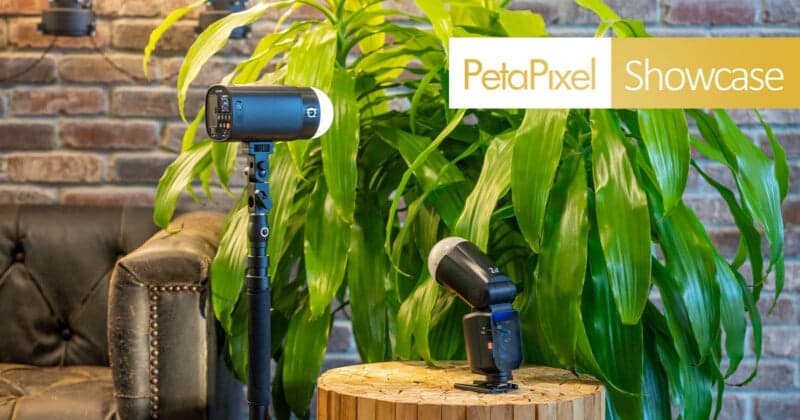
Neewer is making a pretty clear argument with its new flash line: one light should not try to do every job. The Q120 and Z3R are both compact, battery-powered TTL flashes, but they are built around two very different shooting habits, one for portable off-camera strobes and one for quicker, more intuitive hotshoe use. That split says as much about how photographers actually work now as it does about Neewer’s product strategy.
Two lights, two workflows
The old fantasy of one do-everything flash has given way to specialization. If you shoot travel, location portraits, weddings, or fashion with light stands and modifiers, you want a small strobe that can travel, recycle quickly, and play nicely with wireless triggers. If you live more often on the camera, moving fast through events or mixed-light work, you want a flash that feels immediate, readable, and easy to control without diving through menus.
That is exactly how these two models are framed. The Q120 is the portable off-camera answer. The Z3R is the on-camera answer, with a touchscreen and round-head design meant to make speedlight handling feel less clumsy and more polished.
Q120: the compact strobe for location work
The Q120 sits closer to a small location strobe than a basic speedlight. Neewer rates it at 120Ws, gives it a 5600K color temperature with a ±100K tolerance, and says it can deliver roughly 410 to 420 full-power pops from its removable 7.2V 3000mAh battery. It weighs 1.5 pounds, or 671 grams, including the battery, and ships with a metal handle, which makes it feel ready for off-camera use rather than like a flash that still needs a lot of rigging.
On the control side, the Q120 is built for flexibility. It supports TTL, manual, and multi-strobe modes, 1/256 to 1/1 output control, S1 and S2 optical triggering, high-speed sync up to 1/8000 second, and recycle times from 0.01 to 1.5 seconds. Neewer also says it works with QZ and QPro triggers, with Q system speedlights up to 328 feet, or 100 meters, and it can be used with Sekonic L-858D metering through the RT-GX module.
Compatibility is the part that matters most if you already own Neewer or Godox gear. Neewer says the Q120 can operate in RX COMPAT mode with Godox’s 2.4G X system through Xpro, X3, or X2 transmitters, but the Q and X systems cannot be used at the same time. That matters for mixed kits, and Neewer says the latest firmware is required for compatibility.
The Q120 is also priced where a serious travel strobe should be priced, at $199.99 on Neewer’s store. Neewer is clearly aiming it at commercial, wedding, portrait, fashion, and other outdoor photography, which makes sense for a flash that is trying to bridge portable convenience and real off-camera power.
Z3R: the speedlight built for fast, tactile control
The Z3R takes almost the opposite approach. It is a 100Ws round-head TTL speedlite sold in Canon, Sony, and Nikon versions, and Neewer positions it as a step forward from the Z2-C. The headline feature here is not raw power but interface: a 2.8-inch full-color touchscreen that makes the flash feel closer to a modern camera body than a legacy hotshoe unit.
Neewer gives the Z3R a 6000K color temperature, 0.1EV power steps, a 3000mAh battery, USB-C charging, and a 1.7 second recycle time. It also says the flash can deliver 100 consecutive full-power pops on the product page, while PetaPixel’s hands-on notes put the range at 70 to 100 consecutive full-power flashes. Either way, the design brief is obvious: this is a fast, self-contained on-camera unit meant to keep up with active shooting.
The Z3R also leans hard into usability. It includes TCM conversion for moving from TTL to manual without losing your place, built-in modeling lamps, 5 control groups, 32 channels, and 99 IDs. Neewer says it can act as a master or slave for other Q flashes, and it also supports Godox 2.4G X-system triggering in RX COMPAT mode, with the same warning that the Q and X systems cannot be used simultaneously and firmware is required.
Accessory shooters get a few extra reasons to care here too. Neewer says the Z3R works with its CRM2, M12, CRS6, CRS7, and CRB1 S2 circular flash mounts, which makes it more than just a hotshoe strobe. On top of that, Neewer’s support center shows a Z3R-C firmware update released on June 2, 2026, with optimizations for temperature management and exposure stability, a sign that the line is still being tuned right around launch. Neewer lists the Z3R at $279.99.
Which shooter each flash actually serves
The useful way to read these launches is not as a better-versus-worse comparison. It is a workflow split. The Q120 makes the most sense if your flash lives off-camera, travels with you, and needs to act like a compact strobe for portraits, weddings, fashion, or outdoor work. The Z3R makes more sense if your flash lives on-camera and you want a round-head speedlight with faster control, cleaner feedback, and fewer small-button frustrations.
That is the bigger pattern here, and Neewer is not alone in it. Compared with earlier 200Ws models like the Q3, which was aimed at traveling photographers and offered 500 full-power flashes with a 0.01 to 1.8 second recycle time, the new Q120 and Z3R show how compact lighting is being broken into narrower jobs. The future of small flash is not one universal unit anymore. It is choosing the right tool for the way the light actually gets used, whether that means a travel-ready strobe or a faster flash on the camera.
This article was produced by Prism’s automated news system from verified source data, official records, and press releases, then run through automated quality and moderation checks before publishing. The system is built and supervised by the people who set the standards it runs under. Read our full AI policy.
Did this article answer your question?