NOIRLab reveals the Sombrero Galaxy in stunning new detail
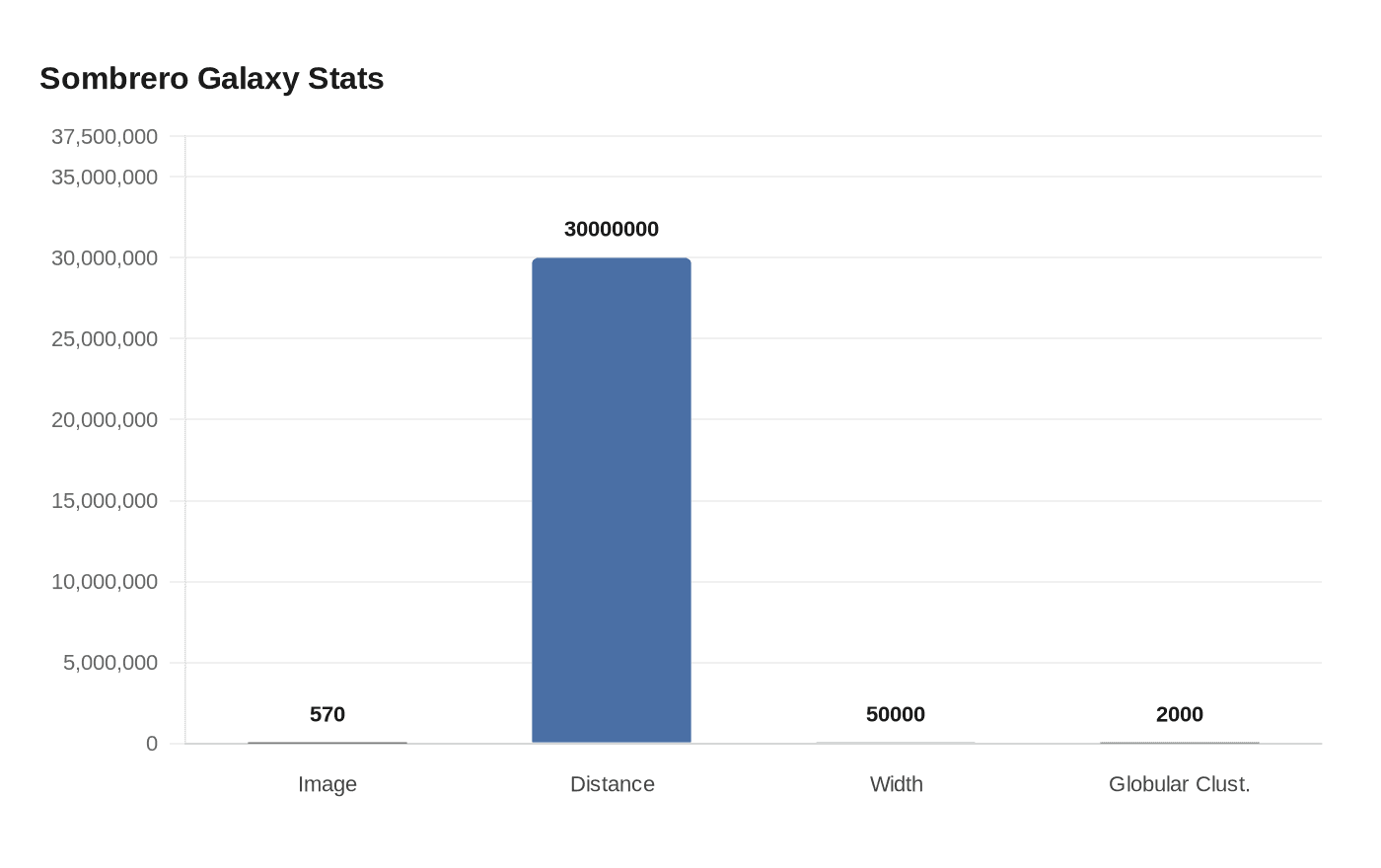
A 570-megapixel view of the Sombrero Galaxy exposed its halo, a faint stellar stream, and about 2,000 globular clusters in one frame.

A 570-megapixel image of the Sombrero Galaxy turned a familiar showpiece into a hard lesson in what “more depth” really means. The new frame of Messier 104, also known as M104, pulled out the galaxy’s bright core, its razor-cut dust lane, and the outer structure that usually disappears in less ambitious views.
NOIRLab captured the image with the Dark Energy Camera on the U.S. National Science Foundation Víctor M. Blanco 4-meter Telescope at Cerro Tololo Inter-American Observatory in Chile. The target sits about 30 million light-years away in Virgo and stretches roughly 50,000 light-years across, which helps explain why it has long been a favorite of amateur observers and deep-sky imagers. It is bright enough to spot with a small telescope or binoculars, but this release shows how much more the object gives up when the camera, optics, and processing are pushed into scientific territory.

The big takeaway for photographers is not just resolution. It is what that resolution unlocks in terms of detail separation and scale. NOIRLab said the image revealed the Sombrero’s halo and a faint stellar stream in exceptional detail, and added that this may be the first time the halo has been captured at this level of scale and clarity. That outer glow matters because it likely holds stars stripped from another galaxy during a past merger, the kind of faint structure that gets lost when an image only aims for the postcard version of the target.
The same frame also showed around 2,000 globular clusters crowding the nucleus. That number is the kind of stat that sticks, because it makes the Sombrero look less like a pretty object and more like a dense, busy system under severe scrutiny. For anyone used to chasing clean stars, controlled backgrounds, and believable color in deep-sky work, the image is a reminder that astrophotography is often about separating tiny signals from a vast amount of nothing.
That is where the Sombrero’s appeal lands for serious image-makers. It is still one of the sky’s most recognizable targets, but in DECam’s hands it became something bigger: a case study in what happens when resolution, dynamic range, and scale all line up on the same object. The result was not just a sharper galaxy. It was a view deep enough to expose the history written around it.
This article was produced by Prism’s automated news system from verified source data, official records, and press releases, then run through automated quality and moderation checks before publishing. The system is built and supervised by the people who set the standards it runs under. Read our full AI policy.
Did this article answer your question?