One Portland park became Aaron Wessling’s rephotography project
Aaron Wessling turned one Portland park into a long-term lesson in seeing. By returning to the same viewpoints again and again, he shows how repetition can teach composition, seasonality, and patience better than novelty.
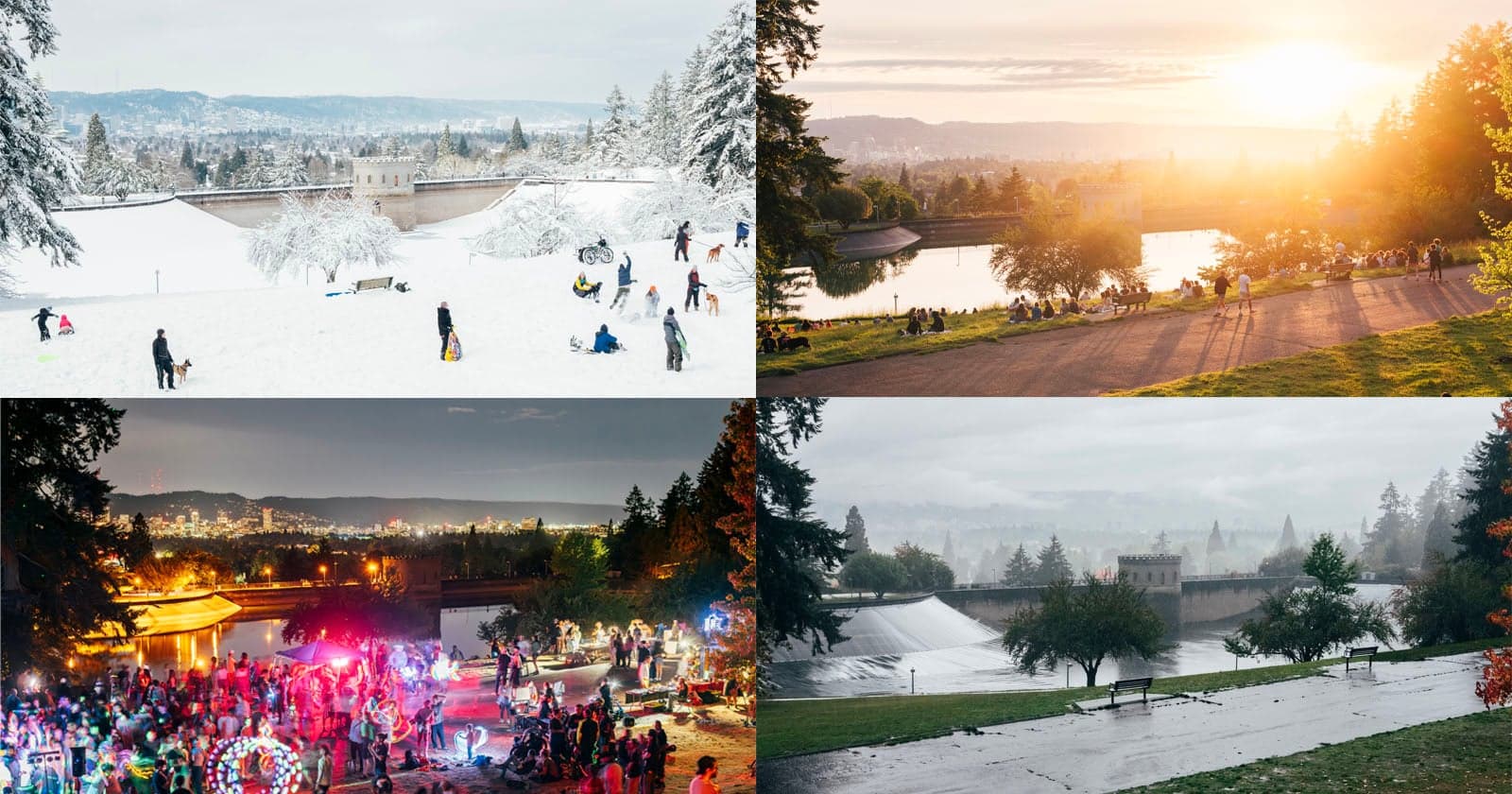
Mount Tabor Park did not become Aaron Wessling’s project because it was dramatic. It became the project because it was ordinary enough to live with, and rich enough to keep revealing something new. Since 2022, he has kept returning to the same Portland landscape, making dozens of careful rephotographs from repeated viewpoints until the park itself became the subject, not just the backdrop.
How one place becomes a body of work
Rephotography is the simple but demanding practice of capturing the same scene multiple times across a stretch of time. Wessling has leaned into that discipline at Mount Tabor Park, where he made 68 trips from May 2022 to August 2023, then passed 70 visits across the larger span from 2022 to 2024. That kind of repetition is the point: instead of chasing a new location every weekend, he keeps testing how much one place can say when the frame stays fixed and time keeps moving.
His project began with a lonely bench above Reservoir 5, where he was questioning his move to Portland. That origin matters because it gives the work emotional ballast. The park is not just a scenic study, it is a record of a photographer learning a city, and learning his own place inside it, one return visit at a time.
Why Mount Tabor Park gives the project so much to work with
Mount Tabor Park is 176 acres of southeast Portland terrain built on the cinder of an extinct volcano. Portland Parks & Recreation describes it as a rare mix of forest, history, views, and recreation, and that variety is exactly what makes it useful as a rephotography site. In the same public space, you can find summer picnics, raves, boxcar derbies, birdwatching, and winter recreation, which means the park never looks or behaves quite the same way twice.
The geology deepens the story. The Oregon Encyclopedia places Mount Tabor among 32 cinder cones within a 13-mile radius, part of the broader Boring Lava Field, which has been extinct for more than 300,000 years. In other words, Wessling is photographing a landscape with a long memory already built in. The park is also tied to Portland’s civic history: the first two open-air reservoirs there were built in 1894, and two more followed in 1911 to serve the city’s fast-growing eastside population.
Friends of Mt. Tabor Park calls it a volunteer-driven urban oasis, and that phrase fits the place well. It is not a museum piece or a wilderness fantasy. It is a lived-in city park, shaped by people, weather, maintenance, and community use, which is exactly why it keeps offering fresh material to someone willing to keep showing up.
What Wessling is actually watching for
The strength of the project is not technical perfection, although Wessling uses Fuji GFX medium-format gear and grid overlays to keep his compositions consistent. The real engine is attention. He is watching how changing seasons alter the same slope, how weather flattens or sharpens the frame, and how people reshape the scene by moving through it differently at different times of year.
That kind of work turns a familiar place into a visual diary. A summer frame can feel open and active, while a winter view might tighten the composition and strip away distractions. A bench that once reflected loneliness can later hold a different mood entirely, simply because the light, the foliage, or the human traffic has changed around it. Rephotography works because it makes those shifts visible without changing the underlying structure of the image.
Wessling’s method also shows why returning matters more than wandering when the goal is to understand place. A single location gives you limits, and limits create comparison. Once the viewpoint is fixed, the photographer starts noticing the details that constant movement would erase: the angle of light at a certain hour, the growth pattern of trees, the way a path is used, the way a reservoir edge or overlook changes character across months.
The influence behind the project
Wessling has pointed to Hayahisa Tomiyasu’s long-term TTP project as an important inspiration. Tomiyasu spent about five years photographing a ping-pong table in Leipzig, Germany, and the project went on to win the 2018 MACK First Book Award. What made that series work was not just duration, but the range of life that passed through one fixed subject. The table became a sunbed, a playground, a laundry counter, a lunch spot, and more.
That example helps explain Wessling’s approach. He wanted something more comprehensive than a single scenic portrait, something that would gather multiple perspectives on a public space without losing the coherence that comes from returning to the same ground. Mount Tabor gives him that chance because it is both stable and changeable, a place with a consistent skeleton and a constantly shifting surface.
How to start a one-location project of your own
The easiest mistake in a project like this is to think you need a famous subject. Wessling’s work argues for the opposite. Start with a place you can keep visiting, then stay long enough for your own habits to become part of the record.
A useful approach looks like this:
- Choose one site with enough variation to reward repeat visits, such as a park, a court, a roadside pull-off, or a neighborhood corner.
- Lock in one or two viewpoints and use a grid overlay or other framing aid so the composition stays repeatable.
- Return often enough to see seasonality, not just weather, so the project captures spring, summer, fall, and winter rather than isolated moments.
- Watch for the things that actually change: light, foot traffic, vegetation, maintenance, events, and how people use the space.
- Keep the scope narrow enough that comparison matters. The point is not to collect places, but to let time do the collecting for you.
That is the deeper lesson in Wessling’s Mount Tabor series. Progress in photography does not always come from expanding outward. Sometimes it comes from going back to the same bench, the same overlook, the same frame, until the place starts teaching you how to see.
A park that keeps rewarding the return
Mount Tabor’s civic role keeps the project from feeling sealed off from the city around it. In 2024, the park was selected as one of 24 national Leave No Trace Spotlight sites, and it was the only Oregon park chosen. Portland Commissioner Dan Ryan said the goal was to raise awareness and implement research-based solutions to protect the park, which underscores how closely its visual appeal is tied to stewardship.
That is why Wessling’s work lands so well as a rephotography masterclass. It is not a celebration of novelty, but of patience, structure, and attention paid over time. Mount Tabor Park keeps changing, and the photographer keeps returning, which is exactly how a single Portland hillside becomes a complete education in seeing.
This article was produced by Prism’s automated news system from verified source data, official records, and press releases, then run through automated quality and moderation checks before publishing. The system is built and supervised by the people who set the standards it runs under. Read our full AI policy.
Did this article answer your question?