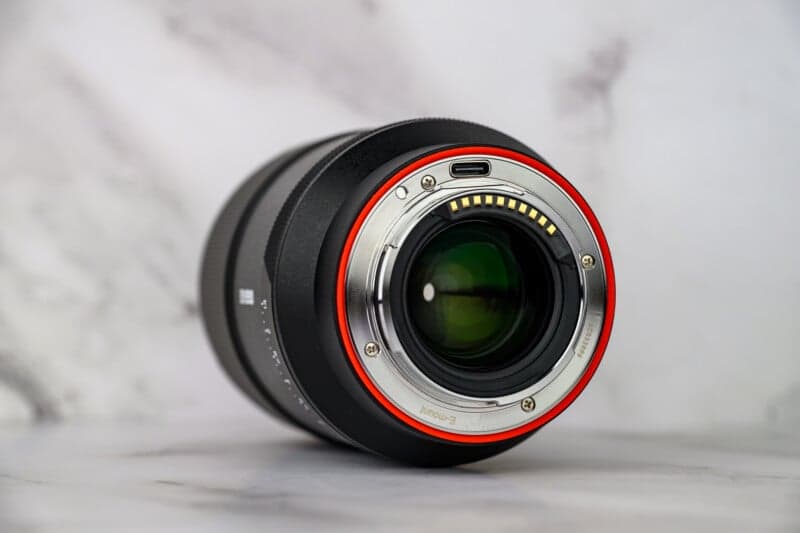
Panasonic LUMIX 100-500mm Telezoom Offers Bird Photographers Reach Without Bulk
Panasonic's LUMIX 100-500mm f/5-7.1 delivers serious reach for bird photographers without the back-breaking weight of traditional super-teles.

There's a real problem with birding lenses: the ones with enough reach to fill the frame with a warbler at 40 feet tend to weigh as much as a small child. Panasonic's LUMIX 100-500mm f/5-7.1 telezoom is a direct answer to that frustration, offering a focal range that covers everything from flight shots to tight perch portraits without demanding you build a separate workout routine just to carry it into the field.
The Phoblographer's Chris Gampat put the lens through a hands-on review and came away seeing it as a genuinely compelling option for bird photographers who want serious reach without the weight and handling complexity that typically comes with the largest super-telephoto glass.
What you're actually getting with this focal range
The 100-500mm range is more versatile than it might sound on paper. At 100mm you have room to shoot birds in habitat, giving context to the image rather than just isolating a subject against a blurred background. Push to 500mm and you're deep into territory that was, not long ago, reserved for lenses that cost as much as a used car and required a tripod just to hold steady. On a Micro Four Thirds body, the crop factor effectively extends that reach further, which for bird photography is an immediate practical advantage. A 500mm lens behaves more like a 1000mm equivalent, and that's the kind of number that changes what shots are actually possible when a kingfisher decides to perch on the far bank.
The variable aperture runs from f/5 at the wide end to f/7.1 at 500mm. That f/7.1 maximum aperture at full extension is worth understanding before you buy. In good light it's a non-issue, and bird photography often happens in golden hour conditions where fast apertures matter more. In low light or under tree cover, you'll be leaning harder on your body's autofocus and high-ISO performance to compensate. This isn't a lens for dim forest interiors; it's built for open sky, wetlands, and bright woodland edges where birds are most active anyway.
Handling and weight: where this lens earns its pitch
The core appeal here isn't just the focal range, it's the form factor. Super-telephoto lenses in the 500mm class on full-frame systems can push past two kilograms before you've even attached a camera body. Panasonic has built this lens around the Micro Four Thirds system, which inherently allows for more compact, lighter construction while still delivering the angular reach that bird photographers need. That size difference is meaningful not just for carry weight during a long morning walk along a shoreline, but for how long you can handhold the lens while tracking a bird in erratic flight. Fatigue is a real factor in bird photography, and a lighter lens means more keepers late in a session.
The handling characteristics extend to how the lens balances on smaller MFT bodies. A more manageable size and weight profile means the combination feels less front-heavy, which makes panning shots more natural and reduces the strain on your wrist joints during extended periods of shooting.
Autofocus and bird photography performance
For bird photography specifically, autofocus speed and subject tracking are arguably more important than optical specifications. A lens that's tack sharp at f/7.1 but hunts when a heron lifts off is a lens you'll stop using. The 100-500mm is designed to work within Panasonic's autofocus ecosystem, and when paired with a body that offers subject recognition and tracking, it becomes a much more capable tool for erratic subjects. Panasonic's more recent bodies have improved considerably on the autofocus front, and this lens is positioned to take advantage of that progress.

Flight photography is the real test for any birding lens, and the combination of reach, weight, and autofocus integration is what makes or breaks those shots. The 500mm equivalent reach on MFT means you can keep more distance from skittish species while still filling the frame, which is often the difference between capturing natural behavior and watching a bird flush because you got too close.
Stabilization and shooting technique
Telephoto shooting at 500mm with a variable aperture lens puts real pressure on your stabilization approach. Optical image stabilization built into the lens, combined with in-body stabilization on compatible Panasonic bodies, creates a dual IS system that dramatically expands your practical handholding range. That matters enormously for bird photography because tripods and monopods, while useful, limit how quickly you can reacquire a subject that's just changed direction or perched somewhere unexpected. Being able to handhold effectively at 500mm equivalent opens up a more reactive, mobile shooting style that matches how birds actually behave.
The practical advice here: shoot in burst mode, keep your shutter speed well above the traditional reciprocal rule when tracking moving birds, and let the stabilization handle fine correction rather than trying to fight every movement manually. At 500mm equivalent, you want a minimum shutter speed in the range of 1/1000s or faster for anything in flight, and your ISO will follow accordingly.
Who should consider this lens
If you're already shooting Micro Four Thirds and bird photography is a significant part of your work, this lens addresses the specific gap that most MFT shooters run into: there's a point where the standard kit telephoto runs out of reach, and the jump to dedicated super-telephoto glass has traditionally meant a significant investment in size, weight, and cost. The 100-500mm sits in that gap practically.
It's also worth considering if you travel for photography. The combination of MFT's inherent compactness and a lens that maxes out at 500mm equivalent means fitting serious birding capability into carry-on luggage is a realistic goal rather than a logistical headache.
The f/7.1 maximum aperture at full zoom will push some photographers toward faster, heavier alternatives, and that's a legitimate trade-off to weigh. But for the majority of birding conditions, bright light and fast shutter speeds are already part of the equation, and the weight savings over a faster equivalent lens are substantial.
The LUMIX 100-500mm represents the kind of practical engineering decision that benefits photographers who actually spend long hours in the field rather than optimizing for spec-sheet comparisons. Reach, manageable weight, and system integration in one package is exactly what birding photographers have been asking for.
This article was produced by Prism’s automated news system from verified source data, official records, and press releases, then run through automated quality and moderation checks before publishing. The system is built and supervised by the people who set the standards it runs under. Read our full AI policy.
Did this article answer your question?