Panasonic’s tiny 18-40mm zoom makes full-frame cameras far more portable
Panasonic’s 155g 18-40mm turns full-frame into a carry-everywhere kit. Its size may matter more than its slow aperture for travel, video, and daily shooting.
Why this lens changes the full-frame conversation
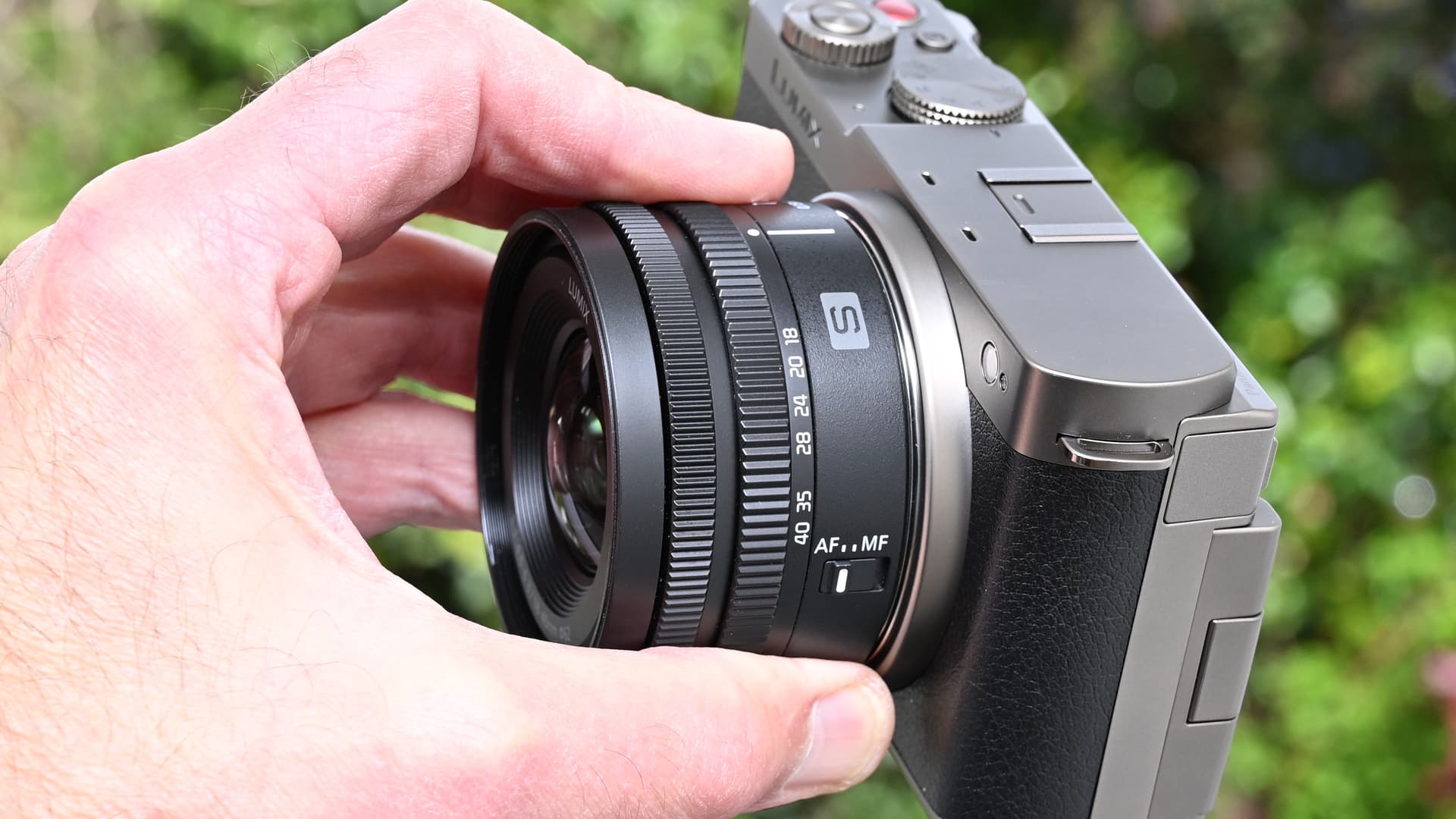
Panasonic’s Lumix S 18-40mm f/4.5-6.3 is built around a simple challenge to full-frame orthodoxy: a big sensor does not have to come with a big lens. At about 155g and retracting to just 40.9mm, it is positioned as the world’s smallest and lightest autofocus-compatible interchangeable zoom lens for full-frame mirrorless cameras, and that claim is the whole story in miniature. The practical payoff is immediate: a full-frame body can stay in the bag less often, and it can feel less like a commitment when it does come out.

That portability angle is not cosmetic. Panasonic has clearly aimed this lens at photographers and video creators who want a system that can be carried all day without thinking twice. The 18-40mm range gives enough reach for wide scenes, everyday framing, and close-in storytelling without drifting into the size and weight of a conventional standard zoom. In a market where full-frame often gets equated with heft, this lens makes a strong case that convenience itself can be a feature worth paying for.
What the 18-40mm actually gives you
The zoom range is narrow by conventional standards, but it is carefully chosen. At 18mm, you get a useful wide angle for landscapes, interiors, city scenes, and real estate work. At 40mm, you land in a natural perspective that works well for people, environmental detail, and everyday shooting without the exaggerated look of an ultra-wide lens.
Panasonic also gives the lens a minimum focusing distance of 0.15m, which adds some flexibility when you want to get close to small subjects or details. That matters because this is not just a travel lens for sweeping views. It can handle tighter compositions and quick snapshots while still keeping the camera package compact enough to carry comfortably through a full day.
The trade-off is just as important as the strengths. The lens is not trying to compete with a fast standard zoom on speed or outright image quality at the edges. Its long-end aperture is slow, edge sharpness could be better, and handling is fairly basic. Panasonic is asking you to accept those compromises in exchange for a lens that is tiny, practical, and easy to live with.
Where it fits in real shooting
This is the kind of lens that changes behavior before it changes specs. A smaller, lighter zoom encourages more everyday use, especially for travel, walkaround shooting, and video work where bulk becomes a barrier. For vloggers, the combination of compact size and wide framing is particularly appealing, because it helps keep the kit unobtrusive while still offering enough coverage for handheld work.
The lens also makes sense for stills shooters working in landscapes, cityscapes, architectural interiors, or real estate. Those are the situations where wide-angle utility matters more than telephoto reach, and where carrying less can matter as much as carrying faster glass. If the goal is to document a place, a room, or a day without feeling weighed down, the 18-40mm is aimed squarely at that problem.
Panasonic’s own positioning makes that clear. The lens is not presented as a do-everything flagship optic. It is a highly practical answer to a familiar frustration: full-frame cameras often promise image quality but ask too much in return when it comes to size and portability. This zoom tries to remove that friction.
Why the build details matter
The lens is not just small, it is also designed to be taken seriously as a travel tool. Panasonic says it includes dust, splash, and freeze resistance, plus a fluorine coating. That combination matters because compact lenses are often treated as niche or delicate, but this one is meant to leave the house, ride in a bag, and keep working in less forgiving conditions.
The retractable design is central to that practical appeal. At 40.9mm when retracted, the lens becomes part of a package that feels far less like a traditional mirrorless rig. Panasonic’s UK guidance goes even further, describing the Lumix S9 with the new 18-40mm as a compact setup that follows the spirit of the old Micro Four Thirds GM5 idea, but now with a full-frame sensor. In kit form, Panasonic says the camera and lens package is just 86mm thick when retracted, which is the kind of figure that changes how often a camera gets tossed into a bag.
That is the real advantage here. Small size is not just about specs on paper. It changes the odds that you bring the camera at all, and that is where the lens has the most practical value.
The Lumix S9 connection
Panasonic has been explicit about the intended partner for this lens: the Lumix S9. The S9 was announced as the smallest and lightest full-frame mirrorless camera in the Lumix S Series, and the 18-40mm was introduced as the perfect companion for its creator-focused design. That pairing makes strategic sense. The body already aims to strip away the bulk that scares people off full-frame, and this lens extends that same thinking into the zoom category.
Panasonic’s broader message around the S9 ecosystem also matters. The company used the lens launch to reinforce a more accessible vision for L-mount gear, alongside new camera color options and firmware updates. That tells you where Panasonic wants the system to go: less spec-chasing, more everyday usability. The 18-40mm is not a side note in that plan. It is one of the clearest examples of how the company is trying to make full-frame feel approachable.
The bottom line for photographers
The Lumix S 18-40mm f/4.5-6.3 is important because it rebalances the conversation around full-frame. It is not the fastest zoom, and it is not the most ambitious optically, but it may be one of the most useful lenses Panasonic has made for people who actually want to carry a full-frame camera around all day.
Its value is measured less by what it beats on a test chart and more by what it changes in real life: travel kits get smaller, walkaround setups get lighter, and full-frame stops feeling like a burden. For photographers who have wanted the image quality of the format without the usual penalty in size, Panasonic has finally made a convincing argument that portability can be the main event.
This article was produced by Prism’s automated news system from verified source data, official records, and press releases, then run through automated quality and moderation checks before publishing. The system is built and supervised by the people who set the standards it runs under. Read our full AI policy.
Did this article answer your question?