Photographer sues over copyright for AI blended Starry Night image
A photographer is challenging the Copyright Office over a sunset image blended with Van Gogh’s Starry Night, testing where AI editing stops being human authorship.
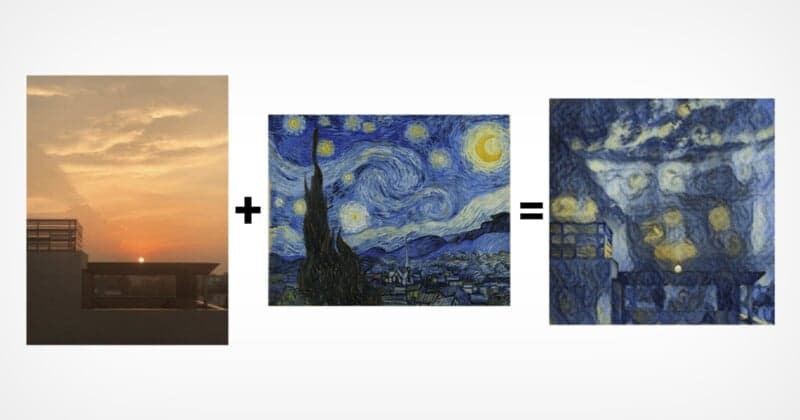
For photographers using AI in the edit stack, the protectable work is most likely the human side of the process: the original scene, the composition, the style choice, and the creative judgments that shape the final image. The Copyright Office’s position is the opposite at the point where a machine supplies the traditional expressive elements, and Ankit Sahni’s lawsuit now asks a federal court to decide where that line falls.
Sahni filed suit in the Central District of California after officials refused to register Suryast, an image that combines his own sunset photograph with Vincent van Gogh’s The Starry Night through the app RAGHAV. In the complaint, Sahni says he chose the baseline sunset, decided the visual structure of the composition, selected the Starry Night style, and used the AI tool to transform the photo while preserving those creative choices. He is arguing that those decisions amount to human authorship even if the final look was heavily mediated by software.
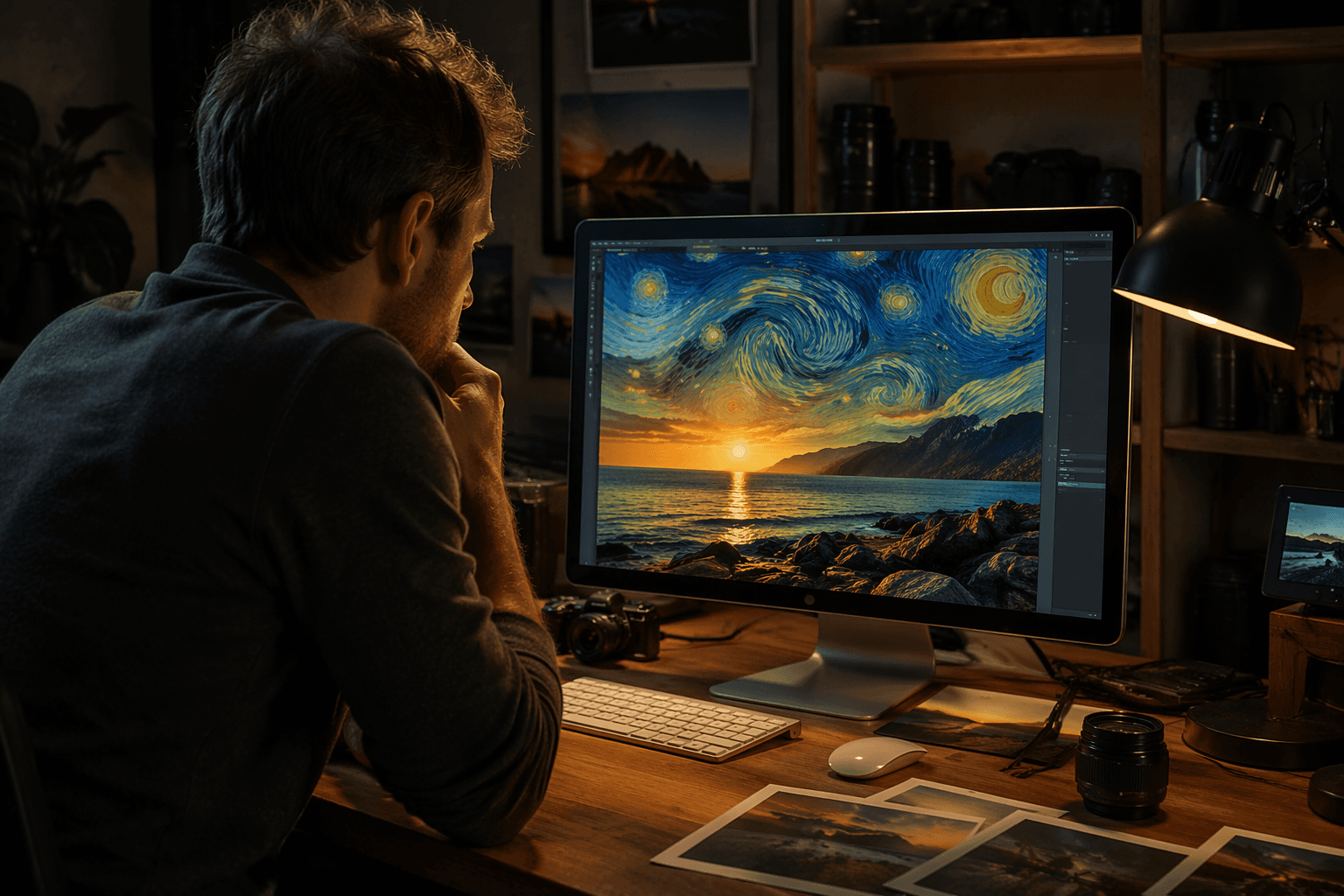
The Copyright Office saw it differently. Sahni first applied for registration on December 1, 2021, and initially listed himself as author of “photograph, 2-D artwork” and RAGHAV as author of “2-D artwork.” The office refused registration on June 29, 2022, and the Copyright Office Review Board affirmed that refusal on December 11, 2023. In its review, the agency said Sahni’s own description showed he used RAGHAV to apply the style of The Starry Night to his photograph and selected a variable amount of style transfer, but that was not enough human involvement for copyright protection.
That refusal fits the office’s broader AI policy. In March 2023, the Copyright Office said applicants must disclose AI-generated material, and that works whose traditional elements of authorship were produced by a machine will not be registered. The agency has also pressed ahead with its artificial intelligence inquiry, receiving more than 10,000 public comments and releasing Part 1 of its AI report on July 31, 2024, Part 2 on January 29, 2025, and a pre-publication version of Part 3 on May 9, 2025.
Sahni’s case now sits alongside the fight brought by Jason M. Allen, who said he used 624 prompts and more than 100 hours in Midjourney to create Théâtre D’opéra Spatial, which won first prize at the Colorado State Fair in the digitally manipulated photography category before the Copyright Office denied registration. For photographers, the stakes are immediate: copyright registration affects ownership, licensing leverage, enforcement, and the ability to stop copying. Sahni is asking the court to protect the human decisions behind Suryast, while the office is holding the line that the machine’s contribution cut too deep for authorship.
This article was produced by Prism’s automated news system from verified source data, official records, and press releases, then run through automated quality and moderation checks before publishing. The system is built and supervised by the people who set the standards it runs under. Read our full AI policy.
Did this article answer your question?