Photographer Used 14 Cameras to Capture NASA's Historic Artemis II Launch
Steven Madow deployed 14 Panasonic Lumix cameras, including 7 remote rigs at the pad, to capture the Artemis II launch — the result of over a decade of credentialing and practice.
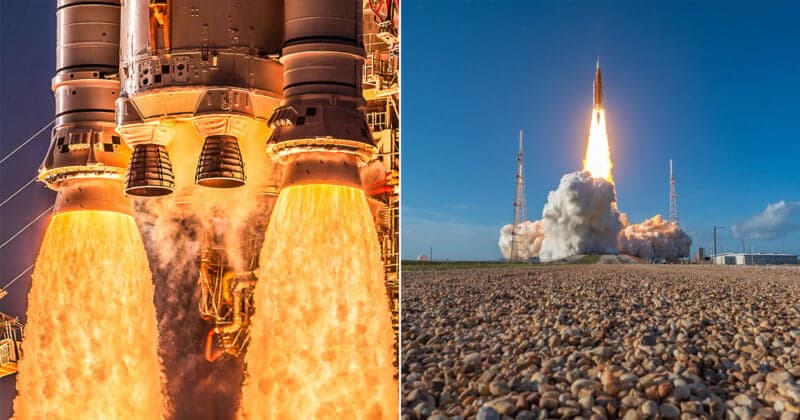
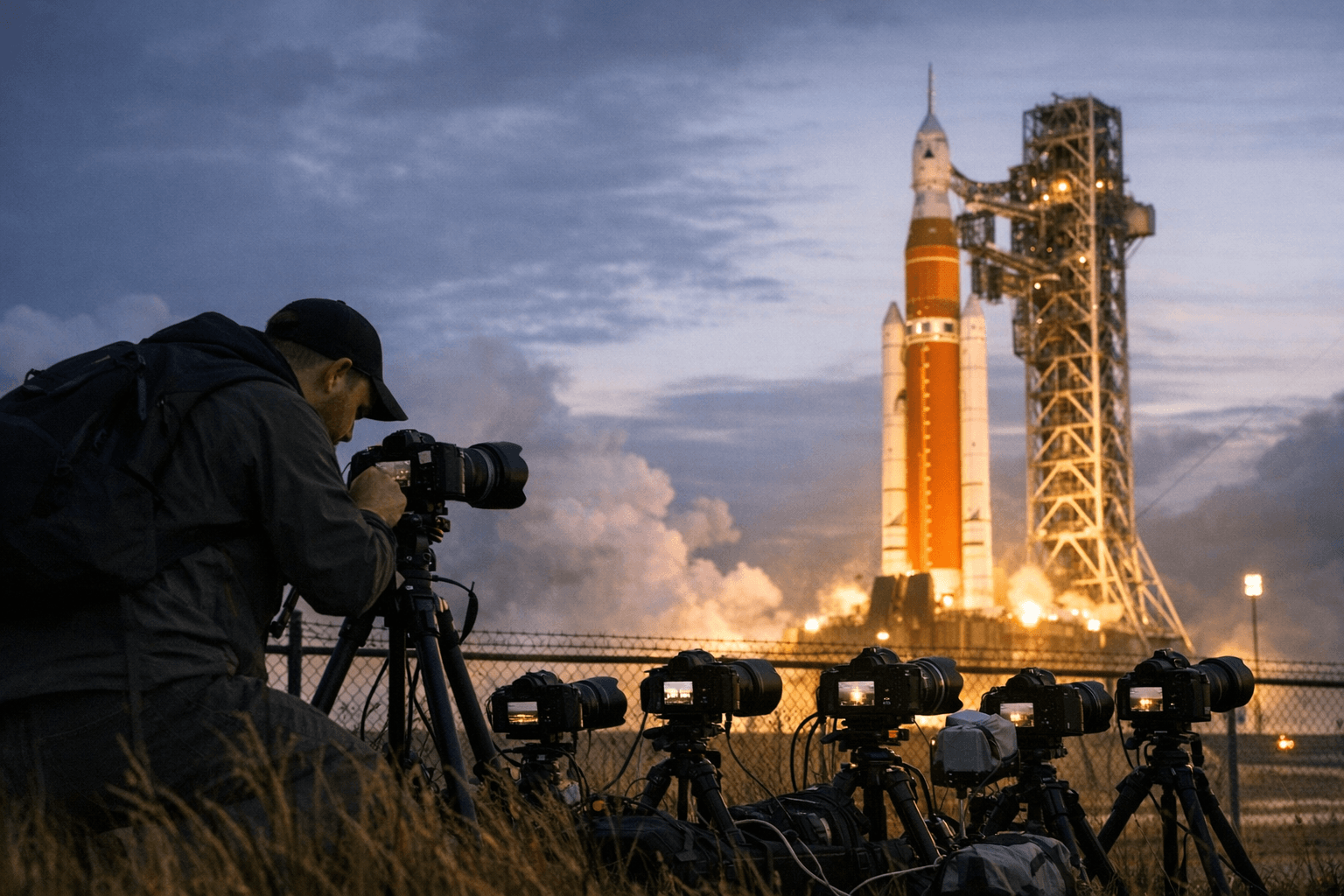
Fourteen cameras. Seven of them bolted down remotely at Kennedy Space Center, weather-hardened and left to fire autonomously just meters from a rocket carrying humans to the Moon for the first time in over 50 years. That is how Orlando-based photographer Steven Madow covered NASA's Artemis II launch on April 1, 2026 — and the resulting images make it immediately clear why the preparation mattered.
A Decade in the Making
Getting to this moment required far more than gear. "NASA credentialing is really tough," Madow told PetaPixel. "I started my journey as a rocket launch photographer over 10 years ago and gradually have been trying to figure out the path through credentialing and getting access." That path ran through smaller stages first: Madow had previously earned credentials photographing launches for SpaceX and the Space Force, building the track record and relationships that would eventually open the door to NASA's most high-profile pad. For Artemis II specifically, he partnered with Space Explored, a publication focused on space exploration storytelling. "Through Space Explored, I was able to get credentialed," Madow explained. "This has been years and years and years of trying to pull this together and be able to get to the Artemis II launch."
That perspective reframes every earlier launch in his portfolio. Each SpaceX remote rig, each Space Force countdown, each failed attempt to nail the shot was incremental training. As Madow described it, he viewed every prior launch he photographed as practice and a process of self-improvement, all building toward a moment exactly like this one.
The 14-Camera Strategy
Madow set up 14 different Panasonic Lumix cameras to cover the monumental event, including seven remote cameras positioned at the launch site itself. The logic behind that volume is straightforward to anyone who has tried remote event photography at scale: redundancy is everything. A single camera malfunction, a missed trigger, a blown exposure, or a framing that clips the exhaust plume can erase an irreplaceable moment. Fourteen cameras across varied positions eliminated that single point of failure.
The spread also gave Madow a range of perspectives that no one handheld camera could achieve simultaneously:
- Extreme long shots capturing the full scale of the Space Launch System rocket against the Florida sky
- Medium telephoto sequences framing the exhaust plume and launch tower
- Close remote perspectives placed near the pad itself, where the shockwave and acoustic energy would be too intense for any photographer to be present
Power management and memory were equally non-negotiable. Months of preparation went into confirming that batteries, cards, and backup systems could all survive an extended wait at the pad — because once the remote rigs were locked in, there was no retrieving them until after launch.
Getting to the Pad
Madow and other credentialed photographers were bused out to the launch site on Sunday, March 29, to set up their cameras. Fortunately, Madow had plenty of time to dial everything in once on location. That bus ride was one of the few elements of the day that went exactly to plan. NASA's security requirements for a crewed mission of this magnitude meant that access windows were strictly controlled; photographers were not free to revisit their rigs once placed. Everything had to be right the first time.
The remote cameras also needed to be physically hardened. The acoustic environment at close range to the SLS rocket during ignition is violent enough to shake loose improperly secured gear, and the flame trench produces intense heat and exhaust. Weather-proofing against Florida's coastal humidity was a baseline requirement, but the physical bracing of each camera rig required the same careful thinking.
Launch Day and Schedule Uncertainty
Artemis II did not cooperate with a clean timeline. The mission lifted off at 6:35 p.m. EDT on April 1 from Launch Complex 39B at Kennedy Space Center in Florida, but the precise go-time was not confirmed until hours beforehand, after multiple schedule adjustments. For photographers with remote cameras already deployed at the pad, that uncertainty means sitting with the knowledge that your gear is locked in position and the only variable left is patience.
When the moment finally came, Madow was stationed at his designated media position, manually sequencing handheld shots as the SLS engines ignited. The seven remote cameras at the pad fired autonomously through their triggers. The images that came back — capturing the scale of the rocket, the billowing exhaust plumes, and the sheer kinetic drama of the first crewed NASA lunar mission since Apollo — confirmed that every hour of preparation had paid off.
What Other Photographers Can Take From This
Madow's Artemis II coverage functions as one of the most detailed case studies available in high-security, high-stakes remote photography. Several principles emerge clearly from his approach:
- Credential-building is a long game. Access to events like a NASA crewed launch does not come from a single application. It is earned through years of demonstrated work at lower-access events, relationships with credentialing partners, and a verifiable body of published work.
- Redundancy is non-negotiable. Fourteen cameras is not excess; it is engineering. When you cannot return to fix a problem, the only answer is to have enough coverage points that individual failures become irrelevant.
- Practice runs are the real work. Every launch Madow photographed before Artemis II served as a test of his remote setup methodology. The specific lessons — how to secure a rig, how long a battery lasts in Florida humidity, what trigger timing works at various distances — are not learned by reading about them.
- Power and memory must be over-engineered. A launch window can shift by hours. Remote cameras need to be ready to fire at the start of that window or the end of it.
- Know your approved positions in advance. NASA's approved setup locations are fixed and non-negotiable. Working out which camera-and-lens combination covers which position, and pre-visualizing each frame before you arrive, is the only way to use the limited setup window effectively.
The Artemis II mission carries NASA astronauts Reid Wiseman, Victor Glover, and Christina Koch, along with Canadian Space Agency astronaut Jeremy Hansen, on an approximately 10-day journey around the Moon — the first time humans have traveled that far from Earth since Apollo 17 in 1972. The weight of that context is part of what makes Madow's images resonate. Getting them required a camera strategy sophisticated enough to match the mission itself.
This article was produced by Prism’s automated news system from verified source data, official records, and press releases, then run through automated quality and moderation checks before publishing. The system is built and supervised by the people who set the standards it runs under. Read our full AI policy.
Did this article answer your question?