Anamorphic Lens Effects Are Now Being Faked in CGI and Animation
CGI films including "The Super Mario Galaxy Movie" now deliberately fake anamorphic lens signatures like oval bokeh and horizontal flares — turning an optical accident into a conscious aesthetic choice.
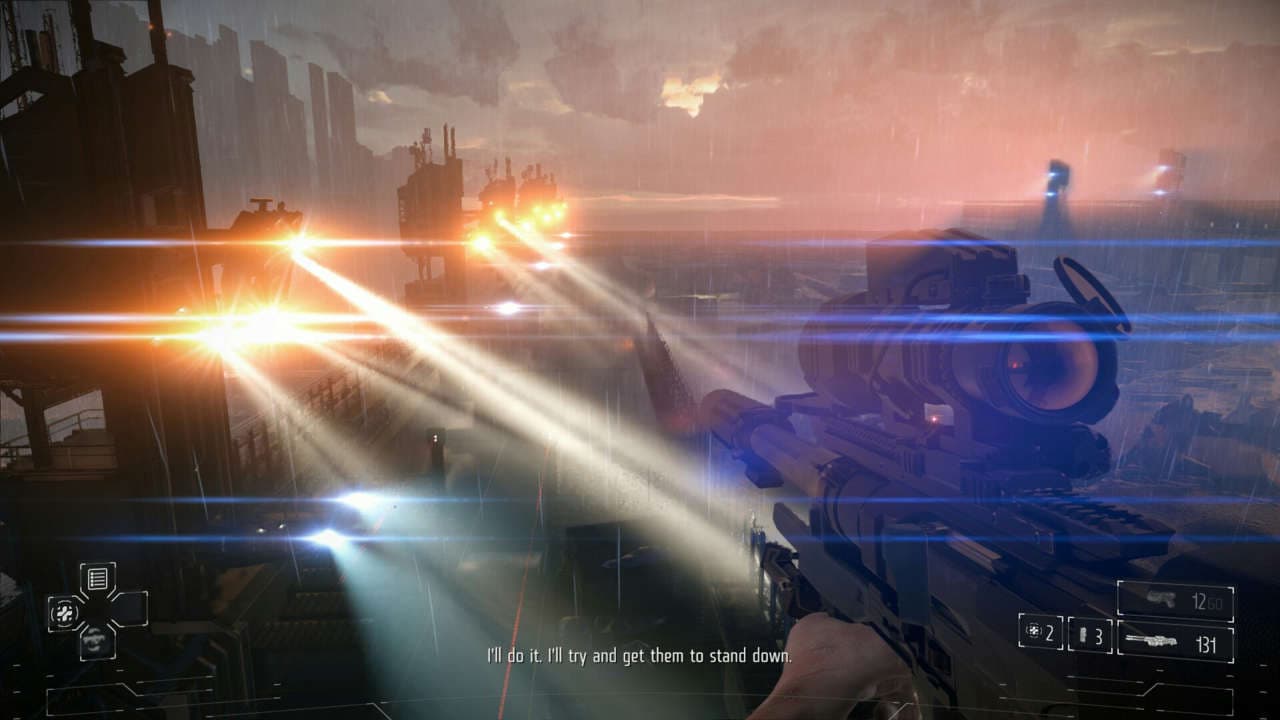
Picture a sequence in "The Super Mario Galaxy Movie" set against a backdrop of streetlights and stars. A careful viewer notices it immediately: horizontal lens flares streak across the frame, bokeh pools into unmistakable ovals, and the field of view carries the compressed, wide-breathing quality of a 2.39:1 anamorphic print. There is no physical lens involved. Every one of those optical "imperfections" was added deliberately in software. That moment is a precise encapsulation of where cinematic visual language sits right now — anamorphic optics have become so culturally loaded that their artifacts are being reconstructed, frame by frame, in worlds that were never photographed at all.
What Anamorphic Optics Actually Do
To understand why animators are faking these traits, it helps to understand what makes them distinctive in the first place. An anamorphic lens uses a cylindrical front element to squeeze a wide horizontal field of view onto a standard sensor or film frame, which is then de-squeezed in post or projection. The squeeze ratio is typically 1.33x or 2x, yielding the familiar 2.39:1 widescreen aspect. But the mechanical byproduct of that squeeze is a set of optical signatures that spherical glass simply cannot replicate: oval bokeh formed by the elliptical aperture shape, long horizontal streaks when point light sources hit the front element, subtle barrel distortion at the frame edges, and a particular kind of chromatic breathing as focus shifts.
In Toy Story 4, Pixar DP Patrick Lin modeled the film's virtual lenses after Cooke's anamorphic optics, producing oval bokeh, horizontal lens flares, and shallow depth of field in a fully CG environment, shooting at a 2.39:1 aspect ratio as a major evolution of Pixar's animation capabilities. That production, released years before "The Super Mario Galaxy Movie," was an early proof of concept: audiences responded to the CG images the same way they respond to film shot on actual glass, because the perceptual cues were identical.
The Toolkit for Faking It
The pipeline for replicating anamorphic traits in animation and VFX has matured considerably. At the high end, productions build optical profiles from physical lens scans and run them through renderers that physically simulate how light travels through glass. At the more accessible end, tools like Blender (free) or Cinema 4D ($59 per month) allow animators to add anamorphic effects directly in CGI pipelines, while plugins such as Dehancer ($199) or Red Giant Optical Flares ($139) handle lens flare and bokeh simulation in post-production, and AI tools like Runway AI ($15 per month) or Luma AI ($29 per month) can automate anamorphic effect generation.
VFX compositing follows a similar logic. When CG elements need to integrate with anamorphic live-action plates, artists distort synthetic renders to match the real lens's warp profile before compositing over the original footage. The same distortion maps are now being applied to fully synthetic scenes, adding optical character to images that have no physical basis.
Star Wars: The Bad Batch by Lucasfilm Animation represents another instructive example: the animated series mimics the natural behavior of an anamorphic lens through simulated depth of field effects and a faux-film grain applied across the footage. Combined, those touches position an animated show in the same perceptual register as live-action prestige television.
Why Animators Are Reaching for This Look
The reason studios go to this effort is not technical nostalgia; it is audience conditioning. From television to IMAX theaters, cinematographers have reached for anamorphic glass so consistently — for the ultra-wide cinematic look, the oval bokeh, and the exaggerated flare — that the look has become ubiquitous in live-action filmmaking. Over the last decade that ubiquity has migrated from prestige feature films into streaming series, streaming originals, commercials, and music videos. Viewers now read those optical signatures as a shorthand for cinematic production values, whether or not they can articulate why.
Replicating optical limitations can also make animated scenes feel more tangible and emotionally resonant. The human visual system is calibrated to real-world optics, and those optics are never perfect. A sterile, aberration-free CG render can feel antiseptic precisely because it is too clean. Introducing horizontal flares, focus breathing, and elliptical bokeh reintroduces the imperfections that signal "camera," which signals "real," which signals "this matters." Colorists and sound designers have applied the same logic to grain simulation, subtle vignette, and filmic color rolloff for years; anamorphic simulation is now part of that same toolkit.
The Market Behind the Trend
The crossover of anamorphic aesthetics into animation has not gone unnoticed by the optics industry. Physical anamorphic glass is still the reference source: anamorphic lenses saw a 27% growth in 2024, driven by increasing use in high-end streaming content, with approximately 32% of professional production houses now using custom-built lens sets tailored to specific visual aesthetics. Cooke Optics, whose glass served as the physical model for Toy Story 4's virtual cameras, released the Anamorphic/i SF series in early 2024, capturing around 10% of the global anamorphic lens market share.
The demand loop is self-reinforcing. As more content, including animated content, carries the anamorphic look, that look consolidates its status as the baseline for "cinematic." More productions then chase the aesthetic, expanding the market for both physical anamorphic primes and the digital emulation tools that simulate them. Adapters, software plugins, and AI-based post tools all benefit from the same cultural momentum.
What This Means If You Shoot
For cinematographers working in live action, the trend puts anamorphic glass in a curious position: the look it uniquely produces has never been more desirable, but that desirability now creates its own impostors. The practical argument for shooting on physical anamorphic primes remains strong — the optical rendering of real glass retains subtleties that current simulation struggles to fully reproduce, particularly in complex multi-source flare situations and at the focus-depth transition zone. But the competitive pressure from convincing digital emulation is real and growing.
For still photographers the implications are more compositional than optical. Shooting with rectilinear glass, you can still borrow the structural vocabulary that anamorphic framing privileges: a deliberate emphasis on the horizontal axis, attention to negative space and wide framing, and considered placement of point light sources that would streak in an anamorphic setup. You cannot fake the oval bokeh on a spherical lens without adapters or post, but you can absolutely internalize the framing instincts those lenses reward.
The Feedback Loop
There is a broader cultural mechanism at work here, and it is worth naming. Every aesthetic tool starts as a technical solution to a specific problem. The anamorphic lens solved the problem of fitting a wide-format image onto standard film stock. Its "look" was originally a consequence, not a goal. But once enough films deployed that consequence, it became a language, and once it became a language, it became something studios and animators intentionally invoke regardless of whether the underlying problem exists. The same feedback loop produced grain simulation in digital photography, the crackle effect in digital audio, and the vignette default baked into countless Instagram filters.
The creative question is not whether borrowing that language is legitimate; clearly it is, and it has been working on audiences since at least Toy Story 4. The more useful question is whether you are reaching for it consciously or reflexively. Animating horizontal flares onto every scene because they feel "cinematic" is a different choice from studying what physical anamorphic glass actually does to a composition and deciding that those specific traits serve the specific story you are telling. The former is aesthetic decoration; the latter is cinematography.
This article was produced by Prism’s automated news system from verified source data, official records, and press releases, then run through automated quality and moderation checks before publishing. The system is built and supervised by the people who set the standards it runs under. Read our full AI policy.
Did this article answer your question?