Photography Life reviews Panasonic Leica 15mm f/1.7 for MFT shooters
A tiny 30mm-equivalent prime that still earns its keep for street and low-light work, but only if you can live with softer corners and no weather sealing.
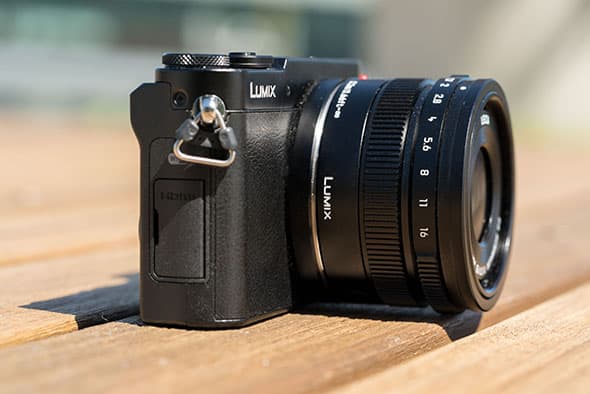
If your Micro Four Thirds kit needs one small fast wide prime that can live on the camera instead of in the bag, the Panasonic Leica 15mm f/1.7 still makes a serious case for itself. It is wide enough to place a subject in context without shrinking them into the scene, fast enough for low light, and compact enough to feel like a natural match for the smallest MFT bodies. The tradeoff is just as clear: this is a lens with real character, not a modern all-conditions sharpness monster.
A compact 30mm-equivalent with a clear job
The headline is simple. On Micro Four Thirds, 15mm gives you a 30mm full-frame equivalent field of view, which lands in that sweet spot between classic 28mm and 35mm storytelling lenses. That makes it a natural fit for street shooting, everyday documentary work, reportage, and available-light scenes where you want context without turning the frame into a crowd shot.
That framing is exactly why the lens still matters. It is not trying to be a do-everything zoom substitute or a technical reference lens. It is trying to be the small prime you actually carry, and that distinction matters more than spec-sheet bragging rights when the camera is hanging on a shoulder all day.
Sharpness that is good, but not ruthless
Photography Life’s take is balanced in a way buyers need. The lens is described as adequately sharp overall, but it does not behave like a lens that chases clinical perfection across every part of the frame. Performance drops a bit at close range and wide open, especially toward the corners, so if your own habit is to inspect edge detail at pixel level, this is not the lens that will calm that instinct.
That said, the review does not frame those limits as deal-breakers. In real use, the lens still delivers the kind of rendering many MFT shooters want from a small prime: pleasing subject separation, a bit of softness that flatters faces and scenes, and enough consistency to make it useful for actual work rather than just test charts. In other words, it is a lens you choose for how it draws, not for winning an optical arms race.
Rendering over clinical perfection
This is where the 15mm starts to separate itself from the more purely utilitarian options in the MFT world. The f/1.7 aperture gives it real low-light usefulness, and the review notes that the bokeh is pleasant for the format. It even held up for night sky shooting in the field, which says a lot about how far you can push a compact prime when the light falls apart.
At the same time, it is not a lens that pretends harsh light does not exist. Harsh flare behavior is one of its drawbacks, even though Panasonic gave it Nano Surface Coating to help reduce ghosting and flare. If you like lenses that leave a little bit of weather in the image, that may be part of the appeal. If you want every frame to come out mechanically polished, the comparison tilts toward newer, more clinical alternatives.
Size and handling are the real argument
The best reason to buy this lens is still the simplest one: it is small. Weighing 115g and measuring about 57 x 36 mm, it disappears onto a compact body in a way that many faster wide primes do not. The 46mm filter thread keeps accessories modest, and the 0.2m minimum focusing distance gives it a little flexibility when you want to get in tight.
Handling is more old-school than featherweight. The lens includes an aperture ring and an AF/MF switch, which many still enjoy because it makes the lens feel like a photographic tool rather than a sealed plastic accessory. The flip side is that the aperture ring can feel clicky to video shooters, so if your use case leans heavily toward smooth iris pulls, the charm may not travel well with you.
How it compares to the obvious alternatives
Against newer small MFT primes, the Panasonic Leica 15mm f/1.7 wins on a mix of portability, rendering, and tactile handling, but not on pure modern convenience. It is not weather sealed, and it does not pretend to be the answer for shooters who prioritize current-generation autofocus behavior, stabilization-centered shooting, or the toughest field conditions.
Against the typical “small but fast” alternative, the choice becomes a question of priorities. If you want the smallest possible lens that still gives you a genuine 30mm-equivalent storytelling angle, this one is still a strong candidate. If you want maximum edge-to-edge sharpness, weather sealing, and a more neutral, less characterful look, the smarter move is to look at a newer lens built around those priorities instead.
That decision is why the lens remains interesting. It is not competing by being the newest thing in the cabinet. It is competing by being the lens that makes a tiny MFT body feel complete.
Launch pricing, kit context, and the used-market logic
Panasonic introduced the LEICA DG SUMMILUX 15mm / F1.7 ASPH. on March 25, 2014, offered it in black and silver, and set the launch price at about $599 in the United States and £549 in the United Kingdom, with availability beginning in mid-June 2014. It was also paired with the Lumix GM1 in a kit, which makes the design intent obvious: this was built as a compact companion for very small Micro Four Thirds cameras, not a big-bodied pro rig.
That context still matters when deciding whether it is a smart buy. At full retail, it always sat in premium territory for a compact prime, so the value case is much easier to make when you are shopping used. If your priority is a small, fast wide lens with good rendering and a real street-documentary feel, the 15mm f/1.7 is still more than a legacy curiosity. It is the sort of lens that reminds you why a small camera can still feel complete.
This article was produced by Prism’s automated news system from verified source data, official records, and press releases, then run through automated quality and moderation checks before publishing. The system is built and supervised by the people who set the standards it runs under. Read our full AI policy.
Did this article answer your question?