Photography student sends film into the stratosphere, captures cosmic radiation marks
A 5x4 color negative went to more than 121,000 feet and returned with radiation-made marks, turning film into a direct record of the upper atmosphere.
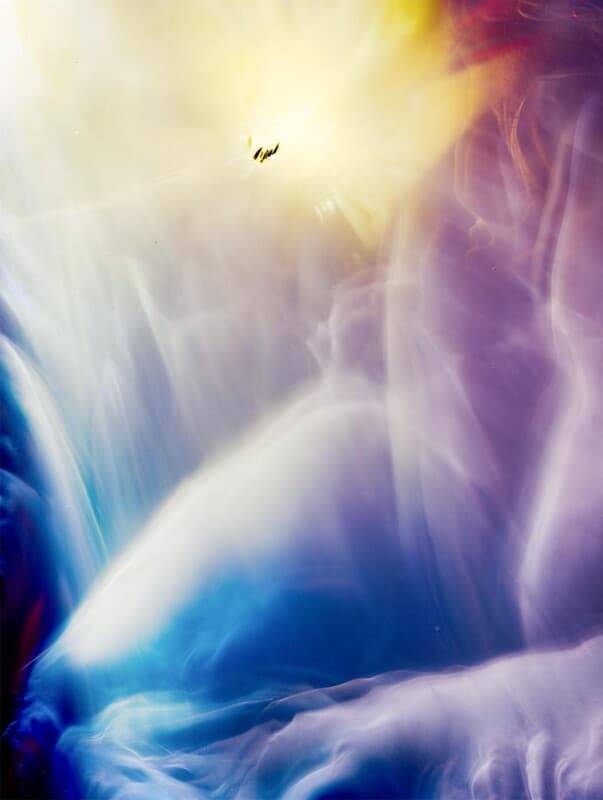
A 5x4 color negative climbed past 121,000 feet and came back with something a camera normally never sees: marks made by cosmic radiation, UV-C light, muons and other high-energy particles. For Tom Liggett, a third-year BA (Hons) Photography student at Arts University Bournemouth, the result was a world first and a sharp reminder that film can still be pushed into territory digital sensors cannot reach.
Liggett launched the HELIOS project on April 19 over New York state, sealing the negative inside a lightproof dark bag and attaching it to a weather balloon payload rather than loading it into a conventional camera. That detail mattered. By keeping visible light out of the equation, the experiment isolated the emulsion itself as the recording surface, so any change in the film had to come from the environment at altitude. AUB says the film was exposed at more than 121,000 feet, about three times higher than commercial aircraft fly.

The project was developed with a specialist high-altitude launch team and Filmed In Space, and Liggett traveled to New York state for the launch. After the balloon burst, he recovered the rig more than 50 miles away in Connecticut. Back in Bournemouth, the negatives were processed in AUB’s color darkroom and turned into a large-format C-type print, revealing a vivid abstract image rather than the blank frame Liggett had expected. One yellow bloom at the top of the frame came from a tree that pierced the bag during descent, while the rest of the image carried the ghostly textures left by the high-altitude exposure.
HELIOS did not come out of nowhere. Liggett’s earlier experiments used a Van de Graaff generator, and he later worked with medical X-rays before taking film into near-space. That progression is what gives the project weight inside photography, where material tests often matter as much as final results. AUB has described the work as a world first because it treated film not just as a capture medium, but as a physical surface capable of recording invisible forces directly.
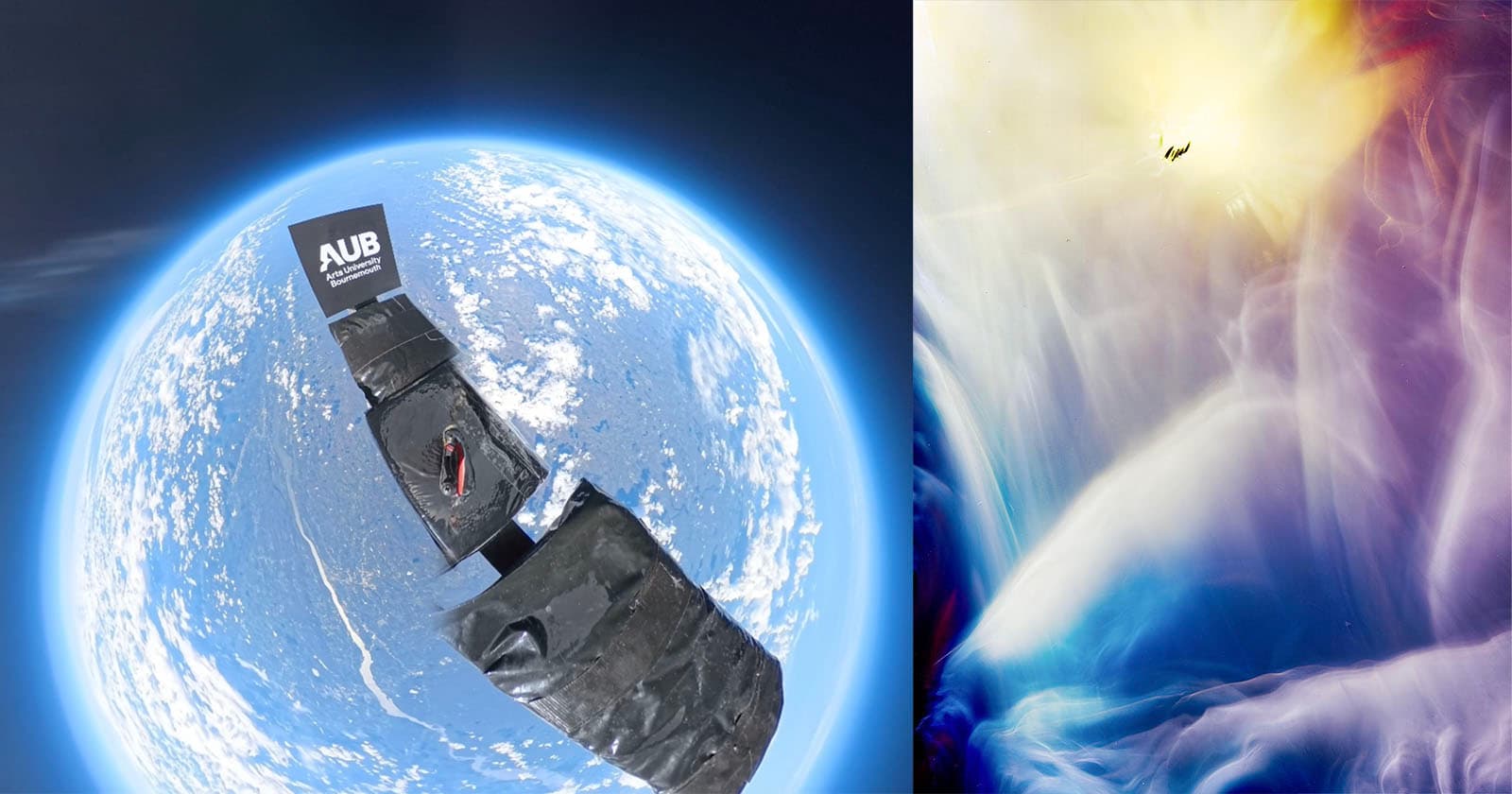
Liggett now wants to scale the idea up to larger sheet formats and eventually work with Kodak or Ilford. The image that came down from the stratosphere made the point plainly: film is still capable of being more than a nostalgic tool, and in the right hands it can become a scientific recording surface for the edge of space.
This article was produced by Prism’s automated news system from verified source data, official records, and press releases, then run through automated quality and moderation checks before publishing. The system is built and supervised by the people who set the standards it runs under. Read our full AI policy.
Did this article answer your question?