Polaroid x530, the rare compact camera with a Foveon sensor
The Polaroid x530 is rare because it failed commercially, not because it sold well. Its Foveon sensor makes it a collector object, but its real value is in the story it tells.
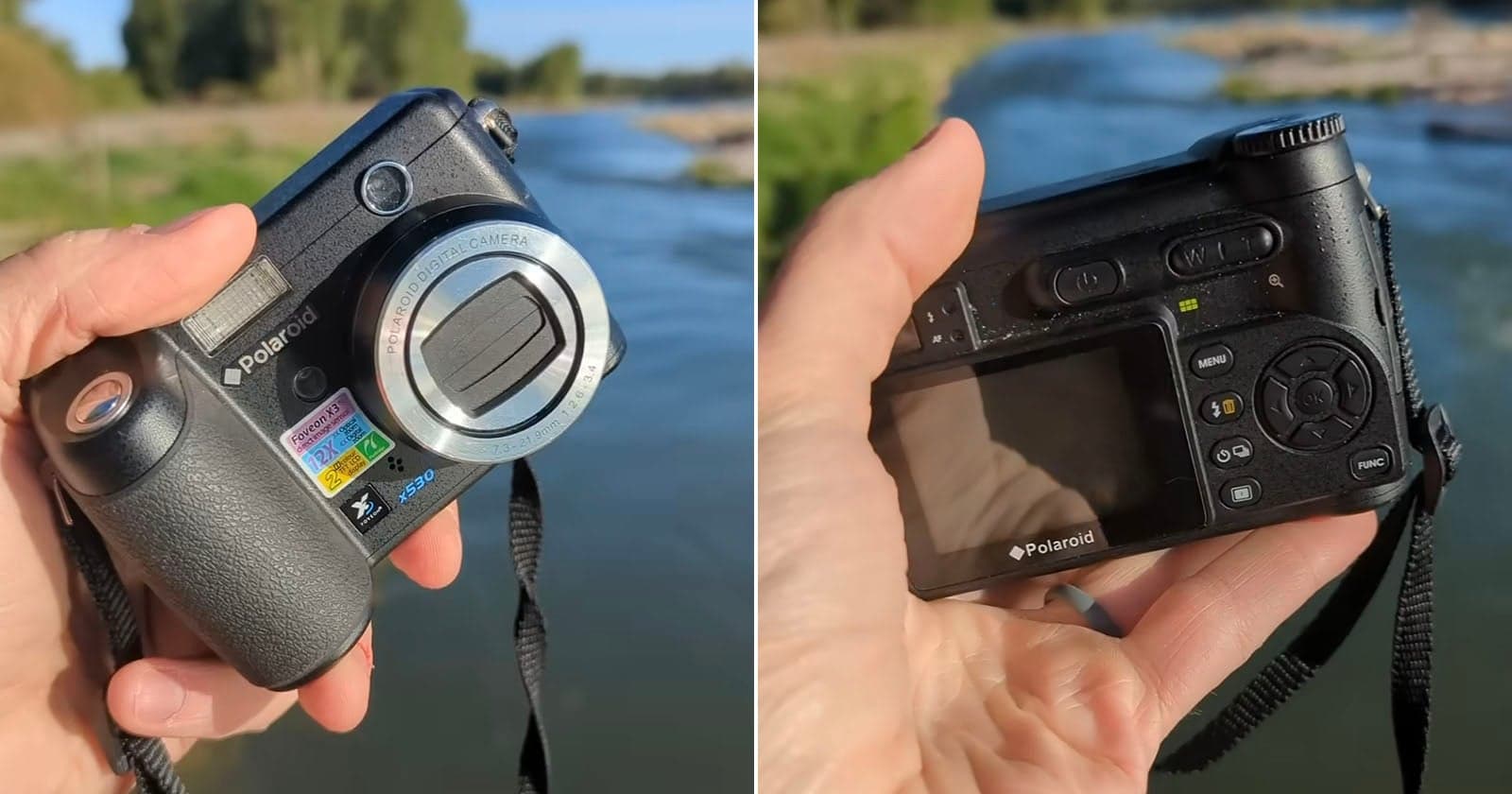
The Polaroid x530 sits in that strange corner of camera history where a forgettable consumer shell became a cult object. It looks plain, but it hides a first and only: the only non-Sigma digital camera ever built around a Foveon X3 sensor, which is exactly why collectors keep circling back to it.
Why the x530 still matters
On paper, the x530 was never a blockbuster. Polaroid first previewed it at PMA 2004, saying it would ship in June 2004 for a suggested retail price of $399. That launch never unfolded cleanly. By the time the camera finally reached U.S. buyers on February 20, 2005, the price had been cut to about $299, and availability was limited to Circuit City’s and Wal-Mart’s online stores. International shipping was also pushed back, with Canada, Japan, Germany and the United Kingdom waiting until March 31, 2005.
That delay is part of why the camera became interesting. Instead of becoming a mainstream compact, it turned into a rare artifact with a story attached. In the collector market, that matters almost as much as image quality, because scarcity plus a memorable technical oddity often creates more heat than a successful product ever could.
The Foveon hook
The x530’s reputation comes from the sensor, not the body. It used Foveon’s X3 5M sensor, built with three layers of 1.5 million pixels each and marketed as a 1/1.8-inch sensor. Rather than using a conventional Bayer array, the design captured color information directly in stacked silicon layers. Foveon’s pitch was bold: full color at every pixel location, with a look it claimed could bring more richness and sharpness than ordinary single-layer sensors.
That idea gave the x530 a place in the larger Foveon timeline. Sigma’s SD9, launched in 2002, was the first digital camera to use a Foveon X3 sensor. The x530 was notable because it brought that technology into a compact point-and-shoot body for the first and only time outside Sigma. For camera historians, that makes it less a curiosity and more a dead-end branch of digital imaging that never spread the way its inventors hoped.
Why rarity does not equal greatness
This is where the collector conversation gets tricky. The x530 is rare, but rarity alone does not make a camera important to shoot with. In this case, the scarcity reflects a commercial stumble as much as any technical triumph. The delayed launch, the reduced price, and the limited retail rollout all point to a product that never found its market.
That does not make it meaningless. Quite the opposite: failed products often become the most revealing objects in a collection because they show how manufacturers were experimenting at the time. The x530 represents an alternate path in digital photography, one where direct-color capture might have moved beyond Sigma and into ordinary consumer cameras. That path closed quickly, which is why the camera now feels like a snapshot of a future that never arrived.
What the x530 actually offered photographers
The camera was not just a sensor demo. Press materials highlighted JPEG and RAW capture, in-camera JPEG processing, and VGA video clips. Polaroid also bundled PhotoLab software, including Foveon’s X3 Fill Light tool, to help with difficult lighting. Those details matter because they show the x530 was aimed at real users, not just engineers and spec-sheet hunters.
Still, the x530’s appeal today is less about practical shooting and more about the unusual combination of features. A 1.5-megapixel sensor by modern standards is tiny, and that makes the camera a poor match for anyone chasing flexibility, cropping room, or modern output expectations. What it does offer is a very specific historical experience: a compact camera built around one of the boldest sensor ideas of the early digital era.
Collectible versus actually interesting to shoot
If you are evaluating a camera like this, separate two questions. First: is it collectible? Second: is it fun or useful to shoot?
- it was rare at launch or became scarce quickly
- it represents a technical first, last, or one-off design
- it has a clear story that other collectors recognize
- it looks unusual enough to be memorable, even if the body itself is plain
A camera becomes collectible when it checks some combination of these boxes:
The x530 hits all of those marks. It is the first and only non-Sigma camera to use Foveon X3 technology, it arrived through a messy and delayed rollout, and it has a technical backstory that is easy to explain and hard to forget.
- the controls feel usable today
- the file output has a look you actually want
- the shooting process is enjoyable beyond novelty
- the results hold up against what you need from a compact
A camera becomes interesting to shoot when the experience itself still rewards you:
That is where the x530 is less clear-cut. Its appeal is tied to a 1.5-megapixel-era sensor and a very specific image pipeline, so the camera is more likely to interest you as a historical object than as a daily carry. In other words, it is a great collector piece before it is a practical one.
The broader Foveon story
Sigma’s acquisition of Foveon on November 11, 2008 shows how seriously the technology was taken, even after the x530’s commercial misfire. The company kept the concept alive for years, which only adds to the oddity of the Polaroid compact. It was not a one-off gimmick cooked up and abandoned overnight. It was part of a broader sensor philosophy that camera makers kept testing, even if the market never fully embraced it.
That context is why the x530 keeps resurfacing in collector conversations. It is not merely an odd Polaroid compact with a forgotten badge. It is a rare bridge between consumer photography and one of the more ambitious imaging ideas of the digital age.
The x530’s legacy is simple: it failed as a mass-market camera and succeeded as a story. That is often how a bland compact becomes a status object, especially when the thing hiding inside it is stranger than the body ever looked.
This article was produced by Prism’s automated news system from verified source data, official records, and press releases, then run through automated quality and moderation checks before publishing. The system is built and supervised by the people who set the standards it runs under. Read our full AI policy.
Know something we missed? Have a correction or additional information?
Submit a Tip