Royal Observatory Greenwich reveals Astronomy Photographer of the Year shortlist
The 29 shortlisted frames show how tracking, stacking and foreground control separate a snapshot from a finalist. Winners are due in an online ceremony on 17 September.
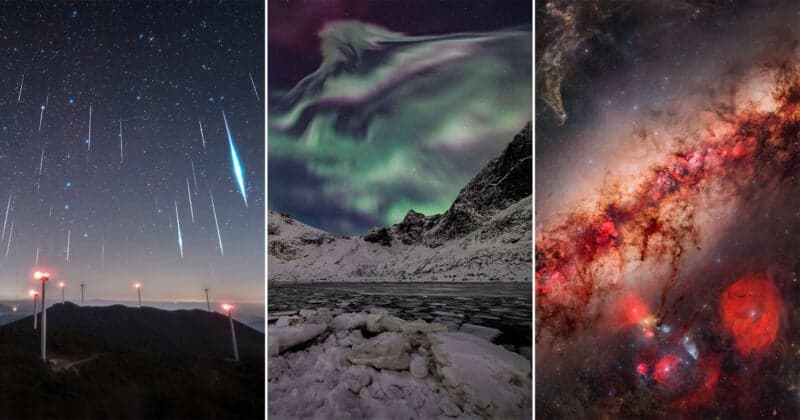
The 29 shortlisted images for Astronomy Photographer of the Year showed exactly why the contest still sets the pace for hobby astrophotography: the standout frames were built on tracking, stacking, careful focal-length choices, and foregrounds that give the sky real scale. Royal Museums Greenwich and ZWO unveiled the shortlist after nearly 4,000 entries arrived from amateur and professional photographers in 66 countries.
Now in its 18th year, the competition is billed by Royal Museums Greenwich as the world’s biggest astrophotography contest and has run every year since 2009. It is open to all ages and abilities, allows up to ten images per entrant, and carries a top prize of £10,000. The 2026 field is split across nine categories, Skyscapes, Aurorae, People and Space, Our Sun, Our Moon, Planets, Comets and Asteroids, Stars and Nebulae, and Galaxies, with the ZWO Young Astronomy Photographer of the Year competition for entrants under 16 and two special prizes, Best Newcomer and the Annie Maunder Open Category.

For readers scanning the shortlist for ideas to steal on the next clear night, the lesson is less about gear lust than about discipline. The strongest astrophotography turns faint signal into structure, which is where stacking and long exposures do their best work. The most compelling finalists also use foreground treatment to anchor the frame, whether that means a horizon line, a landscape silhouette, or another visual cue that keeps the sky from floating free of context. Focal length matters too, and the competition’s recent benchmark work has underlined that point: the 2025 overall winner was The Andromeda Core by Weitang Liang, Qi Yang and Chuhong Yu, made with a long focal-length telescope at AstroCamp Observatory in Nerpio, Spain.

That technical ambition is what keeps the exhibition line strong year after year. Royal Museums Greenwich says the 2026 exhibition will feature 100 images, including winners, runners-up and highly commended entries, at the National Maritime Museum in London. The online awards ceremony will run on Thursday 17 September 2026 at 7pm, with the exhibition opening at the museum on Friday 18 September 2026. By then, the shortlist will already have made its point: the best night-sky images are not just recorded, they are constructed.
This article was produced by Prism’s automated news system from verified source data, official records, and press releases, then run through automated quality and moderation checks before publishing. The system is built and supervised by the people who set the standards it runs under. Read our full AI policy.
Did this article answer your question?