Saher Alghorra Wins Pulitzer for Haunting Gaza War Photography
Saher Alghorra’s Gaza series won the 2026 Pulitzer for showing starvation and destruction with brutal intimacy, from aid lines near Zikim to families under siege.

Saher Alghorra won the 2026 Pulitzer Prize for Breaking News Photography for a Gaza sequence that does something hard: it shows devastation at full force without flattening the people inside it. The Pulitzer Prize Board announced the win on May 4, 2026, and the prize carries $15,000. Alghorra, a photojournalist born, living and working in Gaza, was recognized for a haunting, sensitive series on starvation and destruction amid the war with Israel.
What makes the work land is not just access, but timing and restraint. The cited images stretch across March, April, August and September 2025, building a visual record of ruined streets, wounded children and families trying to survive shortages. One of the strongest frames shows a woman crying for her injured son after he was shot while trying to get aid near the Zikim crossing. That picture tells the whole story in one burst: the desperation of the aid line, the violence around it, and the private grief that follows every public statistic.
The Pulitzer citation said Israeli aid restrictions forced desperate people to risk their lives for food from trucks and aid sites, with hundreds of Palestinians killed while seeking aid and famine declared in northern Gaza. Alghorra got his first camera in 2017 and began photographing everyday Palestinian life, and that background matters. He was not parachuting in to chase catastrophe. He was already there, making pictures of fragile routine before the routine was shattered. That continuity gives the work its weight, because the images read as lived history, not emergency tourism.
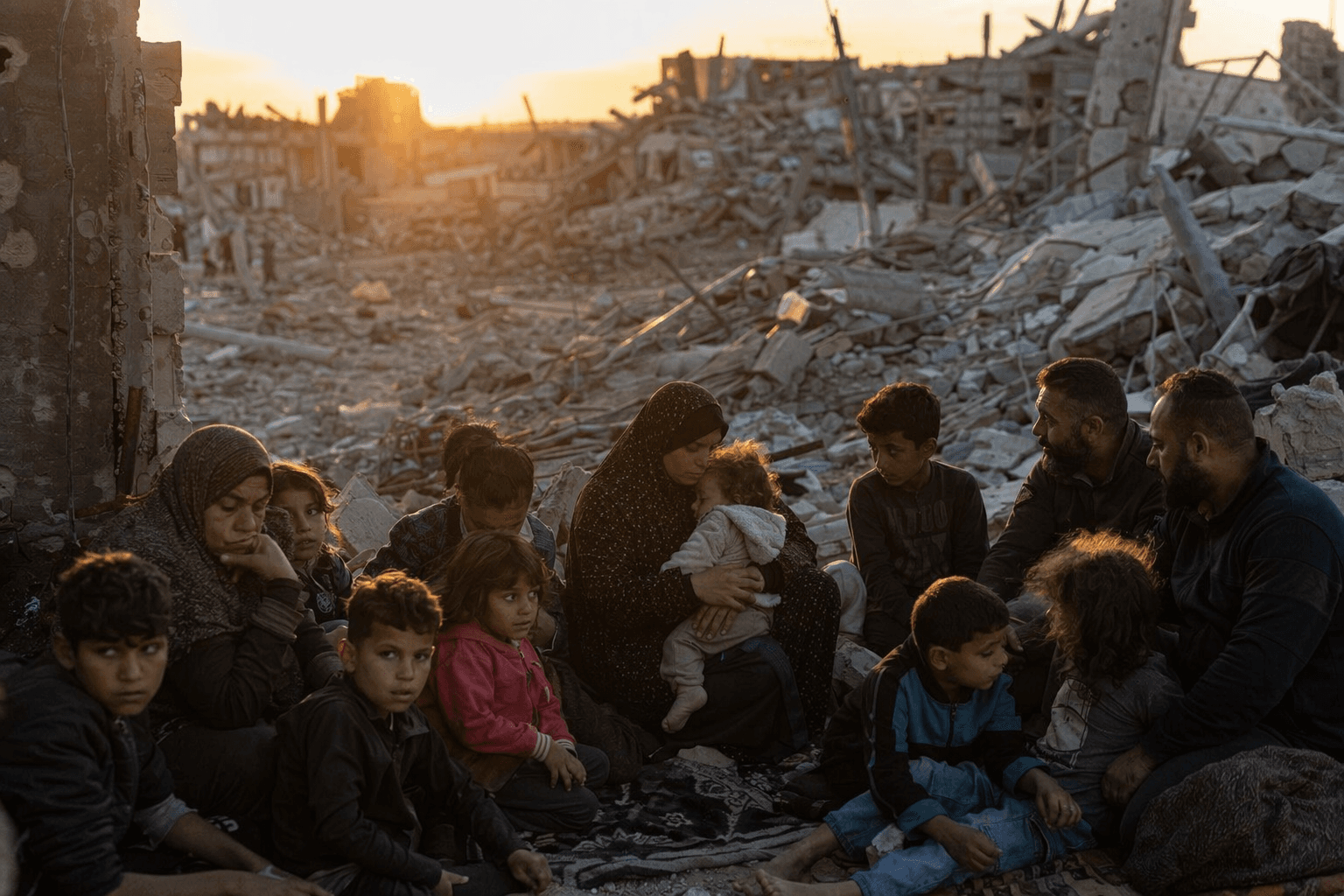
For photographers, the lesson is sharp. Proximity is not the same as intrusion, and this series respects that line. Alghorra moves close enough to make the faces count, but never so close that suffering becomes a design exercise. The composition serves the human fact in front of the lens. The frame around the mother, the injured son and the aid site is not decoration. It is evidence.
The New York Times Company said Alghorra and his family members were displaced six times, and that international photojournalists were barred from entering Gaza, which made local work even more essential. That reality also explains why this Pulitzer matters beyond one portfolio. Reuters was named a finalist for wide-ranging immigration enforcement coverage across the United States, and The Los Angeles Times was a finalist for deadly wildfire images in California. The board had already issued a 2024 special citation for journalists and media workers covering Gaza, noting the extraordinary number of journalists who died while telling those stories. Alghorra’s win extends that recognition, and it underlines what war photography can still do at its best: bear witness with discipline, dignity and no illusion that beauty is the point.
Know something we missed? Have a correction or additional information?
Submit a Tip