Sebastião Salgado Auction Offers Rare Prints and Lessons on Lasting Photography
Phillips is auctioning 30 lifetime Salgado prints this week, with the Kuwait portfolio making its auction debut at a $60,000 to $80,000 estimate, months after his death at 81.
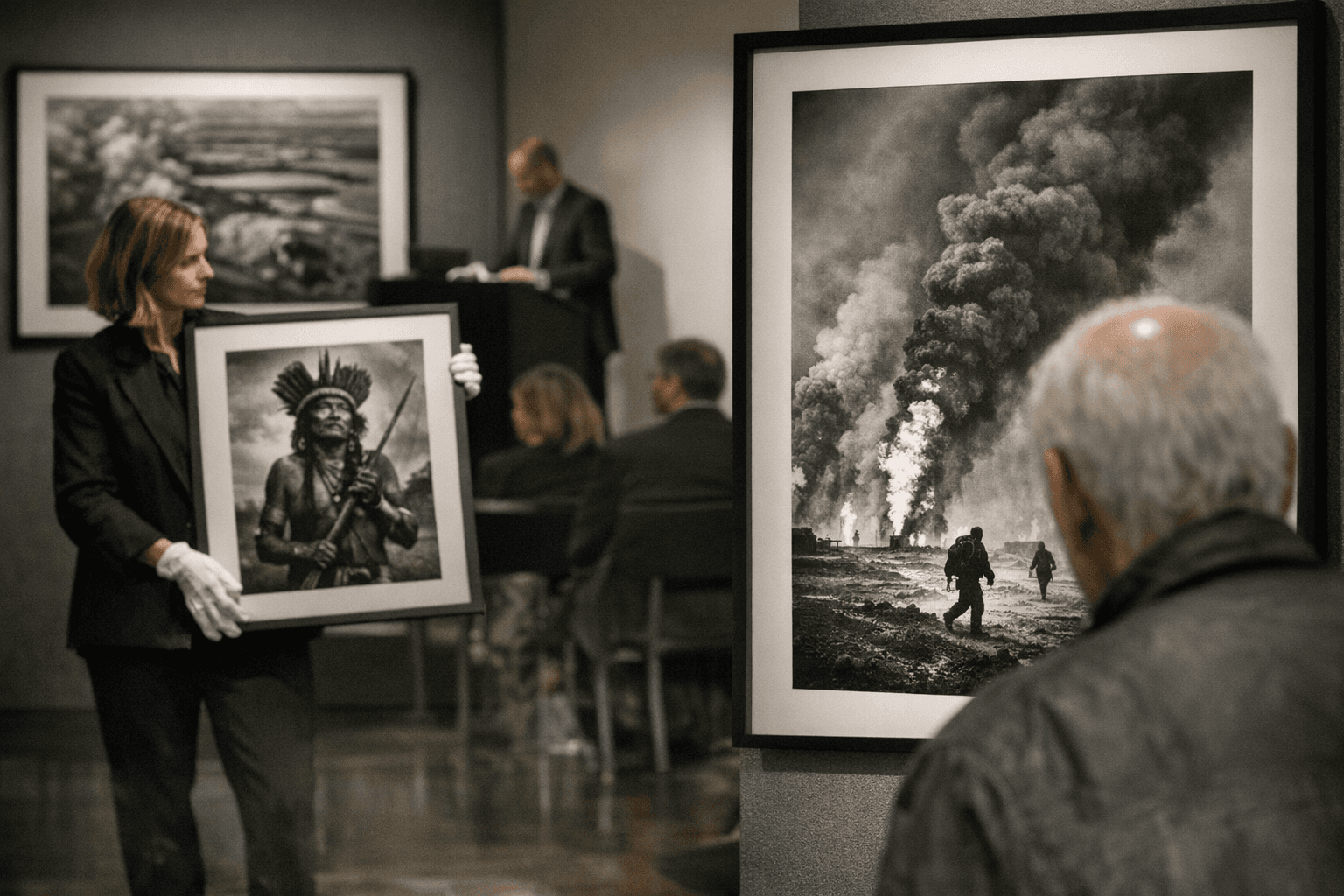
Thirty prints. Four decades. One photographer who is no longer alive to sign another sheet of paper. That closing condition is a large part of what makes Phillips' "Sebastião Salgado: A Life's Voyage" one of the more instructive fine art photography auctions of the year, with online lots closing April 10 and a live New York sale on April 11.
The collection carries a total estimate of $100,000 to $150,000. The headline number belongs to the Kuwait: A Desert on Fire portfolio, 20 gelatin silver prints documenting the international effort to extinguish oil fires set during the Gulf War. It is making its auction debut at Phillips, estimated at $60,000 to $80,000. Individual lots reach as high as $15,000 to $25,000 for Gold Mine, Serra Pelada (Figure Eight), arguably the most recognizable single frame from Salgado's career.
Salgado died on May 23, 2025, at age 81 at the American Hospital in Paris, from leukemia. His death was confirmed by Instituto Terra, the environmental nonprofit he co-founded with his wife Lélia Wanick Salgado, and by the French Académie des Beaux-Arts, of which he had been a member since 2016. Every print in the Phillips sale is a lifetime print, made and signed by Salgado while he was alive. No posthumous editions will follow. That combination of irreplaceability and institutional provenance is precisely what lifts a signed gelatin silver print past the five-figure threshold.
The anatomy of these prices is a practical lesson in what drives photographic value long-term. Thematically coherent projects built the unmistakable visual identity: Workers, Genesis, Migrations, Amazônia, each running for years and accumulating the cultural weight that isolated images rarely generate. The Serra Pelada photographs, shot during the dry season of 1986, documented roughly 50,000 mud-soaked miners in Brazil's northeastern state of Pará. They began as photojournalism, but Salgado had been editioning signed fine art prints from the same negatives for years, with edition numbers and his signature noted in pencil on the verso alongside an embossed blindstamp, creating the documented chain of provenance that collectors and auction houses require. His all-time auction record stands at $155,984 for a Serra Pelada work, per MutualArt. Sotheby's had offered the complete Gold Mine portfolio in 2018 at an estimate of £80,000 to £120,000, confirming institutional appetite years before the Phillips sale.
There is an uncomfortable current running through all of this. The Serra Pelada photographs exist because tens of thousands of impoverished men risked their lives in a pit mine. The Kuwait series exists because of wartime environmental destruction. Those same images now occupy auction rooms and command five-figure bids. Salgado channeled part of that tension through Instituto Terra, which has planted over 2.7 million trees across 290 native species on restored land in Minas Gerais, now chaired by his son Juliano Ribeiro Salgado.
The checklist for building an archive that retains resale credibility is concrete: produce signed, editioned prints with documented edition numbers rather than open-ended digital files; use a stable process, gelatin silver or archival pigment on acid-free cotton rag paper; note the shoot date, location, and edition number in pencil on the verso of every print; establish gallery or auction provenance early, because sales history is the chain of custody that authenticates value; and build toward projects rather than isolated images, since a cohesive body of work documenting a single subject over years generates collector interest that individual prints rarely sustain alone.
Salgado spent more than 30 years turning a newspaper assignment at Serra Pelada into a definitive cultural record. The Phillips estimates are the market's way of agreeing with that judgment.
This article was produced by Prism’s automated news system from verified source data, official records, and press releases, then run through automated quality and moderation checks before publishing. The system is built and supervised by the people who set the standards it runs under. Read our full AI policy.
Did this article answer your question?