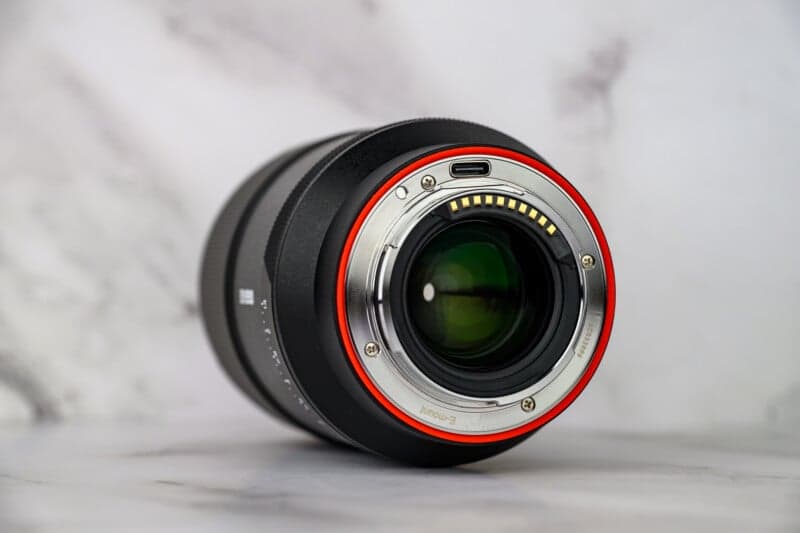
SIRUI Unveils Ultra-Fast F/0.95 Full-Frame Autofocus Anamorphic Lens
SIRUI's new full-frame autofocus anamorphic arrives with an f/0.95 aperture, nearly a stop faster than its own Astra series T1.8 ceiling.

An f/0.95 anamorphic with autofocus on a full-frame sensor is the kind of spec sheet that stops a cinematographer mid-scroll. SIRUI dropped details on exactly that lens on April 1, 2026, and while the timing raised eyebrows across rumor sites, the announcement appears to be a genuine product reveal rather than a seasonal prank.
The new lens pushes well beyond SIRUI's own Astra series benchmark. That earlier lineup, which included 50mm, 75mm, and 100mm T1.8 options with 1.33x squeeze and full-frame coverage, was already notable for cracking the autofocus anamorphic market at accessible prices. An f/0.95 maximum aperture would represent a meaningful step up in low-light capability and depth-of-field control, precisely the two qualities cinematographers cite most when reaching for a fast prime.
Autofocus is arguably the more disruptive feature in a working context. Anamorphic lenses have traditionally demanded manual focus and, on any production with a moving subject, a dedicated focus puller. For solo operators, gimbal users, and run-and-gun documentary crews, an autofocus-capable anamorphic changes the calculus entirely. SIRUI's Astra series proved that full-frame AF anamorphics could exist at a non-Hollywood price point; the new announcement suggests the company is pressing that advantage further.
The broader market context explains why SIRUI is moving aggressively. Competitors like Blazar have been racing in the same compact, affordable anamorphic segment, and the field has consistently rewarded whoever publishes the most compelling aperture or autofocus spec first. Historically, anamorphic glass was heavy, entirely manual, and priced for rental houses rather than individual owners. The current generation delivers the genre's signature characteristics, oval bokeh, horizontal lens flares, and that desqueezed wide aspect ratio, in packages that mount directly to mirrorless bodies without additional rigging.
That said, the f/0.95 figure warrants scrutiny before any purchase decision. The number surfaced in retailer copy and early press aggregation rather than a detailed official spec sheet, and retail listings sometimes carry promotional or placeholder figures that shift before a lens ships. Cine lenses are also typically rated in T-stops rather than f-stops, and the distinction matters: a T-stop measures actual light transmission, which can run meaningfully lower than the geometric f-stop on fast glass. Mount compatibility, whether the lens arrives in Sony E, Nikon Z, Leica L, Canon RF, or some combination, remains unconfirmed, as does final pricing.
If the lens delivers on its headline spec, SIRUI will have extended its lead as the go-to brand for creators chasing an anamorphic aesthetic without the traditional rigging and staffing overhead. The more prudent path is to wait for SIRUI's official product page, independent MTF data, and real-world AF tracking tests before drawing conclusions. What's already clear is that the anamorphic segment has never moved faster.
This article was produced by Prism’s automated news system from verified source data, official records, and press releases, then run through automated quality and moderation checks before publishing. The system is built and supervised by the people who set the standards it runs under. Read our full AI policy.
Did this article answer your question?