Slain Gaza Photojournalist Mariam Abu-Dagga Named 2025 World Press Freedom Hero
Mariam Abu Dagga, 33, killed in a double-tap Israeli strike on Nasser Hospital, has been posthumously named a 2025 IPI-IMS World Press Freedom Hero.
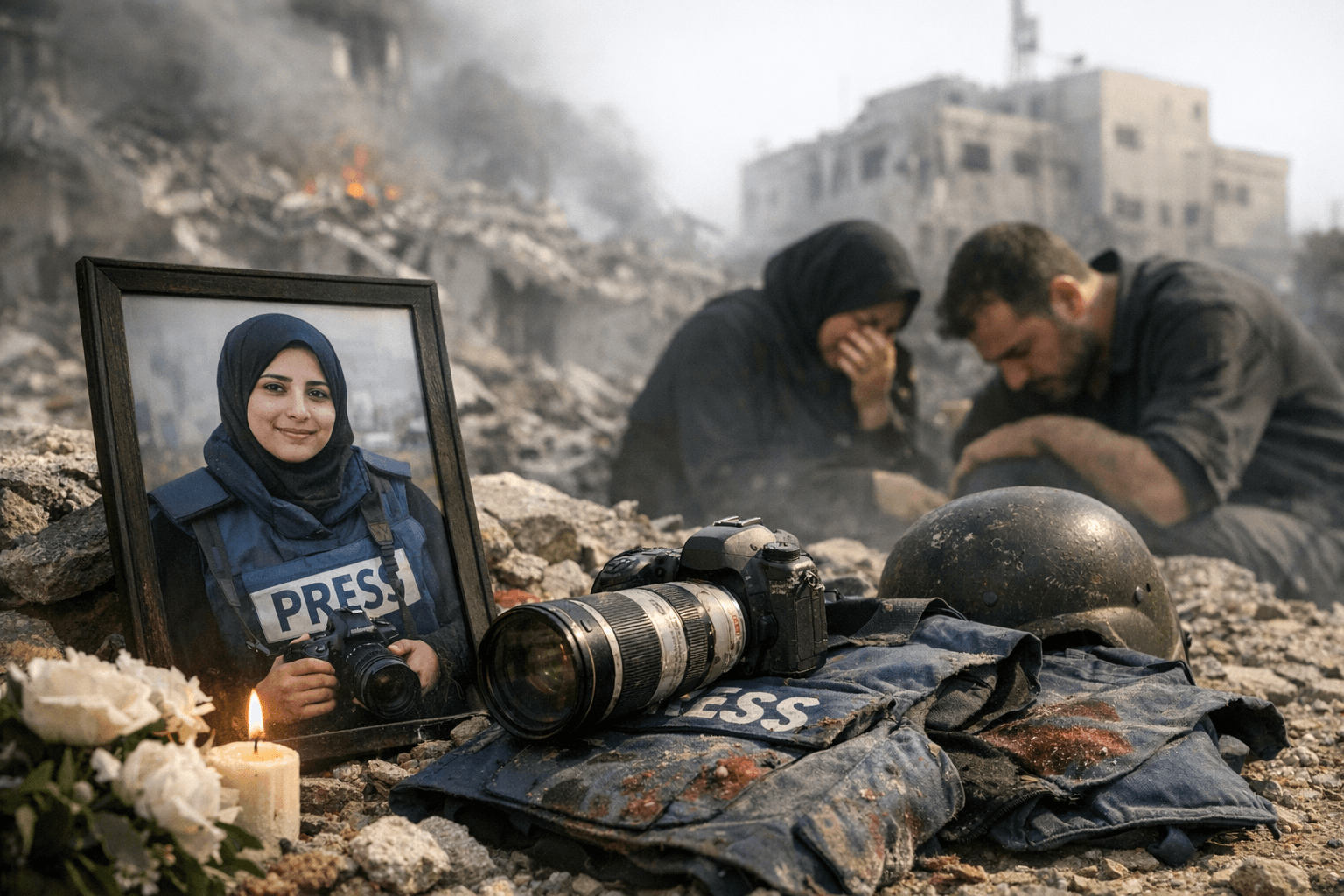
On August 25, 2025, Mariam Abu Dagga and four other Palestinian journalists were killed in an Israeli "double-tap" strike targeting Nasser Hospital in Khan Younis, where she and other journalists working for international outlets were based. The International Press Institute has since named her a posthumous recipient of the 2025 IPI-IMS World Press Freedom Hero award, honoring a life that ended, camera still in hand, at 33 years old.
Days before she was killed, Abu Dagga bylined an Associated Press story about Gaza's deepening humanitarian crisis, capturing devastating scenes at Nasser Hospital in southern Gaza, where malnourished children succumbed to starvation as famine spread throughout the Strip. Her most recently filed AP photos showed emaciated, severely malnourished Palestinian children in Gaza, and a story with her byline highlighted the death of a 2-year-old child, Ro'a Mashi, who doctors said had "wasted away over months as her family struggled to find food and treatment."
As the situation in Khan Younis became increasingly unstable in the days before her death, she told her editor at Independent Arabia in a voice note: "I don't have a place to go." Photos found on her camera moments before her death depict one of Nasser Hospital's external staircases, damaged by a first Israeli strike that killed a Reuters cameraman. As she moved closer to the blast site with her camera, Abu Dagga was killed as a second Israeli strike hit the hospital.
A Palestinian freelance photojournalist who contributed to both Independent Arabia and the Associated Press, Abu Dagga was murdered at Nasser Hospital in Khan Younis on August 25, 2025, in a location the Committee to Protect Journalists described as a known journalist meeting point. The Israeli military said they targeted a Hamas camera in the strike, but a Reuters report said the camera actually belonged to the news agency. CPJ concluded that the journalist was targeted because of her journalism.
AP Executive Editor Julie Pace addressed the loss directly: "AP's team of journalists in Gaza continue to provide the world with crucial eyewitness reporting despite incredibly difficult and dire circumstances. This is exactly what Mariam Dagga, a visual journalist who worked for The Associated Press as well as other news outlets in the region, was doing when she was killed in a strike on a hospital in Khan Younis, Gaza, earlier this year. Mariam produced searing photos and video that captured the lives of Palestinians facing extraordinary challenges, including families displaced from homes and doctors treating wounded and malnourished children. We remain devastated by her death and continue to seek answers to ensure journalists are protected as they cover this war."
The World Press Freedom Hero award is given annually to journalists who have made significant contributions to promoting press freedom in the face of great personal cost. In recognizing Abu Dagga, the selection committee explicitly honored the incredible bravery of photojournalists, and female reporters in particular, who are risking their lives to show the world what is happening in Gaza, while calling attention to the continued killing of journalists in Gaza and the ongoing impunity.
Separately, Abu Dagga of the Associated Press was also awarded the prestigious Robert Capa Gold Medal Award for her photographs of death and hunger in Gaza. She also posthumously received a 2026 George Polk Award for photojournalism for her work documenting conditions in the Gaza Strip.
Abu Dagga first achieved prominence as a journalist when she filmed the killing of a protester by Israeli forces during the 2018-2019 Great March of Return in Gaza, later realizing that the man she had filmed being shot was her own brother. She had studied journalism at Al-Aqsa University and began working in the field in 2015. The AP reported that Abu Dagga had evacuated her 13-year-old son out of Gaza early in the war and had not seen him since.
The five journalists killed alongside her at Nasser Hospital joined more than 247 Palestinian colleagues killed in Gaza over the preceding 22 months, a toll that press freedom organizations say makes this the deadliest conflict for journalists ever recorded, surpassing both world wars, the Vietnam War, the wars in Yugoslavia, and the U.S. war in Afghanistan combined. IMS Executive Director Jesper Højberg placed her loss in that context directly: "Two of them, Victoria Roshchyna and Mariam Abu Dagga, paid with their lives. With immense courage and persistence, the awardees have uncovered corruption, war crimes, persecution of vulnerable groups and multiple other transgressions. We all owe them our deep gratitude for their fearless commitment to exposing what those in power seek to hide.
Know something we missed? Have a correction or additional information?
Submit a Tip

