Study Finds Earth’s Night Lights Are Flickering, Not Just Brightening
Earth’s night lights rose 16% from 2014 to 2022, but the bigger story for shooters is the flicker: some skies brightened, others dimmed fast.
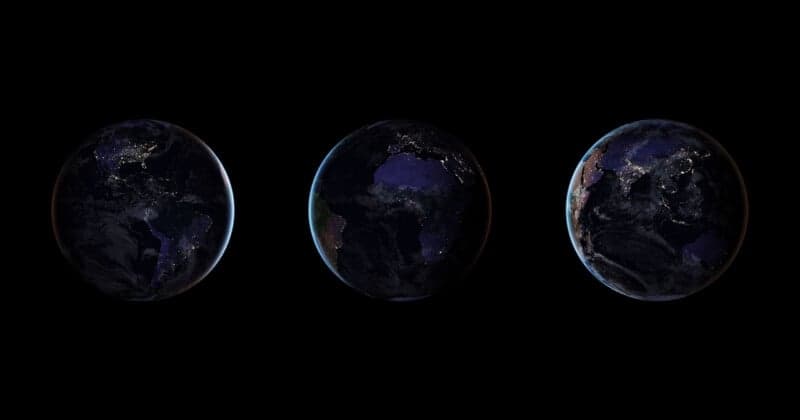
A 16 percent rise in global light pollution from 2014 to 2022 sounds like a slow fade in the dark, but the new picture is messier and more frustrating for anyone chasing the Milky Way. Earth is not just getting brighter. It is flickering, with daily satellite imagery showing frequent brightening and dimming as cities expand, wars hit power grids, lockdowns empty streets, and energy policies take hold.
The study, published in Nature on April 8, 2026, analyzed night-time satellite imagery from 2014 through 2022 and found an average of 6.6 distinct shifts at each location that changed. Brightening added radiance equal to 34 percent of the 2014 global baseline, while dimming offset 18 percent of that gain. The dataset tracked 2.05 million square kilometers of abrupt change and 19.04 million square kilometers of gradual change, a scale that matters when you are trying to predict whether a favorite ridge line or skyline will still hold a clean dark frame next season.
For photographers, the blunt takeaway is that dark skies are becoming harder to count on. The worst losses hit the exact subjects night shooters care about most: Milky Way arcs, meteor showers, and city nightscapes without washed-out horizons. The study points to brightening driven largely by development in places such as India, China and parts of Africa, while some dimming came from energy-saving efforts, conflict and natural disasters. The University of Connecticut’s summary says the satellites caught sharp dimming in Ukraine after Russia’s invasion, along with dimming in Syria and Yemen, plus the timing and spread of COVID-19 lockdowns across Asia and elsewhere.
That volatility is the practical story. Europe showed a sharp dimming trend tied to aggressive energy-saving measures and policy intervention, which means some locations can improve, at least temporarily, even as the broader trend still points the other way. If you are planning a shoot, the best move is to treat the sky like weather and check satellite-based light maps before you drive. NASA’s Black Marble product suite, a daily calibrated and validated nighttime-lights dataset, is built for monitoring light pollution, disasters, settlements and energy infrastructure. For photographers, it is also a planning tool: use it to find the darkest route, avoid newly brightening suburbs, and time trips around places where the glow is changing fast.
That matters even more as other pressures stack up. DarkSky International says a 2023 Science study using 51,351 Globe at Night observations found global sky brightness increased by an estimated 9.6 percent per year between 2011 and 2022, and its 2025 survey of 203 astrophotographers from 31 countries found mounting interference from satellite megaconstellations. The night sky is not simply getting brighter. It is becoming less predictable, and unpredictability is the enemy of a clean astro frame.
This article was produced by Prism’s automated news system from verified source data, official records, and press releases, then run through automated quality and moderation checks before publishing. The system is built and supervised by the people who set the standards it runs under. Read our full AI policy.
Did this article answer your question?