The New Yorker revisits Martha Cooper’s vanished New York street life
Martha Cooper's New York pictures endure because they turn ordinary street play into living social history. The New Yorker’s retrospective is a lesson in proximity, timing, and the city as playground.
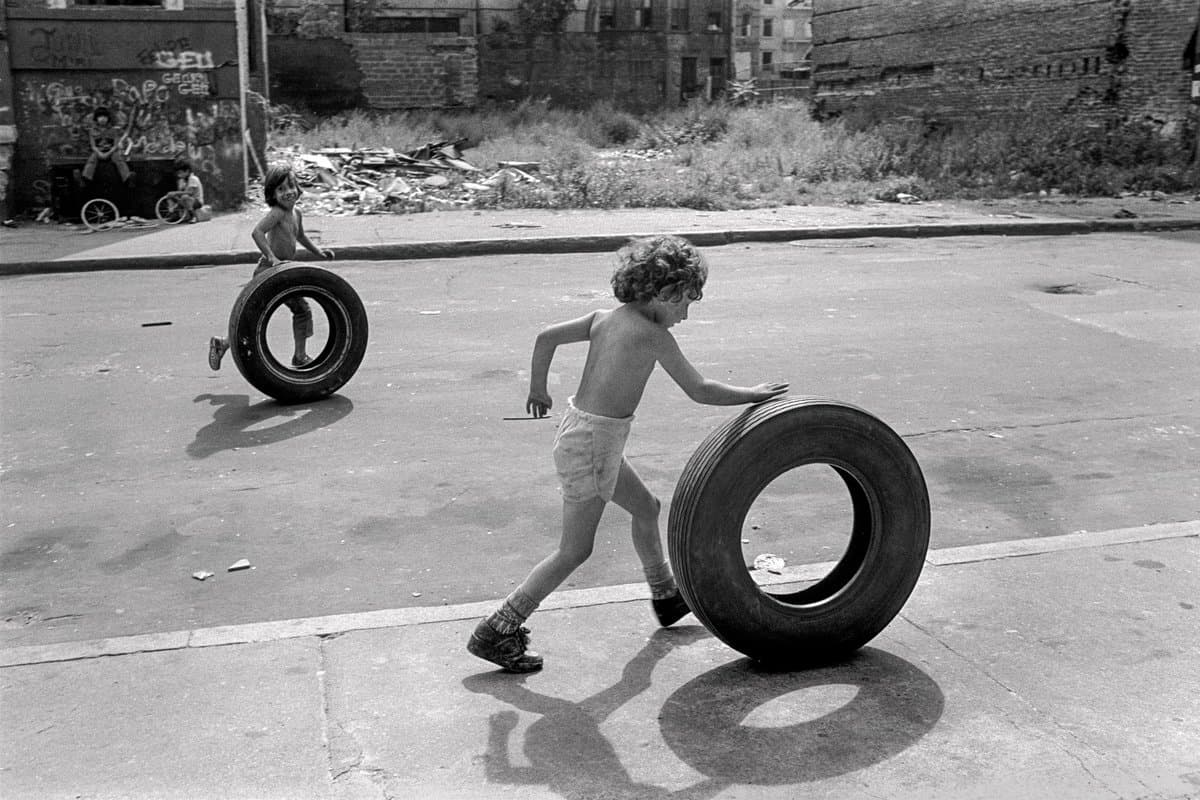
Martha Cooper’s photographs of New York kids at play do something street photography often promises but rarely delivers: they make the ordinary feel structurally important. In The New Yorker’s retrospective, the scene is not a stylized metropolis but a lived-in street world of ramshackle toys, improvised games, and the small inventions children build when the neighborhood itself becomes part of the game. That is why these images still land. They are not just nostalgic, they are evidence.
What makes the pictures endure
Cooper’s strength is proximity without intrusion. She was working as a staff photographer for the New York Post during the 1970s, making images between official assignments, which helps explain why the pictures feel embedded in the city rather than extracted from it. You can sense that she knew where the action was likely to happen and waited for life to arrange itself around her frame.
That distinction matters for anyone trying to make street work feel documentary instead of performative. Cooper does not force a spectacle. She lets the street supply the subject, and the subject is often children converting concrete, rubble, and abandoned space into a usable world.
The city as a playground, not a backdrop
The Museum of the City of New York describes these photographs as a glimpse of a time before video games and cell phones, when New York streets served as a creative playground for city kids. That shift is the real emotional charge in the work. The children are not posed as symbols of resilience. They are simply occupied, busy, inventive, and fully at home in public space.
If you are looking for a practical lesson, it is here: the strongest street photographs often treat the environment as part of the behavior, not just the setting. Cooper’s pictures show how sidewalks, lots, stoops, and blocked-off spaces can reveal social life more clearly than a portrait ever could. The more specific the setting, the more universal the feeling becomes.
Alphabet City and the documentary edge
Her book Street Play sharpens that idea in one neighborhood and one moment. It focuses on late-1970s Alphabet City, just as the area was about to undergo extensive urban renewal, with children playing amid abandoned buildings and rubble-strewn lots. That landscape is not incidental. It is the whole point, because it shows how play survives inside urban change.
For photographers, this is a useful model of social context. A picture of kids at play becomes much richer when you can see the conditions that made that play necessary, possible, or improvised. Cooper’s work does not romanticize hardship, but it also does not separate joy from environment. The result is a street photograph that reads as history rather than mood.
Beyond the playground, into the graffiti years
Cooper is best known for documenting the New York City graffiti scene of the 1970s and 1980s, a body of work tied to the “Golden Age of Graffiti” in the 1970s and early 1980s. Her books include Street Play, Subway Art, and New York State of Mind, and that broader archive shows how consistent her eye has been across subjects. Whether the subject is children, trains, walls, or the people making marks in public, the underlying interest is the same: how urban culture lives in motion.
That wider range is easy to see in later featured work such as Dondi painting in yards in 1980, Lady Pink on Train in 1982, and Freshly Painted Wild Style Wall in Riverside Park, Manhattan, NYC, in 1983. These images extend the same documentary instinct into the graffiti world, where the record of an action often matters as much as the finished object. You are not just looking at art. You are looking at a scene with timing, labor, territory, and style all visible at once.
Why the archive keeps resonating
The Bronx Documentary Center says Cooper has specialized in documenting urban culture for more than forty-five years, and that long view explains why her work still feels current even when the New York she photographed is gone. Her book Spray Nation, which includes previously unpublished 1980s New York City graffiti photos, was released in fall 2022, reinforcing that her archive is still expanding rather than settling into a memorial role.
That is the deeper lesson in the New Yorker’s resurfacing of her street photography. The pictures matter because they preserve a social landscape that no longer exists, but they also matter because they show how to photograph public life without turning it into theater. Stay close. Wait for the telling gesture. Let the street remain itself. Cooper’s children, with their ramshackle toys and improvised games, are still teaching the clearest lesson in street photography: the city tells the story when you have the patience to let it.
This article was produced by Prism’s automated news system from verified source data, official records, and press releases, then run through automated quality and moderation checks before publishing. The system is built and supervised by the people who set the standards it runs under. Read our full AI policy.
Did this article answer your question?