Thomas Peschak's Stunning Photos Reveal the Amazon River's Wild Beauty
National Geographic photographer Thomas Peschak's new book captures the Amazon's 3,700-mile sweep from the Peruvian Andes to the Brazilian Atlantic in 11 breathtaking images.
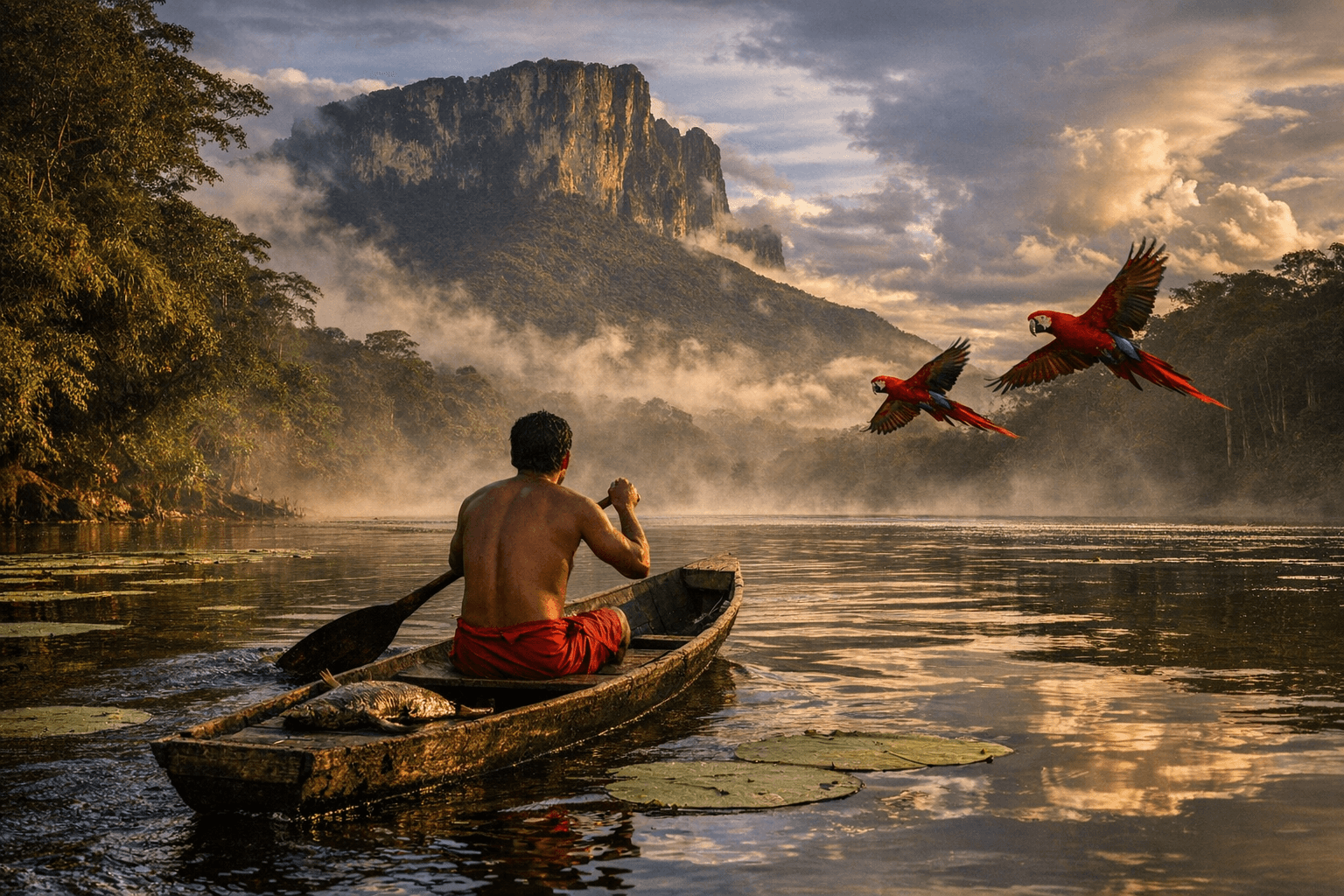
Few rivers on Earth demand a photographer's full attention the way the Amazon does. It winds 3,700 miles through lush rainforests, crossing three countries, sustaining an almost incomprehensible density of life. National Geographic Explorer and photographer Thomas Peschak spent an expedition tracing that entire arc, from the Andes mountains in Peru to where the river finally empties into the Atlantic Ocean in Brazil, and the resulting book, AMAZON: A River's Journey from the Andes to the Atlantic, published by Penguin Random House on March 10, 2026, distills that journey into imagery that stops you cold.
The gallery of 11 photographs drawn from Peschak's book loosely follows the Amazon's flow, arranging his images in rough geographic order along the river's course. Each frame documents biodiversity, novel wildlife behavior, and the unique ecologies of rarely seen species. Taken together, they function less like a wildlife catalog and more like a sustained argument: the Amazon is irreplaceable, and Peschak has the evidence.
The sloth at the water's edge
One of the most arresting images shows a sloth coming out of the water and grabbing onto a tree. Sloths are not animals most people associate with swimming, which makes the moment Peschak caught here genuinely surprising. It's exactly the kind of novel behavior the book was built around documenting.
Ice on feathers in the tropics
Among the 11 images, one stands out for its sheer unexpectedness: a bird's feathers coated with ice. No additional context is provided for this photograph in the source material, which makes it simultaneously the most intriguing and the most puzzling frame in the collection. The Amazon basin is not a place you'd expect to find frost, yet there it is. The image speaks to how extreme and varied the environments connected to this river system actually are.
Life below the surface: catfish and green eel
Peschak doesn't stay at the waterline. Two of the 11 images pull viewers beneath the surface entirely. The first shows a catfish underwater, surrounded by greenery, the river's interior transformed into something lush and layered. The second reveals large sponges with a green eel positioned underneath them, a composition that looks almost architectural. Freshwater habitats rarely get this kind of visual treatment, and both frames make the case that the Amazon's underwater world is as photogenic as anything above it.
The tapir in the rainforest
A young tapir, identified by its brown fur and distinctive white stripes, walks through the rainforest in one of the book's terrestrial shots. Tapirs are among South America's most ancient large mammals, and capturing one mid-stride in dense vegetation requires both patience and precise timing. The image grounds the gallery in the forest itself, reminding you that the Amazon River and the Amazon rainforest are one interconnected system.
Four birds in the rain
Four large birds with black and brown feathers perch together on a branch in the rain, their posture doing the compositional work. It's a social behavior shot, and the rain adds texture that flat light would never provide. Peschak has spent enough time in the field to know that difficult weather often produces the most compelling frames, and this image is a clear example of that instinct paying off.
The pink river dolphin
A pink river dolphin photographed in shallow water underneath trees is perhaps the image most people hope to see when they pick up a book about the Amazon. Also called the boto, the pink river dolphin is endemic to the Amazon and Orinoco river systems, and photographing one in shallow, tree-canopied water requires both access and timing. Peschak delivers a frame that feels intimate rather than performative.
The jaguar on the riverbank
A jaguar perched on a riverbank is the kind of image that defines a photography career. Jaguars are notoriously difficult to photograph in the wild, and the riverbank setting ties the animal directly to the Amazon's ecosystem rather than placing it in generic jungle cover. This is exactly the image that will end up on the book's promotional materials, and for good reason.
Birds at the nest
One image captures birds flying over a bird with a chick on a nest, a scene of layered activity that rewards a longer look. Nesting behavior in the Amazon basin involves a dense overlap of species competing for the same canopy real estate, and Peschak has framed that complexity in a single shot. The chick in the nest gives the image an immediate narrative pull.
The aerial view
Pulling back entirely, one photograph offers an overhead view of the Amazon River winding through the rainforest before emptying out into the ocean. From altitude, the river's scale becomes legible in a way it simply cannot be from the ground. This is the frame that contextualizes everything else in the gallery, the one that reminds you just how vast the system Peschak spent his expedition documenting actually is.
A sea turtle on the beach
The final image in the gallery's loose geographic sequence shows a sea turtle on a beach. As the Amazon meets the Atlantic, the river's influence on marine ecosystems becomes visible, and the sea turtle represents that boundary zone between river and ocean. It's a fitting image to close on: a creature tied to both worlds, photographed where the two converge.
The book behind the gallery
AMAZON: A River's Journey from the Andes to the Atlantic is published by Penguin Random House and arrived on March 10, 2026. Peschak, credited both as a National Geographic photographer and as a National Geographic Explorer, structured the expedition and the resulting book to follow the river's actual flow, from Peru to Brazil, giving the work a narrative logic that single-location wildlife monographs typically lack. The 11 images surfaced in Popular Science represent a fraction of what that full journey produced, but they're more than enough to establish what kind of photographer Peschak is: one who waits for the moment that nobody else would have been there to capture.
The Amazon is the longest river in the world, and it has been photographed countless times. What Peschak's work demonstrates is that there is still behavior to document, still ecologies to reveal, still frames that haven't been made yet. His book is the evidence.
This article was produced by Prism’s automated news system from verified source data, official records, and press releases, then run through automated quality and moderation checks before publishing. The system is built and supervised by the people who set the standards it runs under. Read our full AI policy.
Did this article answer your question?