Viltrox cuts a lens in half to show how optics work
Viltrox’s half-lens stunt is more than a gimmick: it shows how a lens still forms an image even when part of the optics are missing.

A lens cut in half still has something to teach
Viltrox’s strangest demo of the week is also one of the clearest. In a short Instagram video, the company literally cuts a lens in half, mounts the cutaway on a camera, and photographs a model to show how image formation works from the inside out. The result is messy and partially obscured, but that is exactly why it lands: you can see the internal glass stack, the aperture position, and the path light takes before it reaches the sensor.
What makes the clip so useful is the immediate payoff. Half the lens is gone, yet part of the scene still appears in frame. That is a vivid reminder that a lens does not project a tiny image sized exactly to the sensor. It throws a larger image circle, and the sensor samples only the center of that circle. Remove part of the optics and you do not erase image formation entirely, you simply degrade it, crop it, and make the surviving portion harder to control.
What the stunt reveals about optical coverage
The half-lens setup is not a workflow trick, and it is definitely not a recommendation for real shooting. It is a visual explanation of why coverage matters. A lens has to project an image circle large enough, clean enough, and sharp enough to cover the sensor area it was designed for. When Viltrox slices away part of the optic, the frame still records because some of that projected circle remains intact.
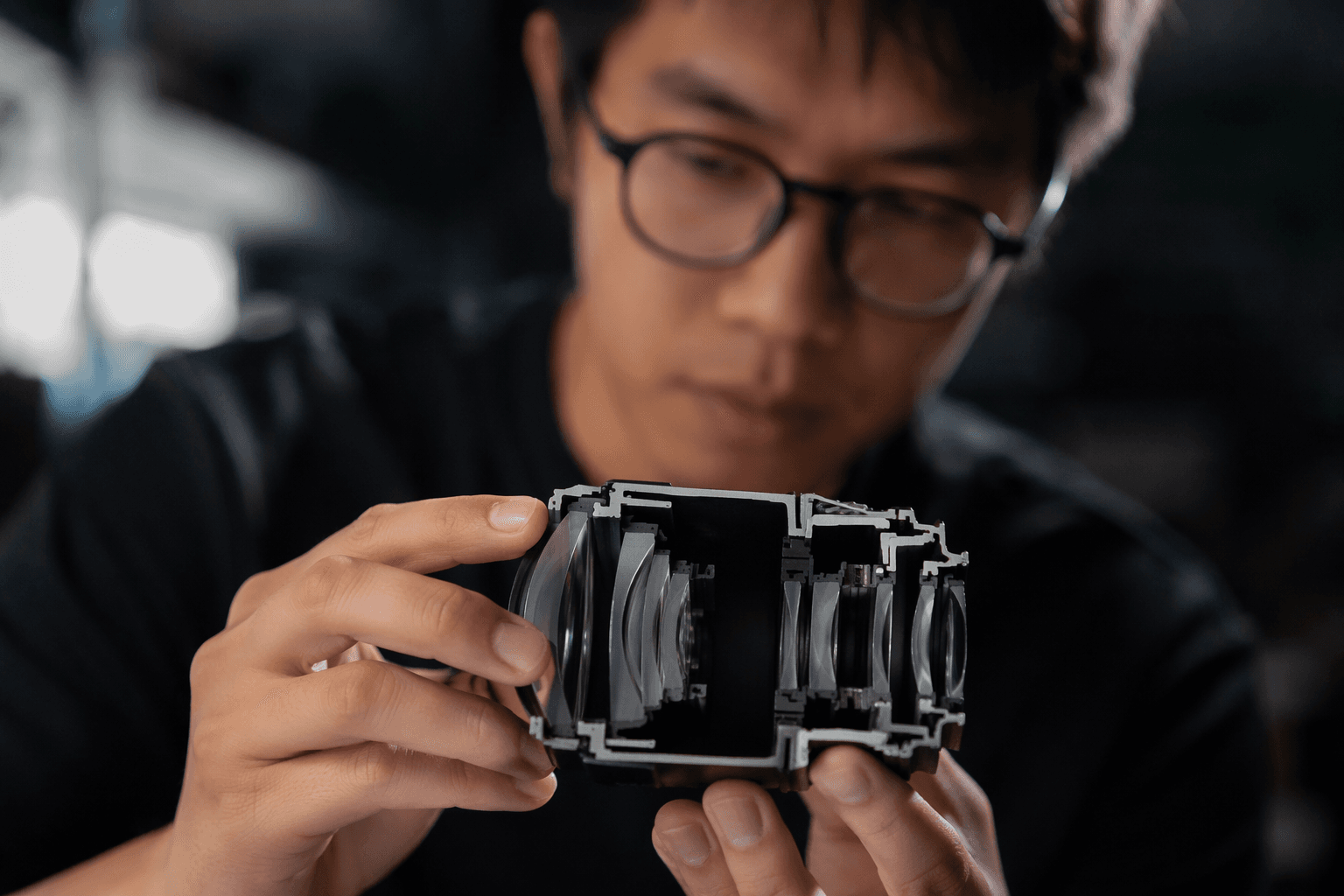
That is the practical lesson hidden inside the spectacle. Sharpness is not just a center-frame question. Coverage is not just about whether an image appears at all. It is about how much of the sensor sits inside the usable part of the image circle, how evenly the light is distributed, and how much the optical design can tolerate before the picture collapses into blur, vignetting, or both. The stunt turns those ideas into something you can see instead of something you have to infer from a technical diagram.
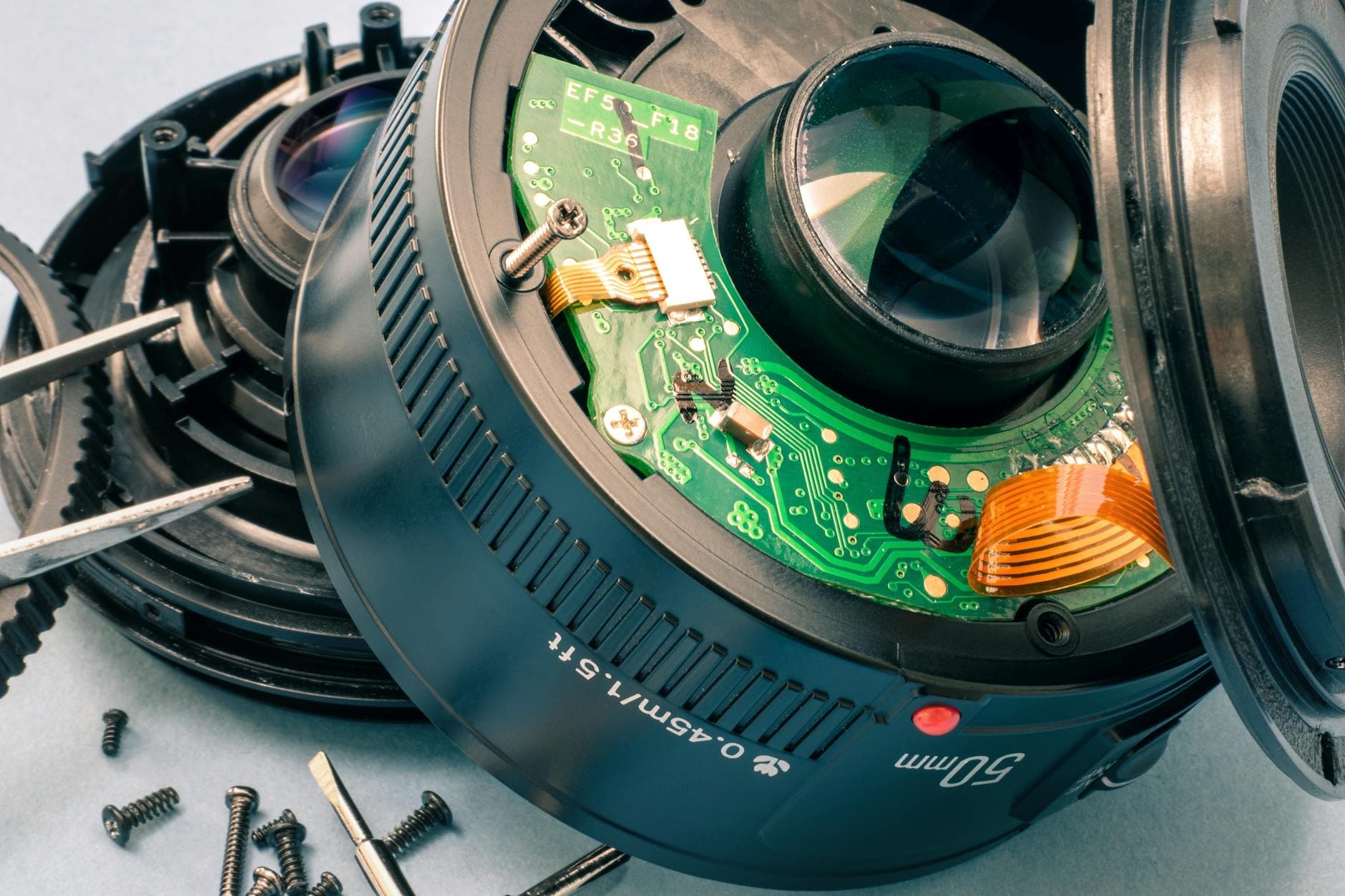
It also explains why lens teardown videos and cutaway diagrams are so sticky with photographers. They connect the abstract language of optics to the reality of what lands on the sensor. In one glance, you can see why aperture placement matters, why glass groups are arranged the way they are, and why a premium optic is more than just a bright aperture number on the front barrel.
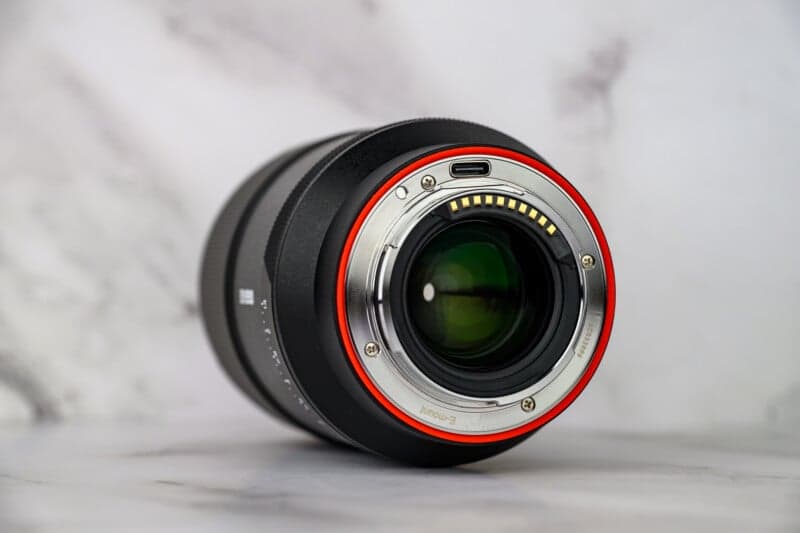
Why Viltrox chose the AF 35mm f/1.2 LAB FE
The lens Viltrox used is not some disposable novelty. The company identified it as the AF 35mm f/1.2 LAB FE, a flagship full-frame autofocus prime for Sony E-mount cameras. That choice makes the stunt even sharper, because the lens itself is a serious piece of engineering: Viltrox says it uses a 15-element, 10-group design with 5 ED elements, 3 high-refractive-index elements, and 2 UA elements, along with a HyperVCM autofocus motor and a 77mm filter thread.
Independent listings put the lens at roughly 920 g and about 89 x 122 mm, which underlines how substantial it is. This is not a tiny pancake lens being used for a throwaway gag. It is a large, premium optic being turned into a teaching tool, and that contrast is part of why the video feels so memorable.
The optical design details matter here because the cutaway is not just showing “glass.” It is showing how a modern fast prime is built to manage aberrations, control focus behavior, and deliver a wide aperture without collapsing into mush. The half-lens demo makes the engineering legible. Even with part of the barrel missing, you can still see that a lens is a system of compromises, not a single magical tube.
How this fits Viltrox’s broader lens strategy
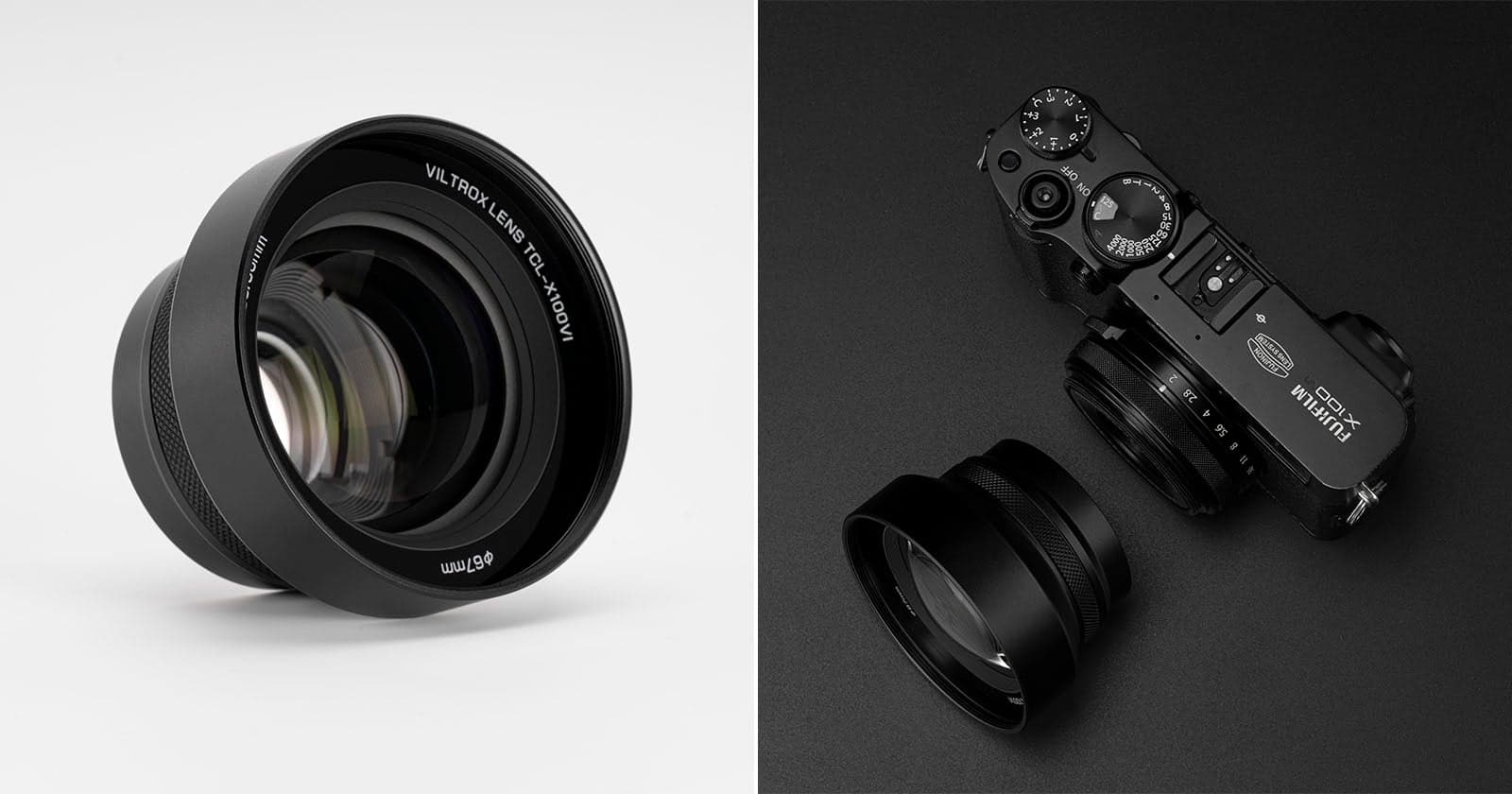
The stunt also lands inside a much larger brand story. Viltrox has been expanding its lens lineup across Sony E, Nikon Z, and Fujifilm X systems, and the official store now places the LAB series alongside other families such as Pro, EVO, Air, Raze, and EPIC. That suggests a company that is not only building lenses, but also trying to segment its lineup in a way photographers can actually follow.
The AF 35mm f/1.2 LAB is especially important in that lineup because it is one of the company’s flagship full-frame autofocus primes. Fstoppers reported in April 2025 that it was the second full-frame autofocus lens in the LAB line, following the 135mm LAB released in 2024. That makes the half-lens video more than a one-off stunt. It is a way to spotlight a prestige product inside a flagship family that Viltrox is clearly still growing.
There is also a system-compatibility angle worth noticing. Photography Blog noted in January 2026 that the Viltrox AF 35mm f/1.2 LAB is usable on Nikon Z full-frame mirrorless cameras, and on APS-C bodies it behaves like a 52.5mm equivalent. That helps explain why a 35mm lens can keep showing up in conversations across different camera mounts. It is a moderate wide-angle on full frame, but it becomes a more normal perspective on APS-C, which broadens the audience for a lens like this.
Why this kind of social demo works now
The half-lens clip also says something important about how camera brands communicate in 2026. Social media is no longer just an announcement channel. It is part of the product demo itself. A strange visual can explain engineering, build buzz, and make photographers stop scrolling long enough to think about focal length, aperture, and image circle in the same breath.
That is a smart fit for Viltrox, which says it began developing and manufacturing camera accessories in 2009 under Shenzhen Jueying Technology Co., Ltd. The company’s YouTube and store presence show a broader content strategy, and the cutaway lens video feels like a natural extension of that approach. Instead of leading with dry specification sheets, Viltrox turns the optics into the story.
The reason the clip sticks is simple: it answers a photographer’s nagging question with a visual punch. What breaks when the lens is half gone? Quite a lot. What still works? More than you might expect. And what does that prove? That image formation is not magic at all, but a carefully engineered projection, one that Viltrox has turned inside out so you can finally see it happen.
This article was produced by Prism’s automated news system from verified source data, official records, and press releases, then run through automated quality and moderation checks before publishing. The system is built and supervised by the people who set the standards it runs under. Read our full AI policy.
Did this article answer your question?