Viral Pikachu police image in Turkey was AI-generated, not a photo
A Pikachu costume fleeing Turkish police drew millions of views, but the giveaway was AI mush: garbled POLIS text, a floating body, and a fake still built from a real protest.
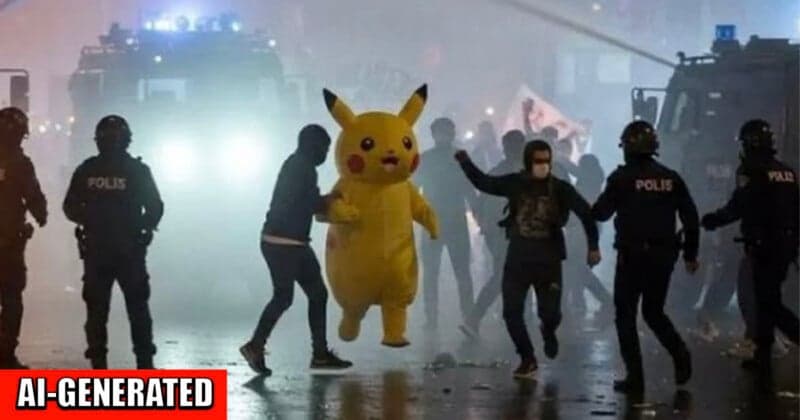
A Pikachu in a police chase looked like the kind of frame that can blow up overnight, and it did, pulling in millions of views and more than 200,000 likes on Instagram. The problem was simple: it was not a photograph. The image, shared by the account History Reported, was an AI-generated still built around a real protest scene in Turkey, which is exactly why it spread so fast and fooled so many people.
The first thing to check in a case like this is the stuff that should be boring. Here, it was not. The lettering on police jackets and vehicles came out mangled, with distorted versions of POLIS showing up in the frame, and one version of the police van carried a misspelled Tolis label. Pikachu also looked wrong in a way photographers notice immediately once they slow down and examine the frame: the costume-wearer seemed to hover above the ground instead of planting weight into the pavement. Those are classic synthetic-image tells, not the sort of artifacts you expect from a real long lens grab in a chaotic street scene.
The underlying event was real. The protest footage came from Antalya, not from the AI image itself, and it was tied to the March 19, 2025 arrest of Istanbul Mayor Ekrem İmamoğlu on corruption-related allegations. Full Fact said the crackdown had led to nearly 2,000 reported arrests by that weekend, while AFP described the unrest as Turkey’s worst in years. The real Pikachu footage was shot by photojournalist Ismail Koçeroğlu at Akdeniz University, and multiple videos of the actual protester circulated from different angles, making the contrast with the fabricated still even clearer.
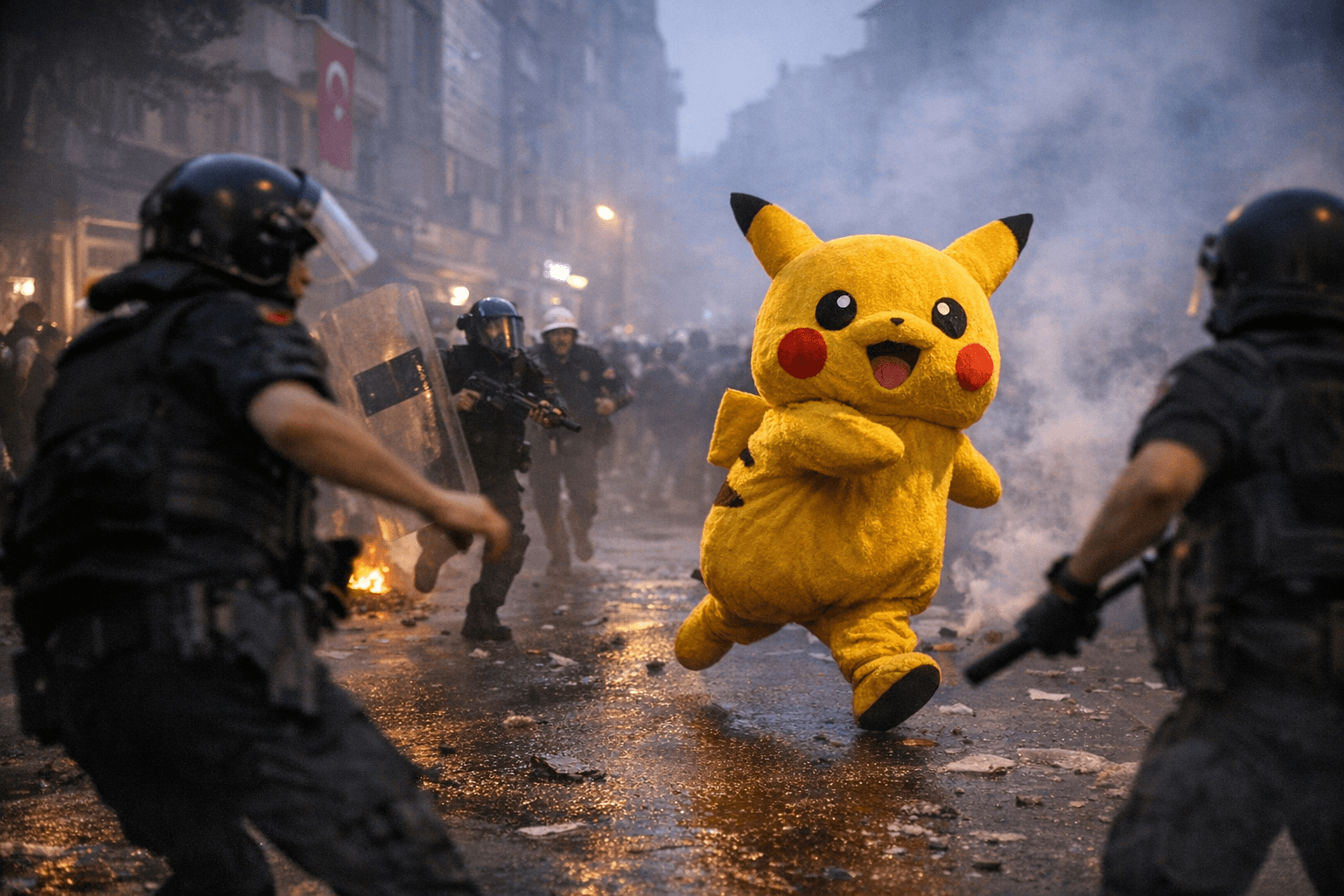
That real protester was identified as Hasan Taskan, a Turkish fitness influencer who said he was not interested in politics and had joined to give people a laugh. The AI fake, meanwhile, traveled far beyond one post, circulating in English, Spanish, Indonesian, Greek and Thai-language versions, with one Thai-language TikTok post appearing on March 28, 2025. GetReal Labs said all three of its detection models flagged the image as synthetic, and its warning fits the bigger lesson for photographers: when a viral image arrives wrapped around a real event, you cannot trust the still just because the story underneath happened. Check the text, check the physics, check the provenance, and assume the meme may be the lie.
Know something we missed? Have a correction or additional information?
Submit a Tip