Washington Post photographer wins Pulitzer for family's cancer photo essay
Jahi Chikwendu turned one Utah family’s birth-and-death timeline into a Pulitzer-winning photo essay, with images built on patience, restraint, and trust.
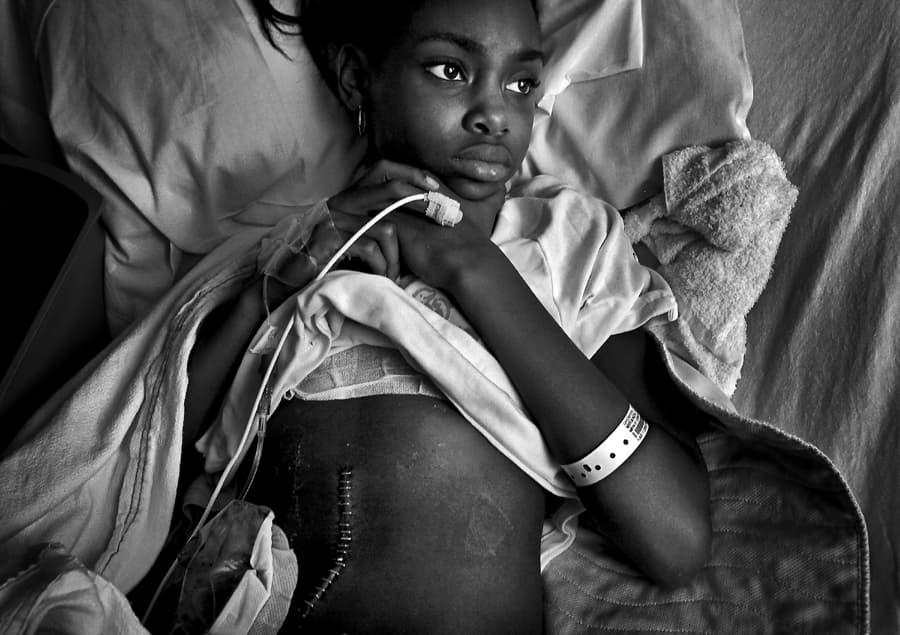
Jahi Chikwendu won the 2026 Pulitzer Prize in Feature Photography for a yearlong portrait of Tanner and Shay Martin, a young family in American Fork, Utah, whose first child arrived while Tanner Martin was dying of stage 4 colon cancer. The Pulitzer Board called it a “heart-wrenching and achingly beautiful photo essay,” and the prize carried a $15,000 award when it was announced on May 4, 2026.
What makes the work land is not just the subject matter, but the way Chikwendu stayed close without turning the story into spectacle. The sequence follows a family moving through pregnancy, terminal illness, birth, and loss. Shay Martin was pregnant during the project, their daughter was born on May 17, 2025, and Tanner Martin died on June 25, 2025. That timeline gives the photographs their force: the pictures are not abstract images of illness, but a record of ordinary family life under impossible pressure.
For photographers, the lesson is in the mechanics. Proximity matters, but so does restraint. Chikwendu did not need grand gestures or heavy-handed symbolism because the story already carried its own weight. The strongest documentary work often comes from letting small moments do the talking: a gesture, a glance, a hospital-room silence, a baby entering a room where grief is already present. In a case like this, the edit has to hold emotional tension without squeezing every frame for sentiment.
The Washington Post had already highlighted the Martin family story on its site in June and July 2025, which shows how the project developed as a sustained narrative rather than a single assignment. That kind of sequence-building is where documentary photography earns trust. A one-off image can shock. A carefully paced body of work can make readers sit with what they are seeing.
Chikwendu has been a Washington Post photojournalist since 2001, with coverage that has ranged from Iraq and Darfur to South Lebanon and South Sudan. That background shows in the control here. He knows how to work in difficult situations without losing the human center of the frame, and that discipline is what separates a moving picture from a manipulative one.
The Post also won the 2026 Pulitzer Prize for Public Service, while the Feature Photography field included a finalist from the San Francisco Chronicle on the fentanyl crisis in America. The category has existed since 1968, but this win feels especially current because it rewards something many photographers chase and few achieve: intimate access, clear sequencing, and the ethics to let a family’s hardest year speak for itself.
This article was produced by Prism’s automated news system from verified source data, official records, and press releases, then run through automated quality and moderation checks before publishing. The system is built and supervised by the people who set the standards it runs under. Read our full AI policy.
Did this article answer your question?