Why lens filter quality still matters for sharper photos
A bad filter can undo a sharp lens fast. The smart money in 2026 goes to the filter that solves a real shooting problem without adding flare, cast, or softness.
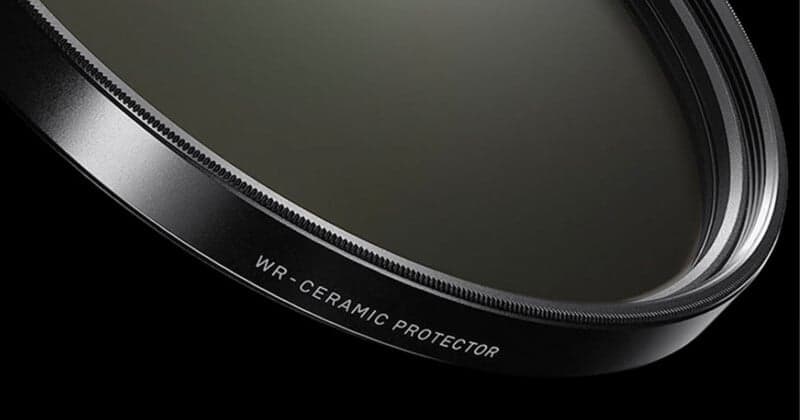
A cheap filter can flatten an expensive lens faster than most shooters expect. The difference is not subtle: poor glass and coatings can add flare, cut contrast, create color casts, and even make the front threads bind, which means the accessory you bought for convenience ends up degrading the file.
Why filter quality still matters
PetaPixel’s May 6 guide lands on a simple truth: a filter is not just a piece of add-on glass, it is part of the optical chain. That matters because the filter can be genuinely useful or completely pointless depending on the quality of the glass, coatings, frame, and intended use. The core buying lesson for 2026 is straightforward: if the filter is not good enough, it will not disappear from the image, it will become the image problem.
That is why the debate around filters still has real bite even in the age of AI editing and better lens coatings. Some fixes are faster and cleaner at capture than they are in post, and some failures, especially flare, veiling glare, and ugly color shifts, are easiest to avoid before the sensor ever sees them. The right filter protects the shot; the wrong one chips away at it.
Landscape: where ND and CPL still earn their keep
Landscape shooters are the clearest case for paying up. Neutral-density filters let you cut light so you can stretch exposures or keep wider apertures in bright conditions, which is exactly why they remain a staple for motion blur in water, streaked clouds, and other long-exposure looks. B&H frames the job plainly: an ND reduces the light making it to the camera, opening the door to longer exposures or wider apertures when the sun is still high.
Polarizers are the other workhorse. B&H and LEE both note that circular polarizers are strongest at about a 90-degree angle from the sun, where they can reduce reflections and deepen blue skies, especially on water, foliage, and wet stone. That is the kind of effect that looks dramatic on a backlit ridge or a forest trail, but only if the filter glass is good enough not to soften the frame or add an obvious cast.
For this use case, cheap filters are where the harm shows immediately. Landscape files punish bad coatings because flare and lowered contrast wash out the very textures that make the scene worth shooting. If the filter dims the scene without preserving detail, you lose the point of using it.
Video and long exposure: control at capture, not rescue in post
Video adds another reason to care: exposure and motion rendering need to stay controlled from shot to shot. A solid ND filter lets you hold a workable aperture and shutter choice in daylight instead of chasing compromises that can make footage look harsh or uneven. In that sense, the filter is less of a luxury and more of a practical exposure tool.
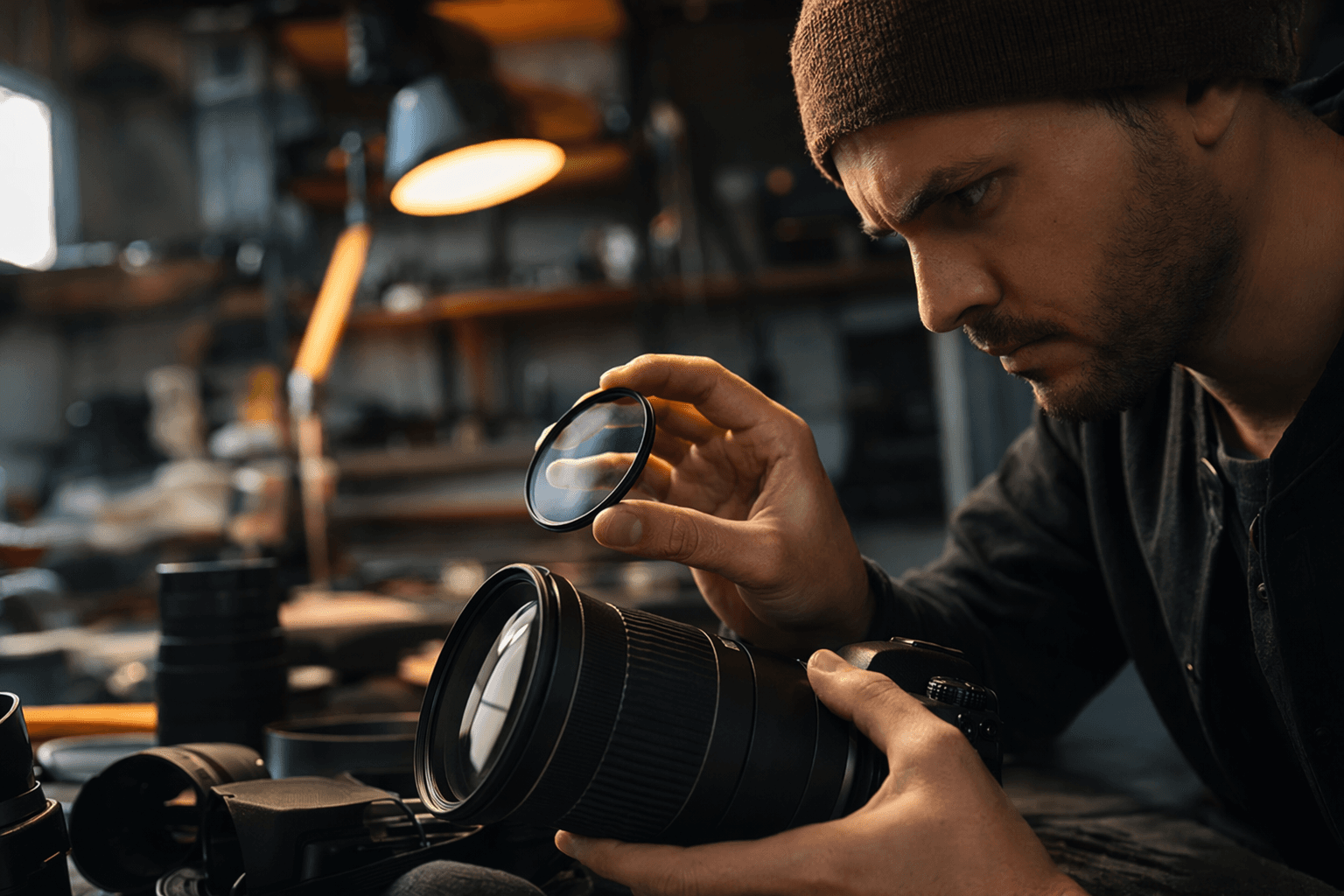
Long exposure work also exposes cheap gear quickly. If the frame is poorly made, the filter can bind on the lens threads, which turns a field adjustment into a headache at the worst moment. If the coatings are weak, the extra glass can create ghosting around bright highlights and turn the clean blur you wanted into a smeared, low-contrast frame.
This is where modular systems start to make sense. Freewell’s M2 5-Pack is built around ND8, ND64, ND1000, CPL, and UV filters, and the company says the system supports swapping in about one second. For shooters moving between daylight video, motion blur, and reflection control, that speed matters almost as much as the optics.
Protection and travel: convenience only works if the glass is strong enough
Protection filters remain one of the most polarizing purchases in the bag. PetaPixel has previously pointed out that UV filters are a constant argument in photography because many shooters buy them for front-element protection, even though manufacturers primarily frame them as optical filters. That tension has not gone away, and it is exactly why quality matters: if you are going to keep glass on the front of the lens, it has to earn its place.
For travel, the case for a good protection or UV filter is mostly about keeping the lens ready to shoot without worry. But a cheap protector that adds flare, cuts contrast, or introduces a color cast is a bad trade, because it degrades every frame just to avoid a problem that may never happen. A better filter keeps the front element safer without becoming visible in the image.
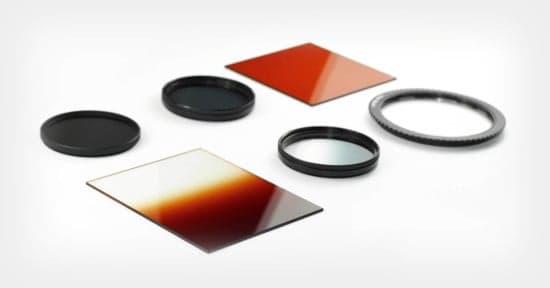
Freewell’s M2 system shows how the market is responding to that workflow pressure. The kit comes in 67mm, 77mm, and 82mm sizes, uses a strong magnetic hold, and is marketed with premium German optics and scratch-resistant construction. That combination is especially appealing when you are moving through airports, trails, or city streets and do not want to thread filters on and off all day.
Black-and-white film: tonal separation starts before the scan
Black-and-white film is another place where filter quality still matters, even if the shooting style feels old-school. Once color is stripped away, the filter’s effect on skies, foliage, and reflected light becomes a tonal decision, not just a color one. A good polarizer can help separate clouds from sky and foliage from shadow in a way that gives the frame more structure before it ever reaches the darkroom or scanner.
That makes color fidelity and contrast handling especially important. If the filter adds haze, uneven density, or a color shift that later complicates scanning and interpretation, the frame loses the clean tonal control black-and-white work depends on. In monochrome, you are not paying for the look of the glass, you are paying for the discipline of the tones.
Why the smart buy is the filter system, not just the filter type
The larger shift in 2026 is that photographers are buying systems as much as they are buying individual filters. The Freewell M2 5-Pack is a good example because it bundles the basics, ND8, ND64, ND1000, CPL, and UV, into a quick-swap setup that is meant to live in the field rather than the cabinet. That is the right idea for anyone who changes conditions often and wants fewer interruptions between seeing the shot and taking it.
The buying rule is simple: pay for filters when they solve an actual shooting problem, and pay more when the filter sits directly in the image path for landscapes, video, long exposure, protection, travel, or black-and-white work. The sharpest lens in the bag still depends on what sits in front of it, and in 2026 that is exactly where the bargain-bin compromise shows first.
This article was produced by Prism’s automated news system from verified source data, official records, and press releases, then run through automated quality and moderation checks before publishing. The system is built and supervised by the people who set the standards it runs under. Read our full AI policy.
Did this article answer your question?