World Backup Day Deals Cut Prices on SD and CFexpress Memory Cards
B&H's World Backup Day sale cuts up to $450 off cards from SanDisk, Lexar, and ProGrade — CFexpress Type A drops from $1,450 to $1,000, but deals expire today.
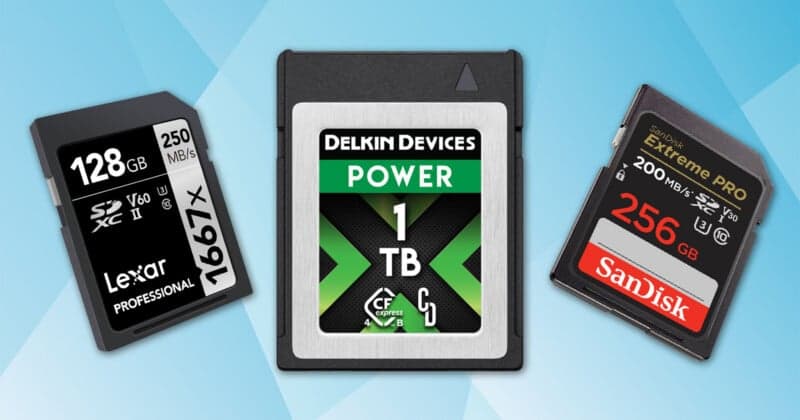
Memory card prices have crept up steadily over the past year, which makes the timing of B&H Photo's World Backup Day sale particularly useful. Timed to coincide with the annual March 31 reminder to protect your data, the sale spans SD, microSD, and CFexpress cards from SanDisk, Lexar, ProGrade, Delkin Devices, Samsung, and PNY, with discounts deep enough to justify refreshing your kit before the spring and summer shooting seasons hit.
The headline cut is on a CFexpress Type A card that dropped from $1,450 down to $1,000, a $450 reduction on a format that's become standard for shooters running high-bitrate 4K and 8K video. Also notable: the Lexar 128GB Professional 1667x UHS-II SDXC two-pack fell from $425 to $320, which represents solid value for anyone who runs dual-card bodies and wants matched write performance across both slots. A separate card originally priced at $500 dropped to $380, and another listed at $460 came down to $355 with a $105 coupon applied at checkout. Deals expire today, March 31, or while quantities last.
On the selection side, the practical breakdown is straightforward: CFexpress Type B or UHS-II SD cards rated V90 are the right call for continuous burst shooting and professional video workflows, where sustained write speed matters far more than the peak sequential figure printed on the packaging. A card with a strong V90 rating handles the unrelenting stream of large RAW files that a modern high-resolution sensor generates mid-burst. V60 cards occupy a solid middle ground for hybrid shooters who mix stills and 4K video. For travel, backup duties, or timelapse rigs where write speed is less critical, a high-capacity UHS-I card keeps costs down without compromising reliability.
The advice on backup workflow is worth taking as seriously as the gear itself. The 3-2-1 rule, three copies of your files across two different media types with one copy stored offsite, remains the baseline standard, and it applies whether you're a weekend shooter or working a full commercial season. Beyond raw redundancy, hash-verified copy tools catch silent data corruption that a basic drag-and-drop transfer will miss entirely. Rotating cards and actually running test recoveries periodically matters too; a card you've never tried to restore from is an unknown quantity. And before you format a card in the field, confirm that at least one redundant copy of the files exists.
With sensor resolutions pushing into the 60-megapixel range and video capture defaulting to 6K on prosumer bodies, the math on storage has changed. A single session now generates files that would have filled an entire card from five years ago. Getting the right media at a lower price point, and pairing it with a disciplined backup habit, is still the most cost-effective insurance available to any working photographer.
This article was produced by Prism’s automated news system from verified source data, official records, and press releases, then run through automated quality and moderation checks before publishing. The system is built and supervised by the people who set the standards it runs under. Read our full AI policy.
Did this article answer your question?