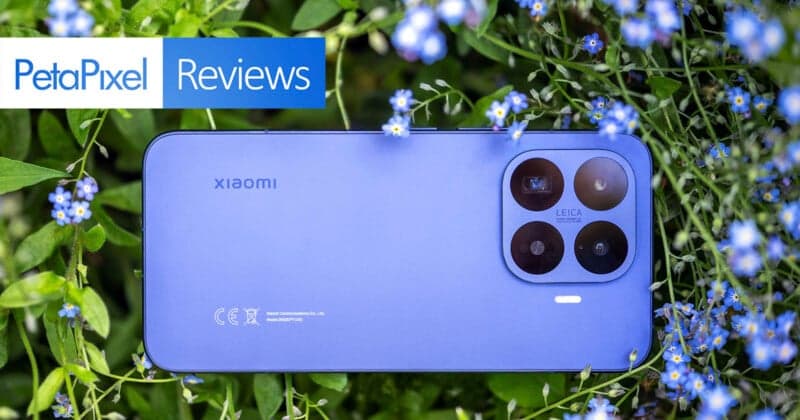
Xiaomi 17T Pro review shows why phones can replace mirrorless cameras
Xiaomi’s 17T Pro lands in the sweet spot where a phone can replace a travel camera for many shoots, but not every one. Its Leica-tuned zoom, battery life, and speed make the decision surprisingly easy.
The travel-camera test
The clearest sign that a phone has crossed into serious camera territory is not a spec sheet number. It is whether a photographer leaves the mirrorless body in the bag and never misses it. That is exactly the standard Kate Garibaldi set after testing the Xiaomi 17T and 17T Pro in Vienna, Austria, where she said she never once reached for a mirrorless camera during the trip.
That matters because the 17T Pro is not being positioned as a gimmick with a good main camera. Xiaomi is pitching it as a practical, more affordable imaging tool that can handle travel, sightseeing, street scenes, and everyday shooting without the drag of a larger kit. For readers weighing convenience against image quality, that is the real question: when does a mid-priced phone become good enough to carry alone, and when does a dedicated camera still win?
Why the Leica connection matters
Xiaomi has leaned hard into Leica’s influence on this generation of the T series. The company says its partnership with Leica Camera began in 2022, and Xiaomi Global frames the relationship as a strategic imaging alliance built around human-centered innovation and mobile photography. The branding is not just decorative. Leica-inspired optics, Leica-branded image processing, and shooting modes aimed at photographers all push the 17T Pro toward a more deliberate, less toy-like shooting experience.
The historical angle is part of the pitch too. Xiaomi’s global cooperation material references Leica’s role in inventing the first 35mm camera in 1925, which helps explain why this partnership is used to signal photographic credibility. In practice, that means Xiaomi wants the 17T Pro to feel like a phone built with camera users in mind, not just a slab that happens to take sharp pictures.
The camera hardware that does the work
The 17T Pro’s rear setup is built around a 50-megapixel main camera, a 50-megapixel Leica 5x telephoto camera, and a 12-megapixel ultra-wide camera. Xiaomi’s own product pages add more detail: the main camera uses a 1/1.31-inch Light Fusion 950 sensor, the telephoto is a 115mm periscope lens with f/3.0 aperture and OIS, and the ultra-wide is a 15mm f/2.2 camera with a 120-degree field of view.
That 115mm-equivalent telephoto is the part that changes the travel equation. It is the sort of focal length that lets you isolate a cathedral detail, compress a city skyline, or pick out a subject across a square without making the camera feel awkward or slow. For everyday shooting, the combination of a strong main camera and a real telephoto makes the phone far more versatile than the average mid-range handset that relies on digital cropping and hope.
Xiaomi’s launch materials also say both the 17T and 17T Pro share the new Leica 5x telephoto camera and Leica Live Moment, with 120x AI Ultra Zoom available across the line. The Pro adds 4K/120fps and 8K/30fps video, which gives it a more serious hybrid creator angle than the standard model.
Where the 17T Pro shines in the real world
Garibaldi’s Vienna experience points to the exact scenarios where a phone starts to beat a mirrorless setup on practicality. When the camera is always in your pocket, it is there for a sudden street portrait, a bakery window, a tram reflection, or a dimly lit dinner scene. Xiaomi is clearly betting that that immediate availability is worth more than chasing the last bit of image purity from a larger body and lens.
The review emphasizes low-light performance, telephoto reach, battery life, and overall usability, which is the right order of priorities for a travel camera replacement. A phone that nails only daylight shots is useful. A phone that stays usable after sunset, reaches far enough for candid framing, and does not die midway through a day of wandering city streets is the one that changes habits.
The 17T Pro also brings premium-phone endurance into the equation. Xiaomi says it has a 7000mAh silicon-carbon battery, 100W wired HyperCharge, 50W wireless HyperCharge, a 6.83-inch 144Hz display, and a MediaTek Dimensity 9500 chipset. That package matters because a camera-first phone has to be fast, responsive, and reliable as an all-day device, not just impressive when the shutter opens.
Where it still loses to a mirrorless camera
A mirrorless kit still has the edge when absolute control, larger sensors, and lens choice matter more than portability. The 17T Pro may narrow the gap for travel, social content, and everyday shooting, but it does not erase the physical limits of a phone-sized camera system. If you need deeper subject separation, specialist glass, or a system built for long, demanding sessions, the dedicated camera remains the better tool.
That is why the 17T Pro should be read as a threshold product, not a universal replacement. It is good enough to make many photographers rethink what they pack for a weekend trip. It is not so complete that larger cameras become obsolete. The value is in how many situations it covers before you feel the need to unpack more gear.
The price question
Xiaomi’s positioning makes sense because the 17T series aims to push serious imaging features below flagship pricing. PetaPixel’s launch coverage said the 17T Pro starts at €899, while the standard 17T starts at €749. That puts the Pro in a bracket where buyers are no longer comparing it only with other phones, but with the idea of carrying a compact camera or a smaller interchangeable-lens setup.
That comparison is where the 17T Pro becomes interesting. A phone has to earn its place as a camera by saving space, saving time, and still delivering files you are happy to keep. Xiaomi is clearly trying to make that decision easier by pairing Leica tuning with a 50MP main camera, a genuine 115mm telephoto, strong battery life, and fast charging that keeps the whole package ready for a full day of shooting.
PetaPixel also noted that Xiaomi covered travel accommodations for the hands-on review but did not pay for coverage and had no advance access, which gives the assessment added weight. Taken together, the 17T Pro looks less like a flashy smartphone with camera branding and more like the point where a mid-priced phone can honestly stand in for a mirrorless body on many trips. For anyone who measures a camera by how often it gets used instead of how often it is carried, that is the real breakthrough.
This article was produced by Prism’s automated news system from verified source data, official records, and press releases, then run through automated quality and moderation checks before publishing. The system is built and supervised by the people who set the standards it runs under. Read our full AI policy.
Did this article answer your question?