Young photographer wins wildlife award with Nikon D500 shot
Jack Crockford beat flashier gear with a Nikon D500, freezing a Eurasian hobby mid-strike at Staines Moor. The frame shows timing still outruns specs.
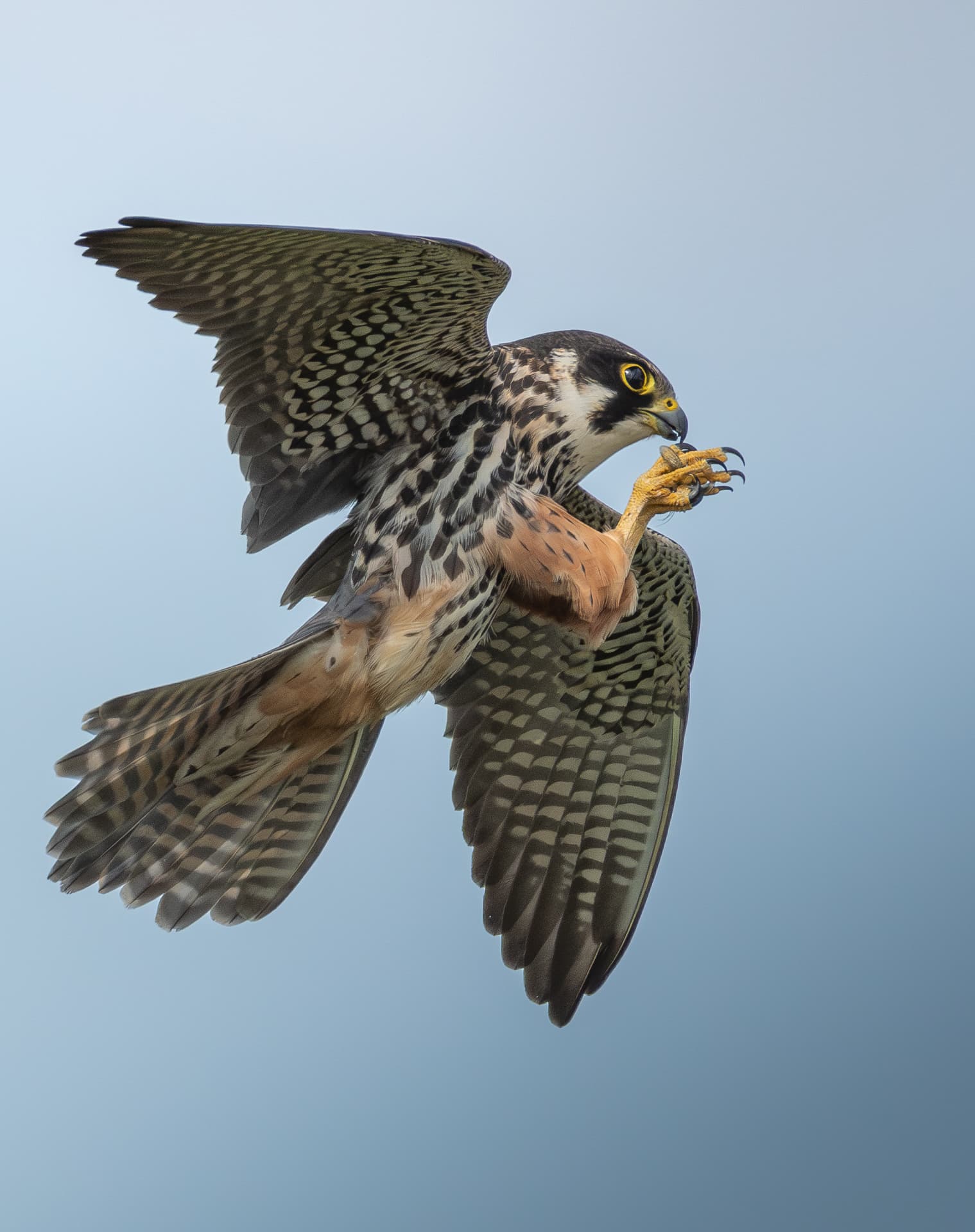
Jack Crockford’s winning wildlife frame is a clean reminder that newer gear does not automatically make a better bird photograph. The 15-year-old won the 12-14 Years category at the British Wildlife Photography Awards 2026 with a Nikon D500 DSLR image that caught a Eurasian hobby snatching prey in mid-air, a split-second strike that depends on reading behavior as much as pressing the shutter.
The shot was made at Staines Moor, England, and it is the kind of image wildlife photographers spend years trying to nail. The bird locks onto its target, reaches with its talons, and closes in a blur of speed and precision. Crockford froze that instant with settings of 1/6400 sec, f/8, and ISO 800, a combination that shows how much the picture relied on tracking, anticipation, and patience in the field.

What makes the result stand out even more is the camera behind it. Crockford used a Nikon D500 paired with a Nikon AF-S 200-500mm f/5.6E ED VR lens, not one of the latest AI-driven mirrorless flagships that dominate the gear conversation. In other words, the award did not come from chasing the newest body on the shelf. It came from knowing where to stand, understanding how the Eurasian hobby moves, and waiting for the bird to commit to the kill.
The species itself adds to the drama. The Eurasian hobby, Falco subbuteo, is a small but exceptionally agile bird of prey known for catching insects in mid-air and for attacking with remarkable speed and precision. Capturing that behavior cleanly is never routine, which is why a frame like Crockford’s carries so much weight in a competition filled with strong wildlife work across multiple age categories.
Crockford’s success also reinforces a point many photographers already know but still need to be reminded of: technique can outrun specs. A decade-old DSLR, in practiced hands, can still produce award-level wildlife work when the photographer understands light, timing, and animal behavior. That is the real story behind the Nikon D500 shot, and it is exactly why the image landed so hard.
This article was produced by Prism’s automated news system from verified source data, official records, and press releases, then run through automated quality and moderation checks before publishing. The system is built and supervised by the people who set the standards it runs under. Read our full AI policy.
Did this article answer your question?