Zeiss still makes six DSLR lenses as mirrorless push grows
Zeiss kept six Nikon F-mount Milvus primes alive while mirrorless took over, a rare sign that premium DSLR glass still has buyers.
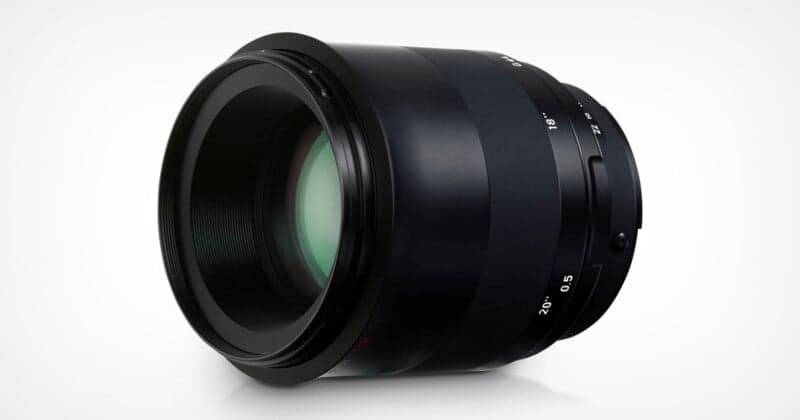
Zeiss is still making six DSLR lenses even as its mirrorless lineup expands, and that stubborn holdout says more about the used-lens market than any launch slide. The remaining models are all Milvus primes for Nikon F mount, a family Zeiss says is popular enough to justify continued production even after the industry’s long retreat from DSLR systems.
That matters because Zeiss has been leaning hard into the future. In February, the company announced the Otus ML 1.4/35 for Sony E, Canon RF and Nikon Z, building on the Otus ML 1.4/50 and 1.4/85. By June, the DSLR-era Otus lenses were gone, including the 28mm f/1.4, 55mm f/1.4, 85mm f/1.4 and 100mm f/1.4. Against that backdrop, the surviving Milvus F-mount line looks less like a broad commitment to DSLRs and more like a carefully defended exception.

The Milvus story goes back to September 2015, when Zeiss introduced it as a six-lens family for Canon EF and Nikon F DSLR cameras. Zeiss framed the line around modern high-resolution bodies, pointing to higher pixel counts and even 6K video as the reason these manual-focus lenses existed at all. Today, Zeiss still describes Milvus, Otus and Classic SLR lenses as precision manual-focus optics for high-resolution DSLR cameras, with Milvus models spanning focal lengths from 15mm to 135mm depending on the version.
For photographers still invested in F-mount or EF-mount gear, the signal is practical as much as sentimental. Continued production supports resale confidence, because a lens that is still being built is usually easier to justify buying, holding and servicing than one that has already been written off by its maker. It also suggests that image character, build quality and Zeiss’s reputation still carry enough weight to keep a niche alive, even in a market where most premium development money has moved to mirrorless.
That does not mean Zeiss is splitting its attention evenly. The company is clearly reallocating toward current mounts and current bodies, and some of the surviving Milvus lenses were already discounted at B&H, while the 35mm f/1.4 and 135mm f/2 were not listed there. But the bigger takeaway is that legacy DSLR glass has not vanished into museum status yet. In a market that keeps announcing the end of old systems, Zeiss is still finding buyers who want the old mount, the manual focus, and the optical reputation to keep them worth making.
This article was produced by Prism’s automated news system from verified source data, official records, and press releases, then run through automated quality and moderation checks before publishing. The system is built and supervised by the people who set the standards it runs under. Read our full AI policy.
Did this article answer your question?