Pickleball Backhands Made Simple, shoulder turn unlocks control and confidence
A fuller shoulder turn can turn the backhand from a panic shot into the skill that pays off in every clinic and round-robin.
The fastest way to get more out of a pickleball retreat is to stop treating the backhand like a rescue shot. The Dink’s backhand guide makes the case plainly: players often make the shot harder than it needs to be by running around it, arming the ball, and slowing the swing out of fear, even though the stroke can become reliable once the mechanics are understood.
Why the backhand decides how much you get from a retreat
Universal Rackets breaks the backhand into three core actions, the drive, the drop, and the dink, and that matters because it shows the backhand is not one isolated problem. It is a family of related skills that show up all over the court, especially when a retreat starts moving from drills into live points. If the weaker side is shaky, you spend more time protecting it than learning from the session.
USA Pickleball’s own teaching reinforces that point. Every shot in pickleball, including dinks, drops, drives, volleys, and overheads, is either a forehand or a backhand, so improving this side of the game lifts far more than one rally pattern. The backhand is not just for survival. It is part of the foundation that lets you stay in points longer, cover more court, and feel less rushed when the ball comes hard to your body.
The shoulder turn is the real unlock
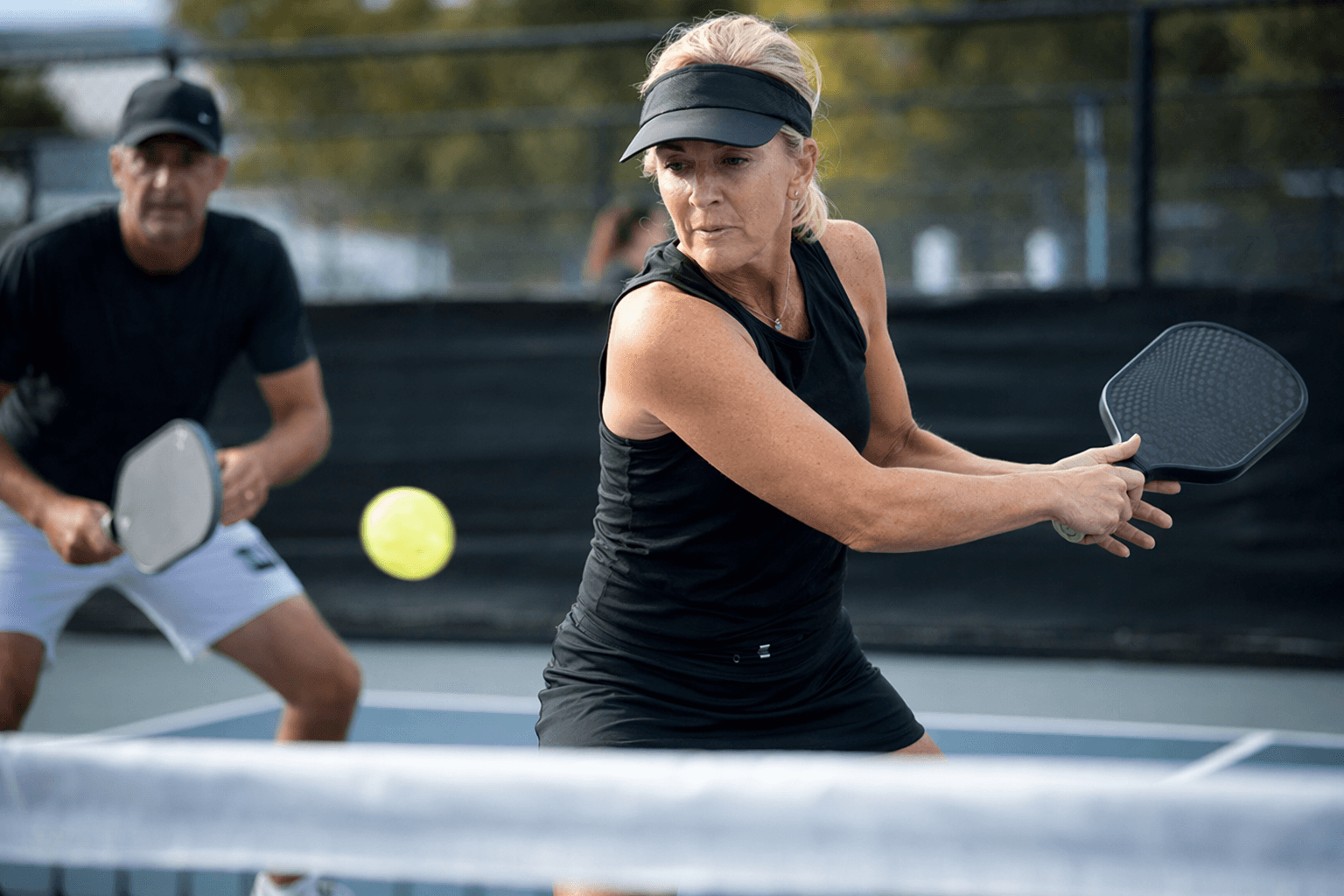
The clearest technical message in the guide is also the simplest to remember: turn your shoulders fully before you swing. Body rotation, not arm strength alone, is what gives the backhand stability and repeatability, and that is the difference between a shot you hope to survive and a shot you can actually control.
That is why so many backhands break down under pressure. Fear makes players shorten the swing, lose balance, and pop the ball up, which only confirms the bad habit the next time the ball comes to the backhand side. The fix is not to muscle through it. The fix is to commit to the turn, let the body lead, and swing with enough shape that the shot has structure instead of panic.
That same idea carries straight to the kitchen line. USA Pickleball says the backhand punch volley is especially effective for redirecting pace, absorbing power, and countering hard drives and speedups at the kitchen line. In other words, a clean shoulder turn does not just help from the baseline or midcourt. It helps in the fastest exchanges too, where retreats often expose whether a player trusts the backhand or simply braces for impact.
Practice this before you go
1. Shadow the shoulder turn until it feels automatic
Before a retreat, rehearse the turn without a ball. Set your stance, rotate the shoulders fully, and freeze for a second so your body learns the sequence: turn first, then swing. Ten clean repetitions a day can make the motion feel less like a correction and more like a habit when you step into a clinic.
2. Hit the backhand in three forms, not just one
The Dink’s structure is useful because it keeps the backhand tied to the drive, the drop, and the dink. Work each one with the same shoulder-turn cue so you are not learning three different swings, just three different speeds and trajectories from the same foundation. That approach makes the shot feel more complete and less like a specialty move reserved for the best players on court.
3. Finish at the kitchen line
A retreat session will eventually test you in fast hands battles, so end practice with backhand punch volleys. Focus on redirecting pace, absorbing the incoming ball, and sending it back without over-swinging. When that contact point feels stable, you will show up to the retreat ready for the exact kind of speedups and hard drives that usually expose a shaky backhand.
Why this matters now across pickleball
The scale of the sport explains why small technical gains keep paying off. The Sports & Fitness Industry Association estimates that 24.3 million Americans played pickleball in 2025, up 22.8 percent from 2024 and 171.8 percent over three years. That growth has pushed the game into more parks, more clubs, and more retreat schedules, which means more players are showing up with the same basic weak-side hesitation and the same opportunity to fix it.
USA Pickleball’s annual growth report shows how quickly the sport has spread, with the Pickleheads database adding more than 2,300 new locations in 2025, bringing the total to 18,258 nationwide, and listing 82,613 known courts. The governing body’s history also shows how far the sport has matured, from its first official rulebook in March 1984 to the current 2026 rulebook cycle, where requests for the 2027 rulebook are open until June 1, 2026 and comments are accepted until June 15, 2026. That mix of rapid growth and active rule development is exactly why technique content like this matters now: the game is bigger, faster, and more structured than ever.
For retreat players, the takeaway is practical. A better backhand does not just help one drill. It changes how much court you can cover, how often opponents can jam you, and how confident you feel when the pace jumps at the kitchen line. Show up with the shoulder turn already in your body, and the retreat stops being a place to survive your backhand and starts becoming the place where you finally trust it.
This article was produced by Prism’s automated news system from verified source data, official records, and press releases, then run through automated quality and moderation checks before publishing. The system is built and supervised by the people who set the standards it runs under. Read our full AI policy.
Did this article answer your question?