Pickleball’s Overlooked Upgrade, Carbon Fiber Insoles Promise Better Movement
The best pickleball upgrade may be the one under your feet: carbon-fiber insoles promise steadier movement, less fatigue, and fresher legs over long retreat days.

The overlooked upgrade under your feet
The cheapest way to feel fresher on day three of a retreat may not be a new paddle at all. Carbon-fiber insoles are trying to solve the grind that piles up in the feet and lower legs when pickleball turns into a multi-day, stop-start test of balance, braking, and recovery.
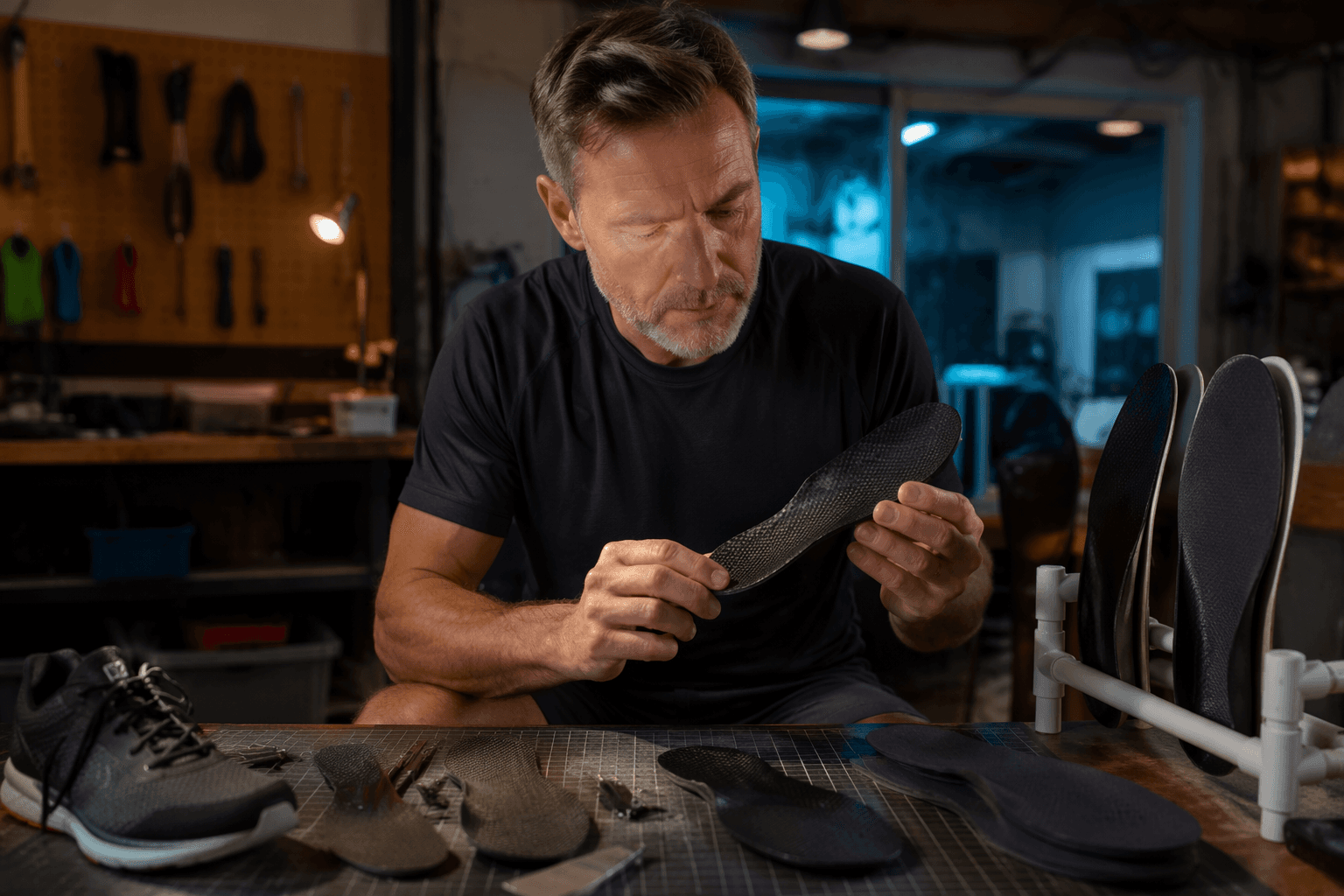
Most players spend their money on power, pop, and spin because those upgrades are easy to see. But the forces that decide whether you still have quick feet after a morning clinic, a lunch break, and an evening open play session are happening below the sock line. That is where VKTRY is making its case: movement quality, fatigue, and injury risk can be shaped as much by the platform under your foot as by the paddle in your hand.
What VKTRY says the insole changes
VKTRY says its pickleball insoles are designed to stabilize the foot and lower leg while reducing twisting or torquing forces that can contribute to injury. The heart of the product is a carbon-fiber baseplate meant to add support, shock absorption, and energy return with each step, which is a much less glamorous promise than a new paddle but one that matters the moment your legs start to feel heavy.
The customization pitch is unusually specific. VKTRY says baseplate flexibility is tuned using age, gender, body weight, and sport, while top-cover thickness is customized by sport and shoe type. That matters because a retreat traveler is not shopping for a generic sneaker insert; the appeal is that the insole is supposed to match the way a body loads force, whether the day includes drilling, match play, or long stretches of standing around between courts.
- stabilize the foot and lower leg
- reduce twisting forces
- add energy return on every step
- adjust to body type, sport, and shoe type
Why the durability argument lands
There is also a spending logic to the pitch. A paddle eventually loses bite or pop, but VKTRY frames its insole as a long-lived performance upgrade that does not wear out after a few months of play. For anyone budgeting around retreats, that changes the conversation from one more consumable to something closer to a foundation piece.
That is especially relevant in a sport where a lot of recreational players will happily pay for the latest paddle but leave foot support unchanged. Pickleball is built on footwork, and footwork is the part of the game that quietly decides whether you are still moving well after the third day of a weekend event.
What the science says so far
The science is promising, but it is still early. A PubMed-indexed study describes carbon-fiber insoles as lightweight and stiff, designed to reduce energy loss and help wearers perform better in sports. In that small study, researchers tested 30 young healthy men with shoe sizes between 260 and 270 millimeters, then looked at acute effects on power generation, agility, speed, treadmill running, muscle activity, and subjective comfort.
That is not a final verdict on pickleball, and it is not a giant player pool. Still, the study direction fits what court athletes care about most: fewer wasted movements, better push-off, and a little more comfort when the session runs long.
There is also a related body of work on rigid carbon graphite footplates in cutting tasks, where researchers examined plantar loading during side-cut and crossover-cut movements. Those motions look a lot like the stop-start demands of pickleball, which is why the insole idea makes more sense here than a straight speed story would.
Why injuries and recovery are part of the equation
The injury angle is not theoretical. Mayo Clinic says pickleball injuries can and do happen even though the sport is often perceived as gentler than many others, and its prevention advice emphasizes stretching and proper mechanics. USA Pickleball makes a similar point, saying the sport is gentler on the body than most other sports but still carries injury risk.
That is where an insole stops being a niche gear tweak and starts looking like daily-life insurance for a retreat schedule. If your feet are less beaten up, your calves are not as wrecked, and your lower legs feel more stable, you are more likely to show up ready for the next court block instead of playing through a dull ache that changes your movement late in the day.
The bigger market shift behind the pitch
The timing is not accidental. SFIA says U.S. pickleball participation rose from about 4.2 million players in 2020 to more than 24 million in 2025, and the court map keeps spreading with it. USA Pickleball’s 2025 annual growth report says the Pickleheads database added more than 2,300 new locations in 2025, bringing the total to 18,258 locations nationwide. A year earlier, the 2024 report said 4,000 new locations had been added, reaching 15,910 courts nationwide.
That scale helps explain why comfort, stability, and endurance are getting more attention. As the sport grows, the gear conversation is widening from what gives you more pace on a forehand to what keeps your body functional across a long season. Carbon-fiber plate footwear already changed how runners think about performance shoes, and pickleball is borrowing that mindset, only with more lateral movement and more repeated braking.
Who feels this upgrade most
The insole story lands hardest for players who spend a lot of time on court without much recovery between sessions. Older players and recreational players make up a major part of the sport’s expanding base, and they are often the people who feel the cost of extra fatigue first.
- Players doing back-to-back clinic and open-play sessions may care most about energy return.
- Retreat travelers who stack three straight days on court may notice foot pain and lower-leg fatigue sooner.
- Anyone worried about court stamina may value stability as much as speed.
- Players who have already invested heavily in paddles may get more real-world value from upgrading the foundation under their feet.
The smarter spend
The point is not that an insole replaces training, stretching, or good mechanics. It is that pickleball has reached the stage where the best upgrade is not always the loudest one. Carbon-fiber insoles are making the case that movement quality, comfort, and injury prevention deserve a place in the budget, especially when a retreat turns the sport into a three-day test of legs, balance, and recovery.
For players who want their best form to last past the first day, the overlooked upgrade may be the one that keeps every step a little more efficient.
This article was produced by Prism’s automated news system from verified source data, official records, and press releases, then run through automated quality and moderation checks before publishing. The system is built and supervised by the people who set the standards it runs under. Read our full AI policy.
Did this article answer your question?