Home Ping Pong Practice Guide for Solo Players of All Levels
A table-tennis robot transforms solo home practice from mindless rallying into purposeful, structured training for players at every level.
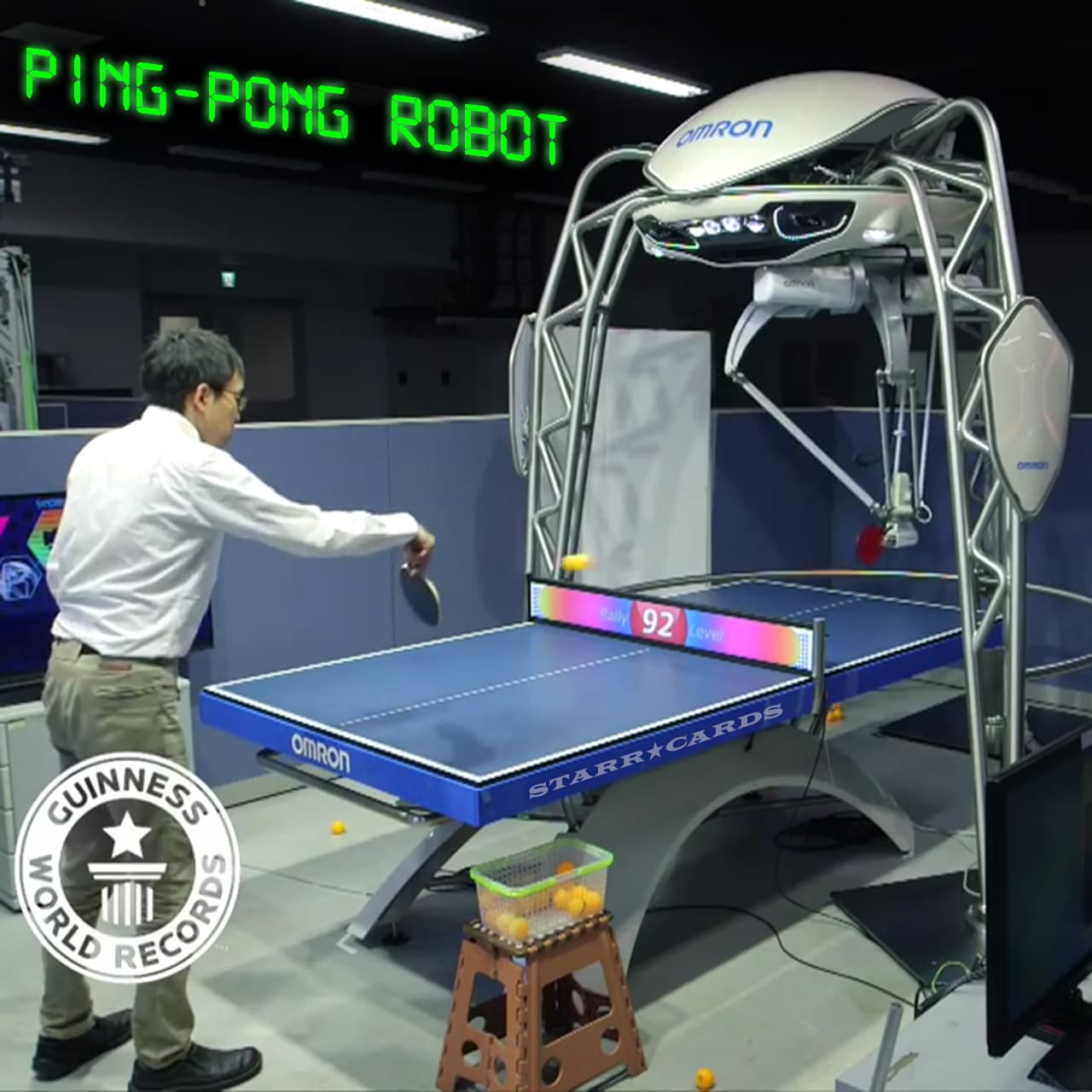
Most ping pong players hit a wall when their regular practice partner cancels for the third week in a row. You can only serve into a bucket or shadow-swing for so long before the session feels pointless. A table-tennis robot changes that equation entirely, turning your garage, basement, or spare room into a legitimate training environment where every repetition has a purpose and every drill has a goal.
This guide is built for solo players who want to practice with intention at home, whether you're a beginner chasing your first consistent forehand loop or an intermediate player grinding through specific shot patterns before your next league night. Here's how to set it up, drill it well, and keep it safe.
Choosing the Right Robot for Your Level
Not all table-tennis robots are created equal, and buying the wrong one is one of the most common and expensive mistakes home players make. Entry-level robots typically handle basic multi-ball delivery with fixed oscillation and limited speed control, which is perfectly adequate for beginners focused on footwork fundamentals and stroke consistency. Intermediate and advanced players will want a machine that can deliver topspin, backspin, and sidespin feeds, ideally with programmable sequences that simulate real rally patterns rather than just feeding balls in a straight line.
Key features to evaluate before purchasing:
- Spin variety: can the robot deliver heavy topspin, heavy backspin, and left/right sidespin independently?
- Ball capacity: larger hoppers (100+ balls) mean fewer interruptions to reload mid-drill
- Speed range: variable speed settings let you scale difficulty as you improve
- Programmable sequences: multi-position drills mimic real match movement rather than static feeding
- Portability: if your table folds away, a robot with a compact footprint and easy setup matters
Budget robots in the entry range work for stroke repetition. Mid-range and premium machines unlock the kind of pattern drilling that serious players need.
Setting Up Your Space
Placement of both your table and your robot determines how effective your sessions will be. A regulation table-tennis table is 9 feet long and 5 feet wide, and you need genuine clearance on all sides, not just enough room to unfold it. Aim for at least 5 feet behind the table on the playing end and 3 to 4 feet on each side. Tight corners force you to abbreviate your swing and build bad habits into your muscle memory.
The robot sits at the far end of the table, typically clamped to the net post or resting on the table surface depending on the model. Position it so the feed lands in the zone you're targeting for a given drill, and adjust the angle before you start, not mid-session. Some players mount a ball-catch net behind their position to collect returns and cut down on the constant floor retrieval that eats practice time.
Lighting matters more than most people expect. Overhead glare on a white ball makes tracking difficult, especially for fast feeds. Position your table away from direct windows if possible, or use diffused overhead lighting rather than a single bare bulb above the play zone.
Core Drills by Skill Level
For beginners, the single most valuable drill is the crosscourt forehand drive, fed at medium pace with no spin, landing in the same spot repeatedly. The goal is not to hit hard but to build a repeatable stroke path. Run this drill for sets of 20 to 30 balls, focusing on contact point and follow-through, then switch to the backhand crosscourt and repeat. Consistency before speed is not just advice; it's the only way the muscle memory actually forms correctly.
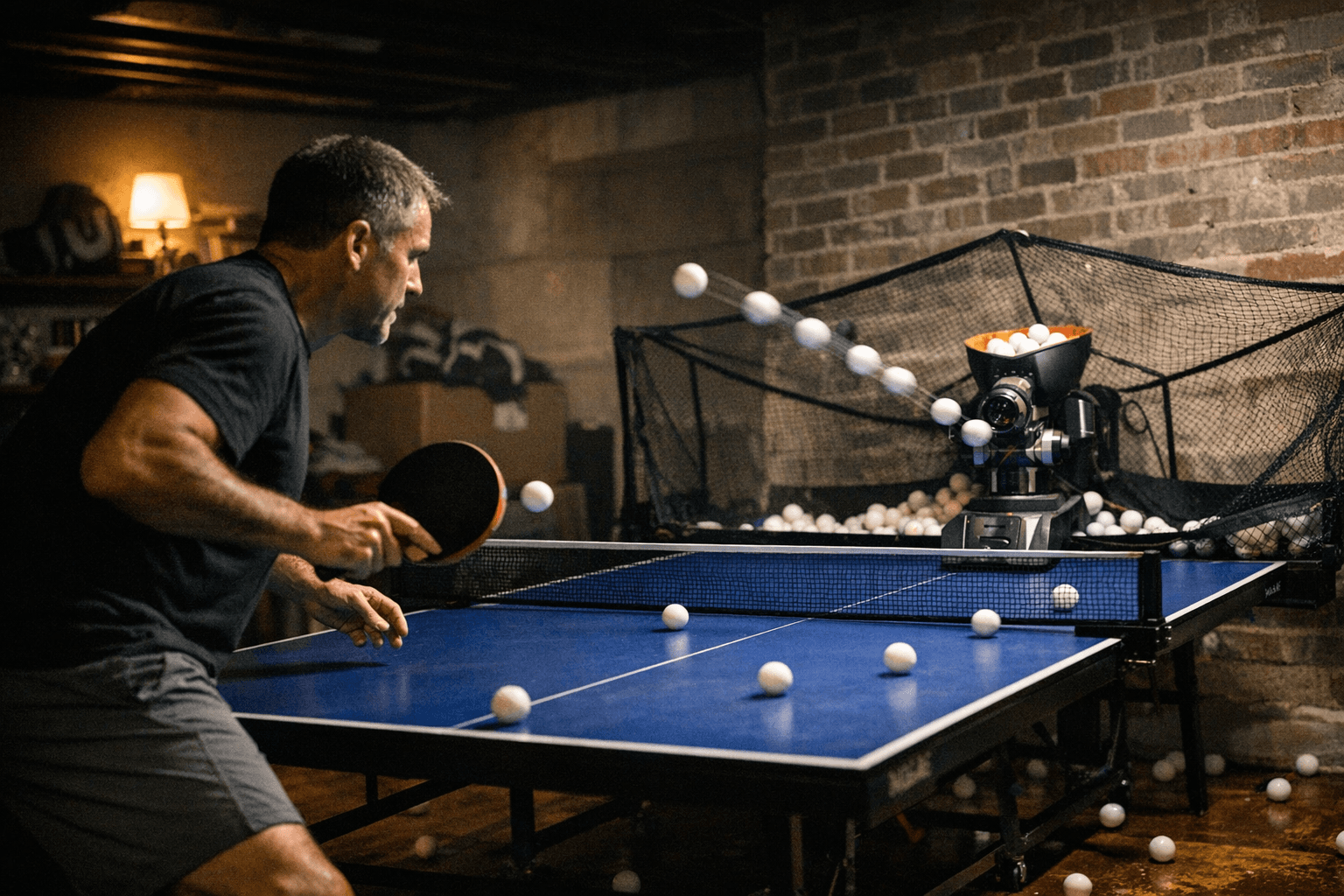
Intermediate players should shift toward spin-response drills. Program your robot to alternate between topspin and backspin feeds to the forehand side, forcing you to read the spin and adjust your racket angle on every ball. This is closer to real match conditions than any fixed-spin drill and builds the reading habit that separates intermediate from advanced players faster than almost anything else.
Advanced players benefit most from multi-position pattern drills. A classic three-point pattern: forehand from the backhand corner, pivot forehand from the middle, backhand from the wide forehand corner, looped continuously. This builds both footwork mechanics and the explosive recovery step that defines high-level play. Program the robot to deliver balls at match pace with varied spin, and keep sessions shorter and more intense rather than long and mechanical.
A few general drill principles worth keeping:
- Work in focused blocks of 10 to 15 minutes per drill, not marathon sessions
- Film yourself periodically; the robot doesn't give you feedback, but your phone camera does
- Mix in shadow footwork between ball sets to keep your movement sharp
- Track what you're drilling in a simple session log so you're building on previous work rather than repeating the same comfortable patterns
Building a Practice Routine
A purposeful home session has a structure, not just a pile of drills you run through until you're tired. Start every session with five minutes of footwork and shadow swings, no ball involved. This activates the movement patterns you need and prevents the "static hitting" trap where you stand flat-footed and arm-swing through every drill.
From there, move into your primary drill, the skill you're actively developing right now. Spend the majority of your session here, 20 to 30 minutes of focused repetition. Then close with a maintenance drill, something you've already built competence in, to end on quality contact and reinforce good mechanics. Total session time of 45 to 60 minutes is more productive than two-hour grind sessions where attention fades and technique deteriorates in the back half.
Safety and Equipment Care
A table-tennis robot feeding 60 to 80 balls per minute creates a floor covered in fast-moving plastic spheres. This is genuinely a slip hazard, and it's worth taking seriously. Use a ball-catch net if your model supports one, and never walk barefoot in your practice space during or immediately after a session. Keep your practice floor clear of obstacles before you start, because you will be moving quickly and laterally.
Protect your robot between sessions. Dust and humidity are the main enemies of the feeding mechanism; store the machine covered when not in use and keep it out of damp spaces like unventilated garages in humid climates. Inspect the ball hopper periodically for cracked balls, which can jam the mechanism and damage the feeder wheel over time.
Your table surface deserves the same attention. Wipe it down after sessions to remove ball residue and dust. If your table lives in a garage or basement, a fitted cover prevents warping from moisture fluctuation, which will ruin the bounce consistency you're depending on for accurate drill work.
Solo practice with a robot is not a substitute for match play, but it's the closest thing to a private coach available at any hour, in any weather, on your schedule. The players who improve fastest at home are the ones who treat every session as purposeful rather than recreational, who know what they're drilling and why, and who set up their space to support serious work. The machine feeds the ball. The structure is up to you.
Know something we missed? Have a correction or additional information?
Submit a Tip