Michigan State Table Tennis Club Hits New Heights With 40 Members
MSU's table tennis club doubled paid membership to 40 and posted its best season since 2008, funded partly by interest-free loans from the president's own parents.
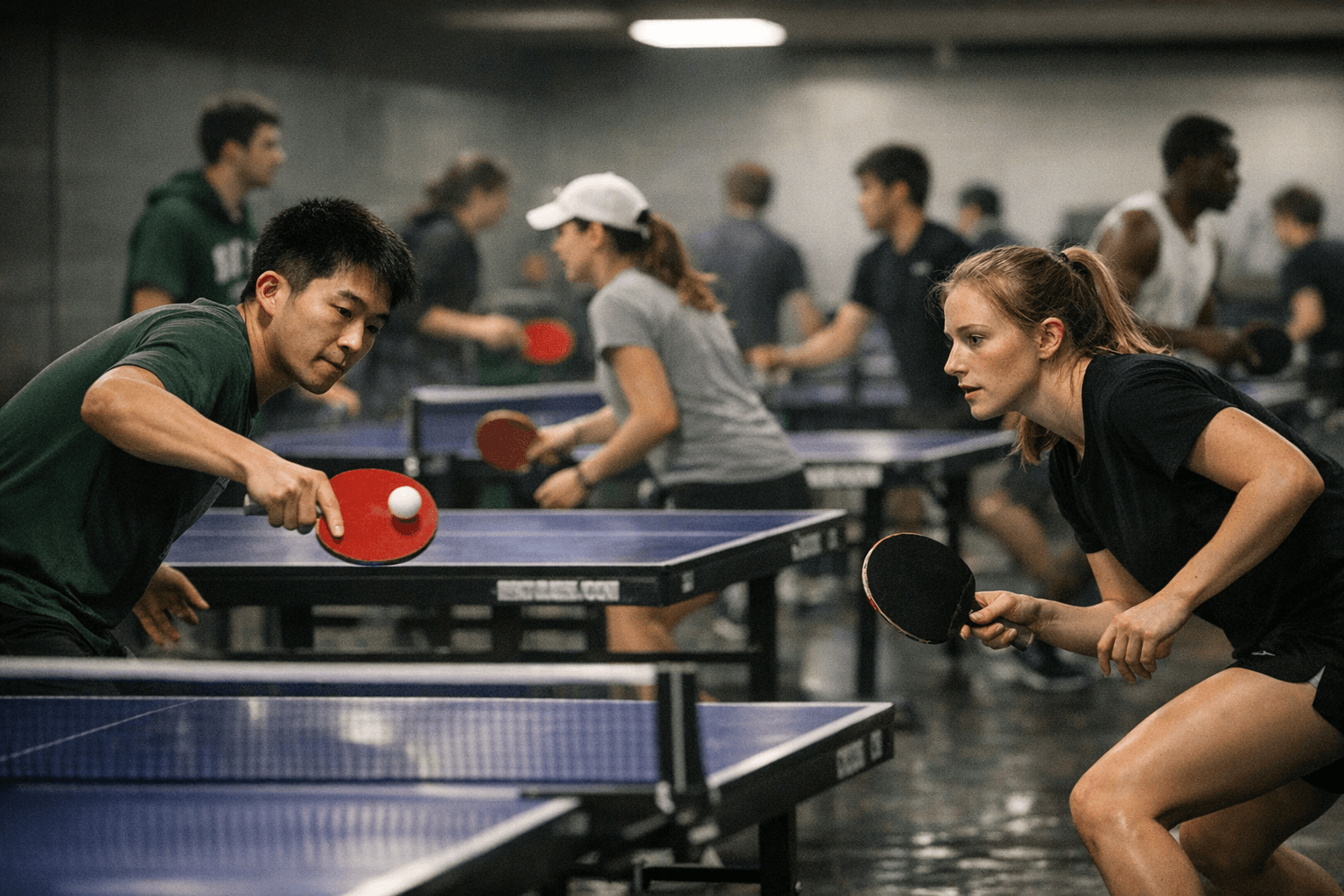
Michigan State's student-run table tennis club posted its most successful competitive season since the program's founding in 2008, doubling paid membership to 40 players under president Sam Bertcher while running on a shoestring budget held together in part by personal loans from family members and club officers.
Bertcher has brought new organizational structure to a program that now practices Monday and Wednesday evenings from 7 to 10 p.m. at IM West, with four tables reserved each session. Multiple matches run simultaneously while other members watch from the sideline and receive coaching, a format that has helped the club pick up wins over in-state programs Oakland University and Wayne State University this season.
The financial picture behind that competitive success is less polished. Tournament travel, particularly a regional event in New York, puts real pressure on the club's budget. "Our T-shirts alone cost about $740," Bertcher said. "Our vice president loaned me money, our adviser loaned me money, and my parents still have an interest-free loan out to me. For our regional tournament in New York, I have to fly people out, find lodging and cover food. It adds up fast."
Despite the budget constraints, the club's culture has drawn members who might never have walked into a more competitive program. Bertcher describes a roster that runs the full spectrum: "We're a club, so we have people who can barely hit the ball over the net, and we have people who've gone to other countries to compete. There's no real skill gap, just a huge range."
That welcoming environment is what converted Elijah Rodabaugh, a junior kinesiology major, from casual player to committed member. "I've been playing for about two years, but this is my first year truly taking it seriously," Rodabaugh said. "Everyone has been improving, and it's getting really fun. Sam, the president, has been so nice to me, and everyone is always in a good mood when they're here. There's no bad blood. It's always a fun time."
The club competes in several in- and out-of-state tournaments annually, and the combination of competitive results and inclusive culture has clearly driven the membership surge. The harder question now is whether the funding model, built on personal goodwill and interest-free loans, can sustain a program operating at this level of ambition.
Know something we missed? Have a correction or additional information?
Submit a Tip