CaPriCe Forever v26.4 Improves Amstrad CPC Floppy and Tape Emulation
CaPriCe Forever v26.4 tightens FDC and tape emulation, cutting the mystery load failures that have long plagued Amstrad CPC disk and cassette titles relying on precise hardware timing.
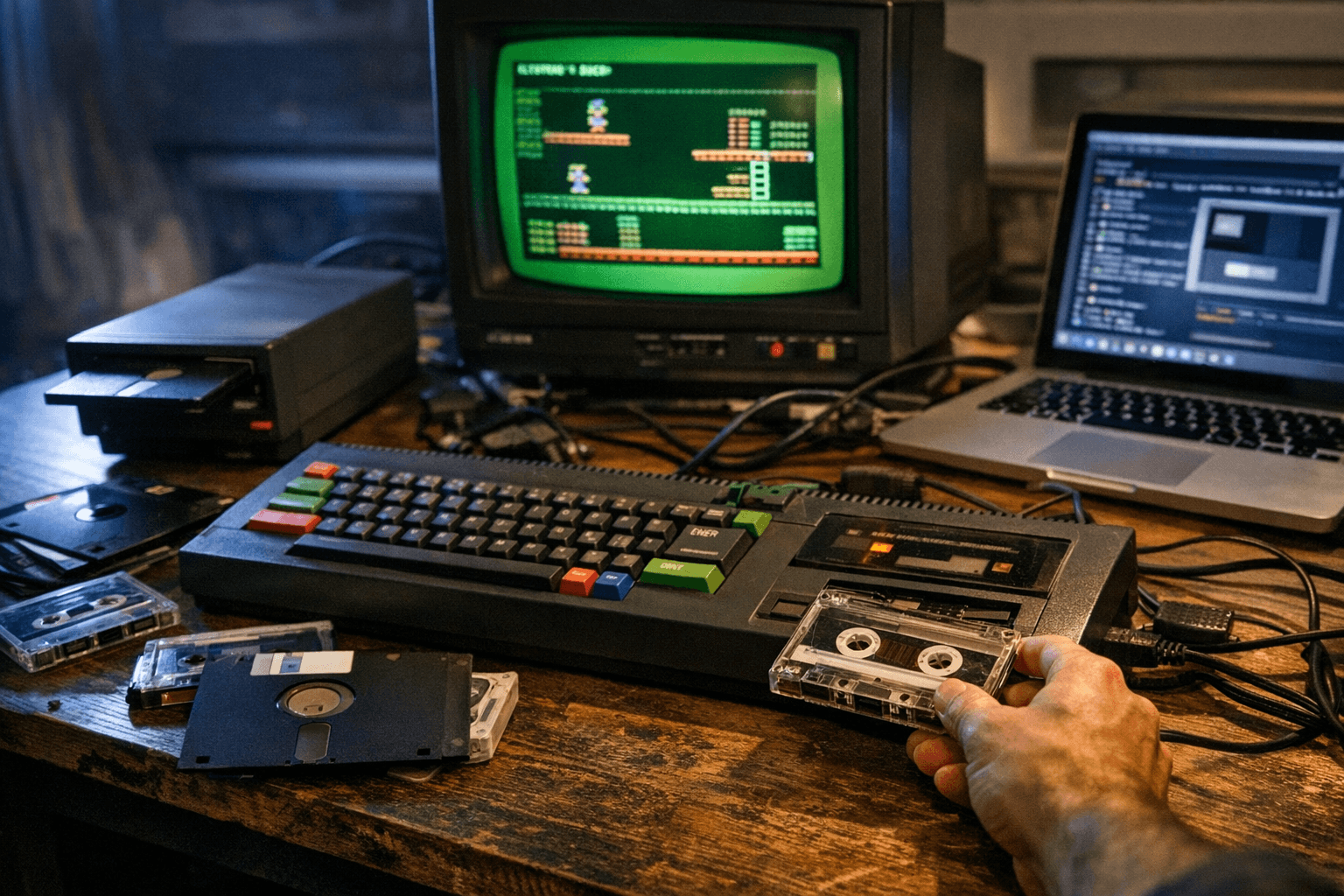
Floppy disk controller emulation has been the Achilles heel of Amstrad CPC emulators for years. Titles that used subtle timing behavior or non-standard track geometry to load could fail silently, leaving players staring at a blank screen with no obvious explanation. CaPriCe Forever v26.4, released April 1 by maintainer Frédéric Coste, directly targets that problem, along with a cluster of tape and UI improvements that together make the emulator noticeably more reliable for everyday use.
The v26.4 changelog, confirmed via Emu-France, lists five changes: improved FDC emulation, enhanced tape audio navigation, contextual menu population for the most-used features, an update to OpenAL Soft 1.25.1, and a round of minor bug fixes. None of those items are cosmetic. The FDC improvement matters because the original NEC 765 controller in CPC hardware operated with timing tolerances that many protected disk releases exploited, and any emulator that doesn't reproduce those behaviors precisely will fail on certain DSK and IPF images in ways that look identical to a bad rip. Better FDC emulation raises the floor on which disk images boot cleanly without manual workarounds.
The tape audio navigation fix addresses a different but equally frustrating class of problem. CPC cassette software frequently used multi-block loaders where the emulator had to accurately track position within a CDT or WAV file, pause at the right moment, and resume on cue. A navigation slip of even a few seconds could corrupt the load. For anyone running a cassette library through CaPriCe Forever, the improvement reduces the need to manually rewind and retry, which matters both for casual play and for archival workflows where repeatability is the whole point.
CaPriCe Forever traces its lineage through Ulrich Doewich's original Caprice and the Caprice32 branch, with Coste's fork pushing the project forward on Windows while keeping the low-level hardware fidelity that distinguishes it from lighter-weight options. The project has been chipping away at FDC accuracy across multiple release cycles; v23.07 improved RAW and IPF image reads, and v19.3 fixed an FDC read failure detection regression. Version 26.4 continues that incremental but meaningful pattern.
If a disk image still refuses to load after updating, the diagnostic order is straightforward: confirm the image format is one of the formats the emulator supports natively (DSK, IPF, CT-RAW), then check that the CPC model selected in settings matches what the software targets (a CPC464 title behaves differently under a CPC6128 profile), and finally verify whether the failure reproduces with a second known-clean image of the same title before blaming the emulator. Many apparent emulator failures are actually corrupted or incorrect dumps, and v26.4's FDC changes make it easier to distinguish between the two because fewer edge cases now surface as false load errors.
The OpenAL Soft 1.25.1 update is worth noting for anyone running the emulator on current Windows builds, since audio backend mismatches have historically caused sample playback glitches and sound-driven loaders (where the tape motor is effectively cued by audio output) to behave incorrectly. Keeping the audio stack current is as much a reliability fix as the FDC work, just a less visible one.
Downloads for v26.4 are available through Try2Emu and the project's standard distribution mirrors.
This article was produced by Prism’s automated news system from verified source data, official records, and press releases, then run through automated quality and moderation checks before publishing. The system is built and supervised by the people who set the standards it runs under. Read our full AI policy.
Did this article answer your question?