MAME 0.287 Brings Namco, Sega, and CD-i Accuracy Fixes for March
Sega Model 3 titles like Scud Race have been rendering with physically impossible lighting in MAME until now; 0.287 fixes the math, along with Namco System 23 colors and CD-i audio.
Three arcade boards and a home interactive platform received meaningful accuracy fixes in MAME 0.287, released March 31: Namco System 23, Sega Model 3, and Philips CD-i now behave closer to original hardware than any previous MAME version. For players running Konami's classic six-player X-Men cabinet, a timing correction also landed in this build, fixing a longstanding issue where the game ran noticeably faster than it should at certain points.
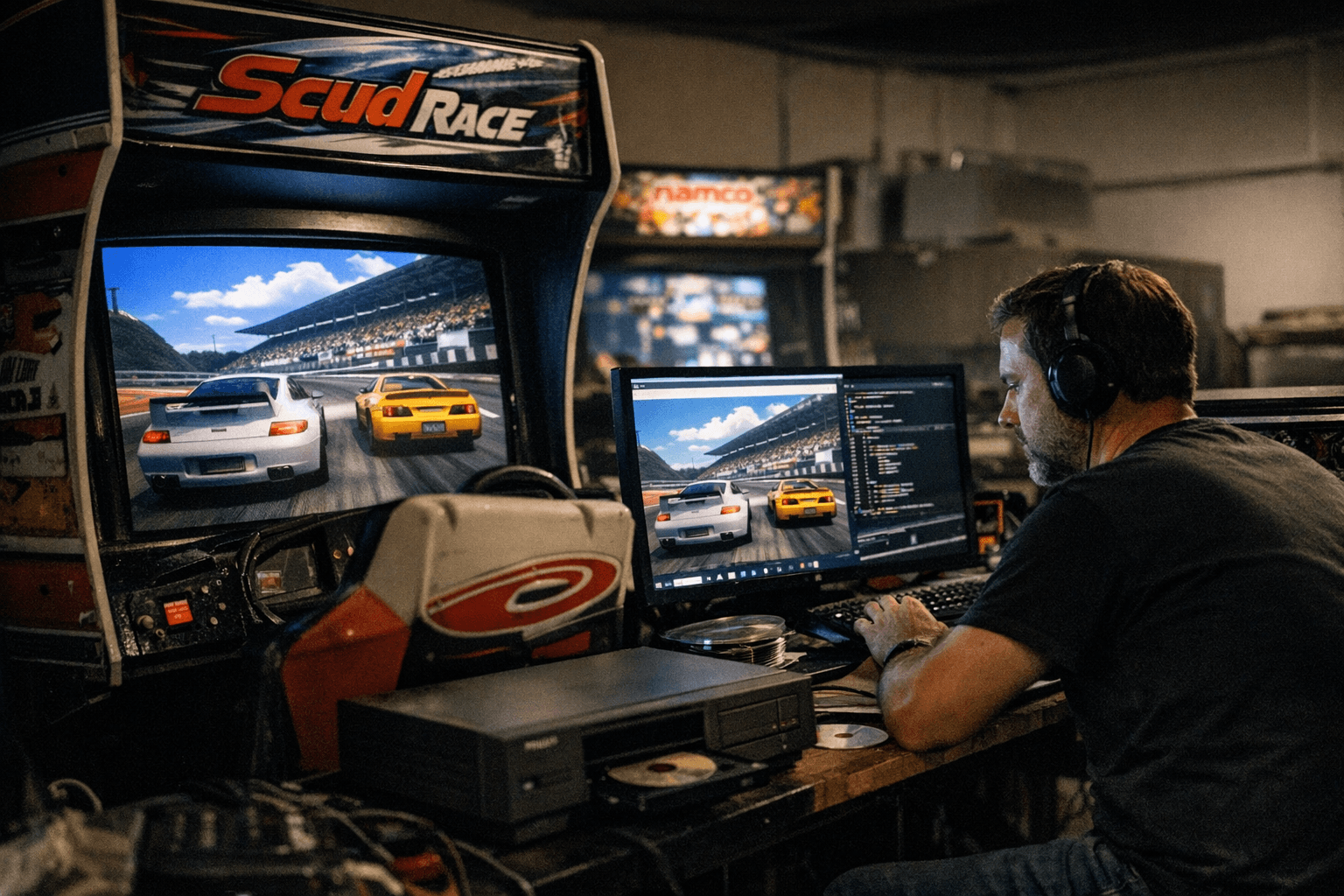
The Sega Model 3 lighting fix traces back to a straightforward but consequential math error. The driver was allowing dot product calculations, used to determine how surfaces respond to light sources, to return negative values. That is physically impossible in standard diffuse lighting, and correcting that clamping behavior changes how 3D geometry appears across all Model 3 titles. Games like Scud Race and Virtua Fighter 3, running on the most powerful arcade hardware Sega produced in 1996, now render surface shading that more faithfully reflects what the original board actually produced.
On Namco System 23, developer Ryan Holtz resolved bug 09403, which caused Shinzo, the pilot character in Motocross Go!, to appear without his correct translucent cyan coloring. The fix is visible directly in gameplay: Shinzo's appearance now matches original hardware reference. System 23 also powered Time Crisis II and Downhill Bikers, and continued driver accuracy work in this release builds on that library's ongoing rehabilitation in MAME.
The Philips CD-i received a fix for software-controlled volume and panning, meaning titles that adjust audio dynamically through software commands now do so correctly. For anyone capturing audio from CD-i titles for archival recordings, this matters: previously those commands could be ignored or mishandled, producing output that didn't reflect the original hardware's actual behavior.
The GRiD Compass family, a line of ruggedized early-1980s laptops, got a keyboard translation table correction from Valera Klachkov alongside an initial DAC sound output implementation, the first step toward accurate audio emulation for those machines. The Apple II family also saw improvement, with raster effects now handled more realistically and a substantial software list update bringing the MECC collection's metadata into better shape.
To verify the Model 3 lighting change, load any Model 3 title such as Scud Race (scudrace) and observe how 3D polygon surfaces handle directional shading, particularly in areas that should appear cleanly shadowed. For Namco System 23, load motoxgo and check Shinzo's in-game coloring against hardware reference footage. For CD-i audio, load any title using software-driven volume fades or stereo panning and confirm the audio responds to those commands rather than playing flat. For X-Men six-player, run xmen6p or xmen6pu and compare gameplay speed through the stages previously documented as running too fast against known-good reference recordings.
ROM sets for affected titles are available through the standard MAME 0.287 distribution on GitHub and official mirrors, with the full changeset and driver-level details on the project's official release page for those who want to dig into the specifics.
This article was produced by Prism’s automated news system from verified source data, official records, and press releases, then run through automated quality and moderation checks before publishing. The system is built and supervised by the people who set the standards it runs under. Read our full AI policy.
Did this article answer your question?