EmuCoreX aims to make PS2 emulation feel native on Android
EmuCoreX is trying to turn PS2 emulation into an Android-native experience, with easier controls, a cleaner library, and small but useful fixes.
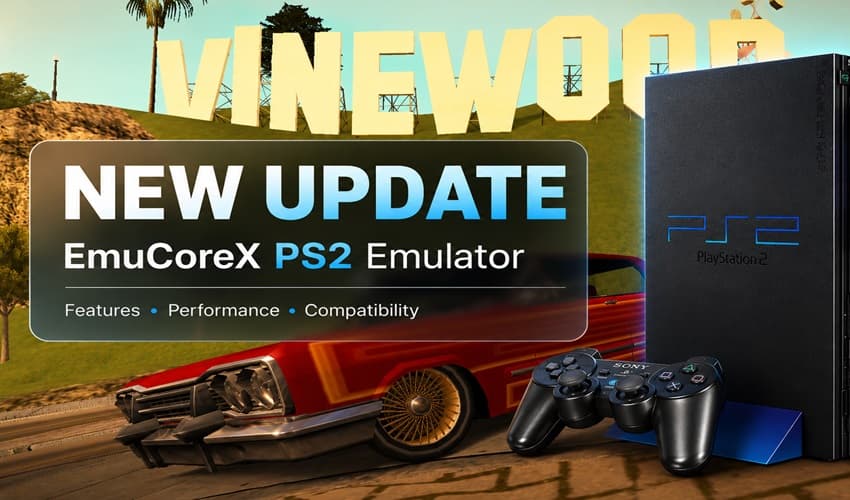
EmuCoreX is trying to do what most Android PS2 tools still struggle with: make the whole experience feel like a phone app, not a desktop emulator squeezed onto a touchscreen. It wraps a PCSX2-based core in a visual game library, controller support, save states, live settings, and an interface built for phones, tablets, and Android gaming handhelds.
A PS2 front end that behaves like Android
That design choice is the real selling point. Instead of asking you to live inside menu trees and per-game tweak screens, EmuCoreX presents itself as a PlayStation 2 library and launcher for Android, with a custom interface that is meant to reduce friction before you ever press Play. For anyone who has bounced off Android emulation because setup felt like a chore, that matters as much as raw compatibility.
The project is also honest about where it stands. Its README says the current Android focus is mid-range and high-end phones, while budget devices are not optimized yet. As of April 2026, the rough minimum chipset recommendations were Snapdragon 8 Gen 2 or Snapdragon 7+ Gen 3 class devices on the Snapdragon side, and Dimensity 9300 or Dimensity 8400 class devices on the MediaTek side.
That hardware target tells you exactly what EmuCoreX is trying to be. It is not a miracle app for every handset in a drawer. It is a serious PS2 launcher for people already carrying modern silicon and wanting an experience that feels organized, not improvised.
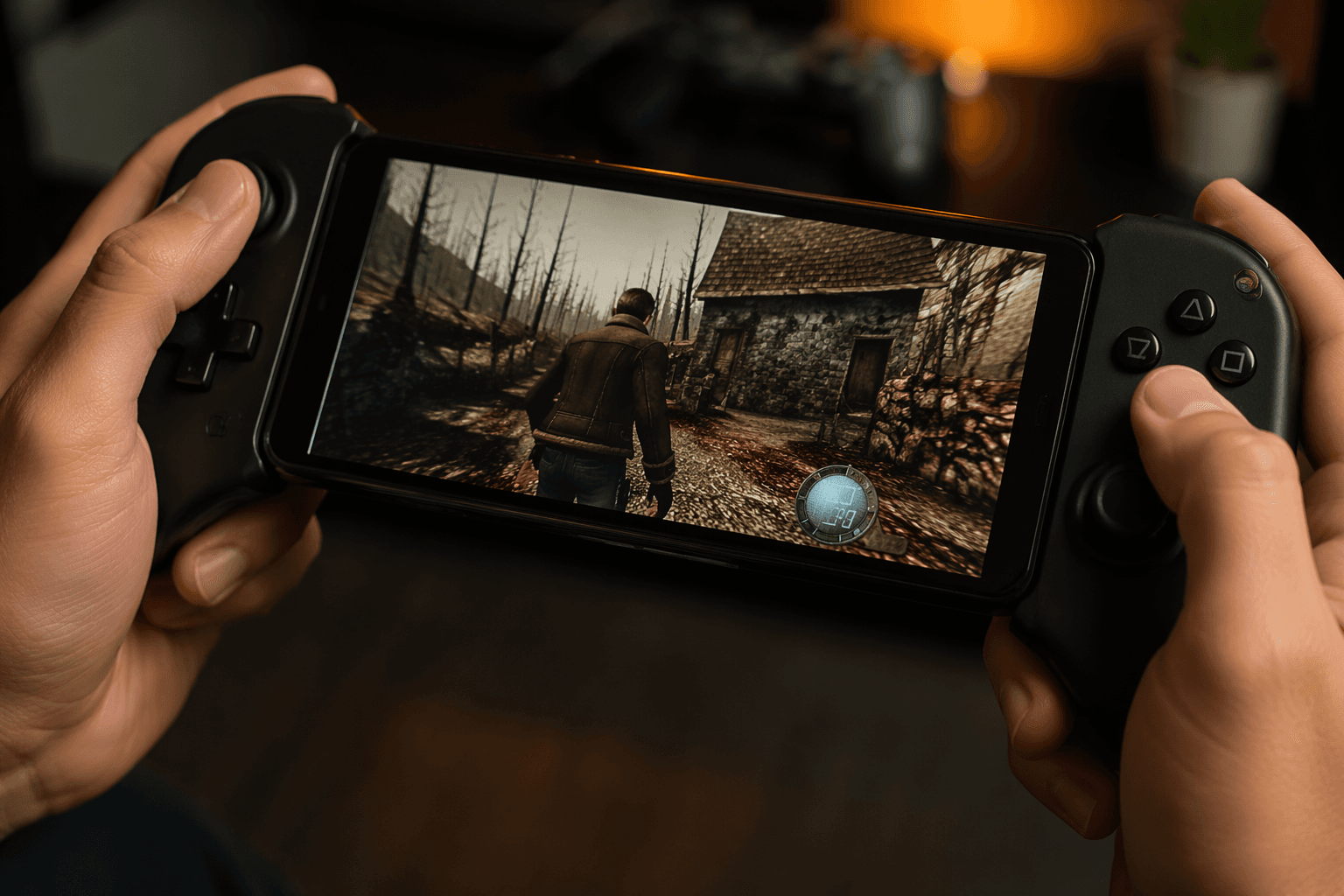
What the latest build changes in your hand
The newest release, v0.2.3, is small in the way the best emulator updates often are: it adds one feature you can feel immediately and fixes one performance issue you can actually notice. On-screen controls now support vibration, which gives touchscreen play a little more physical feedback, and the Vulkan fix removes a case where Basic blending accuracy no longer drags performance down.
That may sound modest, but it speaks directly to how you use a handheld or phone. Touchscreen emulation often fails not because the game will not boot, but because every press feels detached. A vibration pulse on on-screen controls is a small change that helps the app feel less like a workaround and more like software designed for Android first.
- v0.2.2 fixed Killzone and Scarface.
- v0.2.1 added a game manager, Racing Mode, and fast-forward by holding the Start button.
The release trail before that shows the same pattern of practical work:
Those are not abstract changelog items. A game manager makes a library easier to live with, Racing Mode gives the app a clearer use case for performance-tuning, and Start-button fast-forward is the kind of shortcut that matters when you are playing in bursts on a phone screen. Together, they make the app feel less like a technical port and more like a daily-driver launcher.
Why Android PS2 emulation still needs strong hardware
EmuCoreX is entering a field where hardware limits still dominate the conversation. PCSX2’s own history shows how far PS2 emulation has come, but also how much work it takes to get there. The project crossed 100 million downloads, marked its 20th anniversary by July 12, 2024, and shipped PCSX2 2.0 on July 12, 2024, after more than 6,000 changes. It later followed with 2.6.0 on January 4, 2026.
That lineage matters because EmuCoreX is not building from scratch. It is riding on years of PCSX2 development and carrying that work into a different environment, where the constraints are harsher. A 2025 ARMSX2 interview laid out the central problem plainly: the PS2’s custom chips and timing-sensitive hardware make full emulation difficult, and smooth results still depend heavily on device horsepower and tuning.
On Android, that means performance is never just a matter of opening the app and expecting the same result everywhere. GPU drivers, cooling, RAM bandwidth, renderer choice, and per-game settings all shape whether a session feels polished or fussy. EmuCoreX cannot erase those realities, but it can make the path through them shorter and more understandable.
The active work behind the scenes
The most encouraging part of EmuCoreX is that it does not look frozen in a release cycle. Recent GitHub activity points to work on MediaTek renderer defaults, Android DEV9 online multiplayer support, Persian and Indonesian localization, and MediaTek ANGLE support. That mix is useful because it suggests the project is being built for more than one narrow setup, and more than one kind of player.
That is important for the Android emulation crowd, where device diversity is the rule rather than the exception. A launcher that only works beautifully on one chip family is not enough; one that is steadily expanding renderer support, localization, and networking features has a better chance of becoming a real home screen staple. EmuCoreX still has early-software rough edges, but the development pattern shows a project being shaped with actual use in mind.
For readers trying to decide whether this is the PS2 emulator to install on an Android handheld, the answer comes down to expectations. If you want the widest possible device coverage, this is not there yet. If you want a PS2 app that feels closer to a native Android game library, handles controllers, keeps settings on device, and keeps shaving away at the ugly parts of mobile emulation, EmuCoreX is moving in the right direction.
That is why the story here is not just that PS2 emulation works on Android. It is that EmuCoreX is trying to make it feel like it belongs there, one vibration pulse, one launcher screen, and one compatibility fix at a time.
This article was produced by Prism’s automated news system from verified source data, official records, and press releases, then run through automated quality and moderation checks before publishing. The system is built and supervised by the people who set the standards it runs under. Read our full AI policy.
Did this article answer your question?