Fujisan v2.0.0 Brings FujiNet-First Atari 8-Bit Desktop Emulation to Windows
Fujisan v2.0.0 makes FujiNet-PC support native on Windows, letting Atari 8-bit fans run networked virtual-drive sessions without manually wiring the Atari800 core.

Getting FujiNet working inside an Atari 8-bit emulator used to mean manually wiring up device stacks and hoping your NetSIO configuration survived a reset. Fujisan v2.0.0, shipped on April 5 by developer Paulo "pedgarcia" Garcia, makes that friction largely disappear.
The update is the project's clearest statement yet of its purpose: Fujisan has pivoted from a polished GUI layered over Atari800 into something it now explicitly calls a FujiNet-first Atari 8-bit emulator for Windows. Built-in FujiNet-PC support arrives natively in v2.0.0, alongside revised startup and reset behavior that keeps the networked device stack intact across sessions. NetSIO stub emulation and polling fixes tighten diskless workflows, where FujiNet's virtual drives, networked disk access, and firmware update pathways replace what physical SIO peripherals once handled.
Fujisan runs on libatari800, the same proven emulation core that underpins the wider Atari800 project, and that choice is intentional. Garcia's stated philosophy has always been to leave mature emulation internals alone and invest in accessibility and modern integration instead. Version 2.0.0 follows that principle with full keyboard mappings and machine configuration defaults now bundled into the package, eliminating the manual setup steps that previously turned newcomers away.
The FujiNet angle matters beyond convenience. FujiNet recreates the SIO serial peripheral chain that Atari 8-bit software was written around, including networked device behaviors that have no practical equivalent in vanilla emulation. For collectors and preservationists working from No-Intro or Redump dumps, that distinction is consequential: binary traces and filesystem interactions change when a FujiNet virtual drive sits in the chain, and capturing those interactions accurately demands a stable, consistent emulation layer. Fujisan's approach to hardening network and device emulation behavior addresses that environment-drift problem directly.
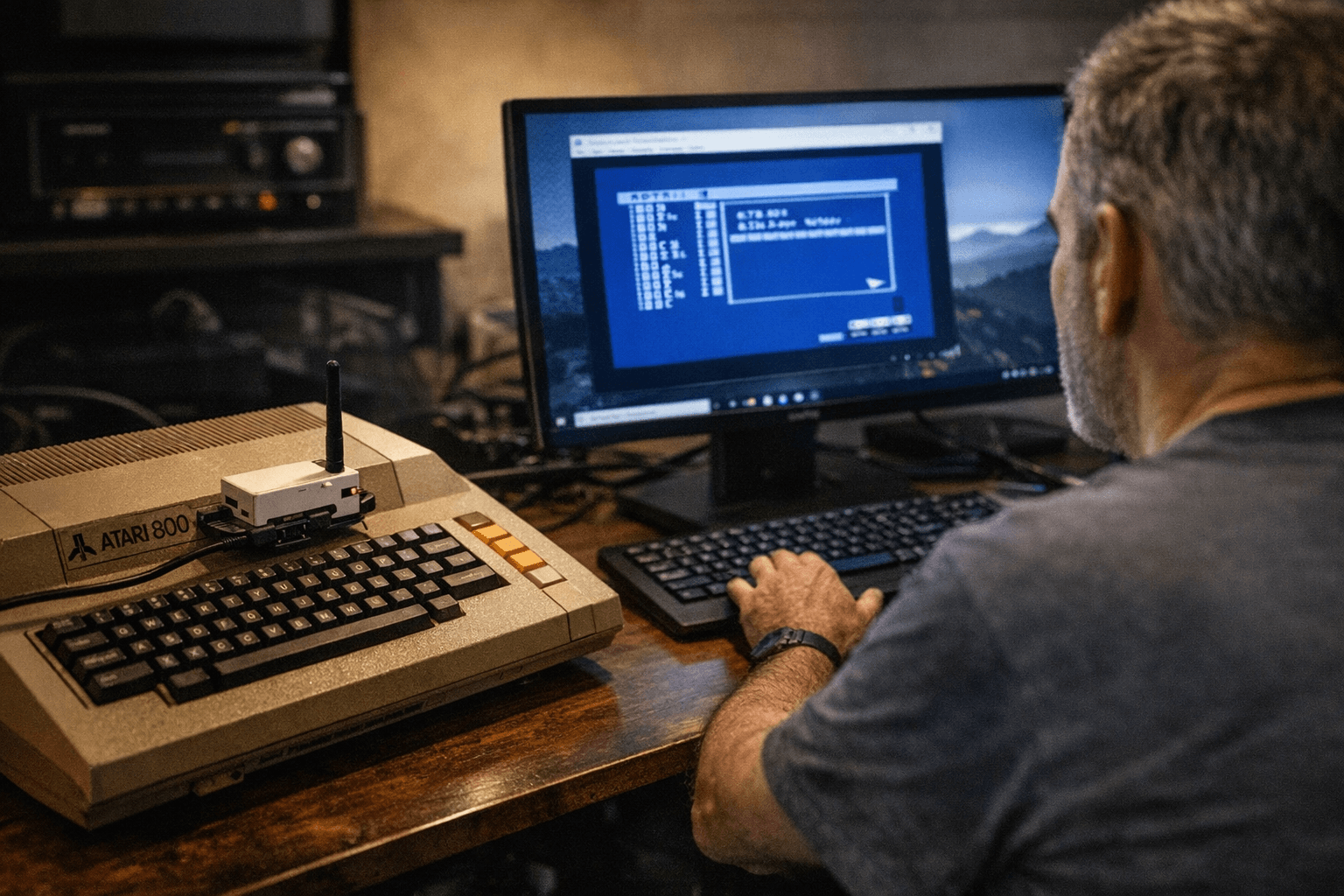
The project has also entered the ABBUC Software Competition 2026, a signal that Garcia sees Fujisan competing not just as a utility but as a platform worth measuring against the broader Atari community's standards. That ambition tracks with the pace of development since Fujisan first appeared publicly as a modern GUI for Atari800: the project iterated through audio improvements, debugger functionality, and cross-platform compatibility fixes before landing the FujiNet-centric overhaul that defines v2.0.0.
Early community response has focused on two things: the improved FujiNet integration and the cleaner packaging that removes the need for manual core configuration. Both point to Garcia hitting the accessibility target his development philosophy has aimed at from the beginning. With Windows now treated as a first-class environment for FujiNet-PC, the gap between running original Atari 8-bit software authentically and doing so conveniently has closed considerably.
This article was produced by Prism’s automated news system from verified source data, official records, and press releases, then run through automated quality and moderation checks before publishing. The system is built and supervised by the people who set the standards it runs under. Read our full AI policy.
Did this article answer your question?