Hackers turn Xteink X4 e-reader into playable Game Boy emulator
A 77-gram Xteink X4 is running Pokemon Blue with a semi-unstable port, and the result is more than a stunt: it shows e-ink can be pushed far past reading.

Oliexe turned the Xteink X4 pocket eReader into a playable Game Boy machine, and the proof-of-concept is already running Pokemon Blue at usable refresh rates. The build is not polished, but it is concrete evidence that a 77-gram, 0.23-inch-thick e-reader can do more than display books.
The Xteink X4 is a weirdly capable target for the hack because the hardware is so constrained. Community firmware docs describe it as an ESP32-C3 reader with about 380KB of RAM, five buttons, and a 480x800 class e-paper screen. CircuitPython lists the same device with a 4.26-inch panel at 800x480, an SSD1677 controller, a GDEQ0426T82 e-ink panel, Wi-Fi, Bluetooth LE, and 16MB of flash. That is not much room to work with, which makes the emulator running on it all the more interesting.
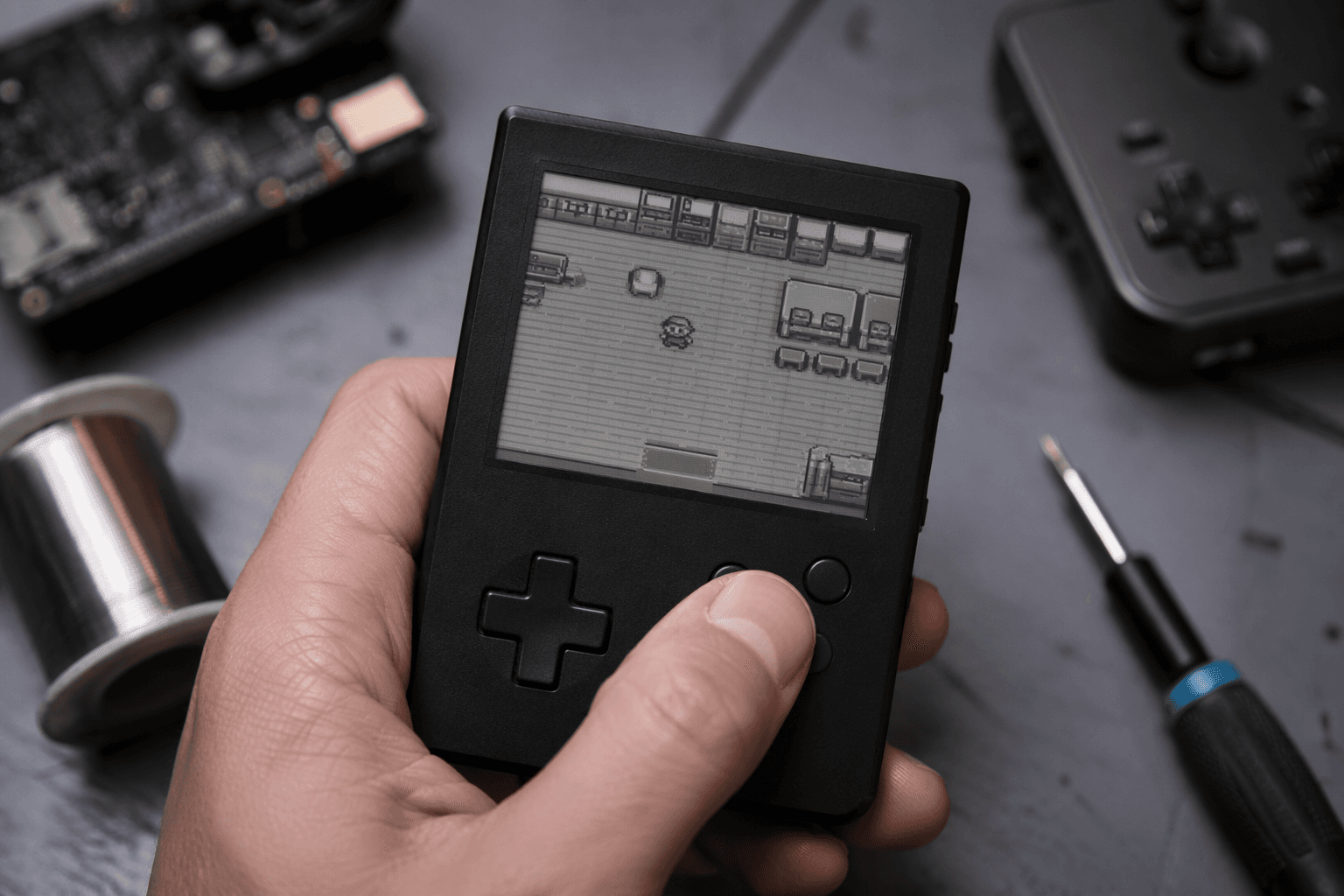
Oliexe framed the project as an “unholy experiment” and said the emulator was a “semi unstable port” of AshrafHanyy’s GameBoy-ESP32-S3 code. That matters because it places the X4 build in the same maker ecosystem as other open firmware efforts around the device, including CrossPoint and CrossLink, which are meant as drop-in, fully open-source replacements for Xteink’s stock software. SUMI, another custom firmware stack for the Xteink X4 and X3, goes even further and bundles a Game Boy emulator with apps, a dictionary, and Bluetooth keyboard support.
The bigger story is the display technology. E-ink has long been treated as too slow for real-time graphics, but recent hacking work has argued that the bottleneck is often the controller rather than the panel itself. That shift is what makes this X4 project feel useful instead of novelty-driven: if the controller can be driven fast enough, e-paper stops being just a reading surface and starts looking like a viable base for distraction-free retro handhelds.

The name adds one last layer of retro irony. Nintendo’s own e-Reader was a Game Boy Advance add-on released in Japan in December 2001 and in North America in September 2002, then discontinued outside Japan in spring 2004 after low sales. Two decades later, an e-reader is once again running Game Boy software, only this time the joke lands because the hardware finally keeps up.
This article was produced by Prism’s automated news system from verified source data, official records, and press releases, then run through automated quality and moderation checks before publishing. The system is built and supervised by the people who set the standards it runs under. Read our full AI policy.
Did this article answer your question?