Lost Data East prototype HANGZO preserved by MAME community
A 1992 Data East prototype once thought lost now boots in MAME, giving arcade fans a playable Ninja Warriors-style relic with original hardware roots.
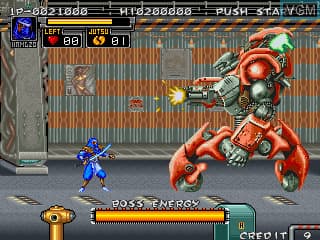
MAME’s recovery of HANGZO turned a January 1992 Data East prototype into a working piece of arcade history instead of a rumor sitting in a collector photo folder. The Japan prototype now loads as a two-player game with three buttons per player, and it gives emulation fans a rare chance to handle a board that was never meant to survive in public.
That matters because HANGZO is not just “preserved” in the abstract. MAME documents it on Data East’s rohga.cpp, or Wolf Fang, hardware with a 320x240 raster display at 58 Hz, and the entry still notes imperfect sound emulation. In other words, this is a real bootable prototype, not a cleaned-up tribute build, with the quirks and rough edges that come with original arcade hardware.
The game’s appeal is obvious the moment it is described. It sits in the same action space as The Ninja Warriors, and early footage made it look like a “grown-up Ninja Kids,” which is exactly the kind of shorthand arcade people understand instantly. HANGZO is the sort of lost Data East oddity that fills in the gap between known releases and the strange boards that never got their chance.
The recovery also shows how these finds actually happen. The dump and preservation work tied HANGZO to ShouTime, Smitdogg, David Haywood, hap, and The Dumping Union, a reminder that MAME’s archive is built by a loose network of collectors, dumpers, and hardware fixers rather than a single studio release schedule. MAME’s stated mission is to preserve software history so vintage software is not lost and forgotten, and HANGZO is that mission in practice.
There is still some historical ambiguity around who made it. Some records point to Hot-B, while others say the game never credited a developer and leave Data East and Hot-B as the likely names. That uncertainty does not weaken the find, because the important part is already settled: a rare 1992 prototype now survives, runs, and can be loaded up by anyone who wants to see where Data East’s ninja-era experimentation went when the arcade floor never got it.
The larger collector chain behind it is part of the story too. In 2016, Andy’s Arcade from California was in Tokyo working on another prototype board so it could be released to emulation, the same kind of hands-on cooperation that keeps pieces like HANGZO from disappearing into private storage. For emulation fans, that is the payoff: a lost board becomes playable history, and the history is still wired to its original silicon.
This article was produced by Prism’s automated news system from verified source data, official records, and press releases, then run through automated quality and moderation checks before publishing. The system is built and supervised by the people who set the standards it runs under. Read our full AI policy.
Did this article answer your question?