Neo Geo Pocket Color gets a modern emulation revival guide
The NGPC is finally easy to recommend because modern screens make its tiny image sing. Pick carts, price, or pocket comfort, then buy around that.
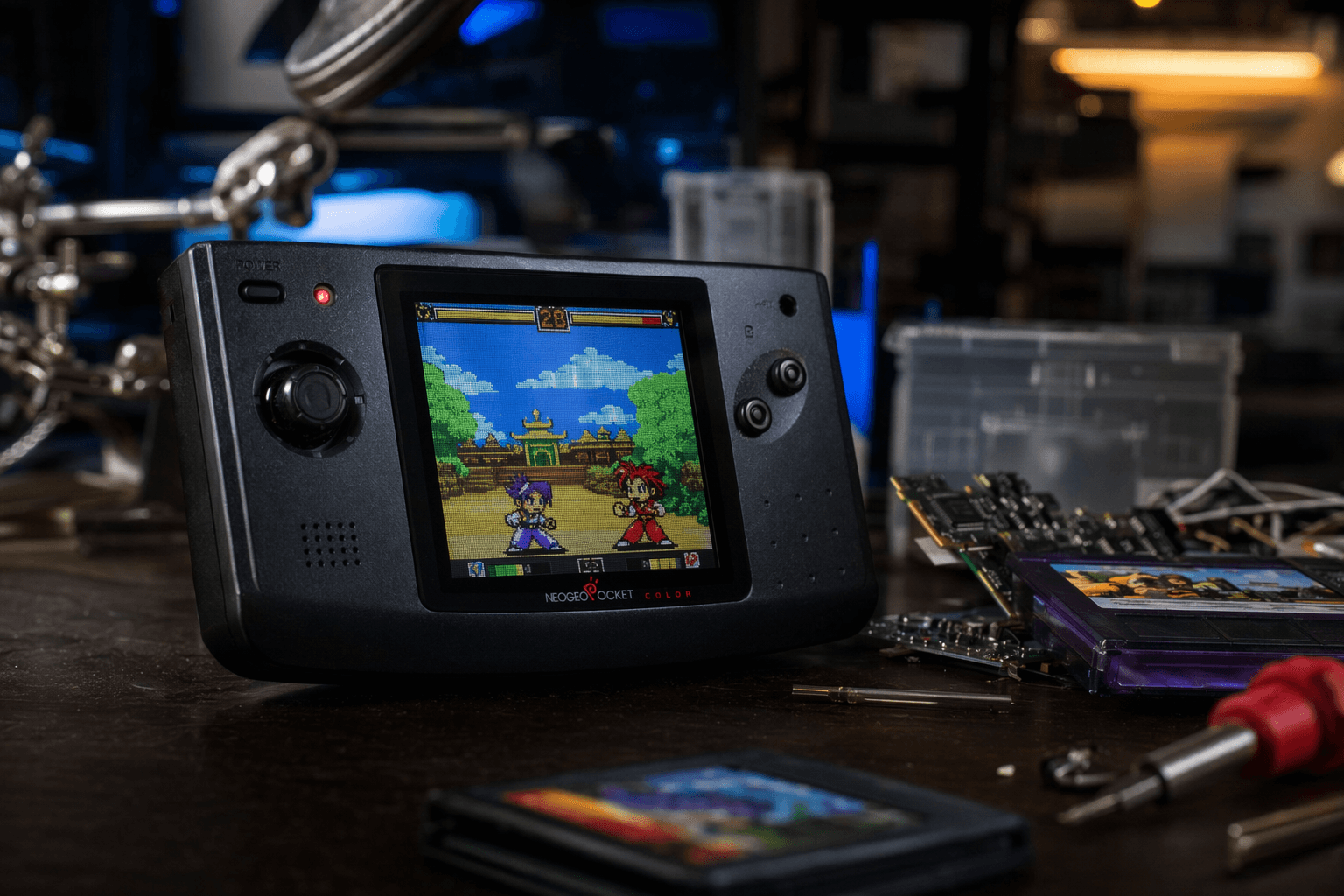
The Neo Geo Pocket Color is one of those handhelds that makes modern emulation look smarter than nostalgia ever could. Its native 160x152 screen, 4,096-color palette, and ability to show up to 146 colors at once mean the system rewards sharp scaling and clean controls more than brute-force hardware ever did. That is why the best way to play it in 2026 is not one universal answer, but a choice between three very different paths.
Why the NGPC works so well on modern gear
This handheld launched in Japan on March 16, 1999, reached North America on August 6, 1999, and landed in Europe on October 1, 1999. It was fully backward compatible with the original Neo Geo Pocket library, which makes the Color model the obvious target if you want one device to cover the whole family. The catch is that SNK’s portable arrived with a tiny library by mainstream standards, commonly cited at 73 Neo Geo Pocket Color games and 9 original Neo Geo Pocket games, and its commercial life was brief after SNK dropped the system from U.S. and European markets in 2000, following Aruze’s acquisition of the company. SNK’s bankruptcy in 2001 sealed its status as a cult machine rather than a mass-market one.
That short life is exactly why the platform thrives in the modern emulation era. The games are small, the screen is low-resolution, and the library is compact enough that you are not wrestling with a giant backlog. What matters now is presentation: how clean the image looks, how closely the controls echo the system’s microswitched joystick spirit, and whether you want the flexibility of save states or the feel of original cartridges.
If you are an accuracy purist, buy for the cartridge path
If you want the closest thing to owning the machine without chasing old hardware, Analogue Pocket is the cleanest high-end route. Its cartridge adapters support Neo Geo Pocket and Neo Geo Pocket Color cartridges, and its Original Display Modes extend to portable systems like this one. That matters because the NGPC’s charm is not just software preservation, it is the exact relationship between the tiny image, the hardware scale, and the crispness of the original cart experience.
This is the route to take if cartridge access matters more than convenience. You give up the frictionless flexibility of emulation tools, including save states, in exchange for a setup that treats the system like a real portable instead of just another ROM target. For players who care about original carts, that trade is obvious: no files to manage, no guessing about core maturity, and no compromises about whether the device can present the game as a cartridge-first experience.
If you are price-sensitive, the smart move is a budget square handheld
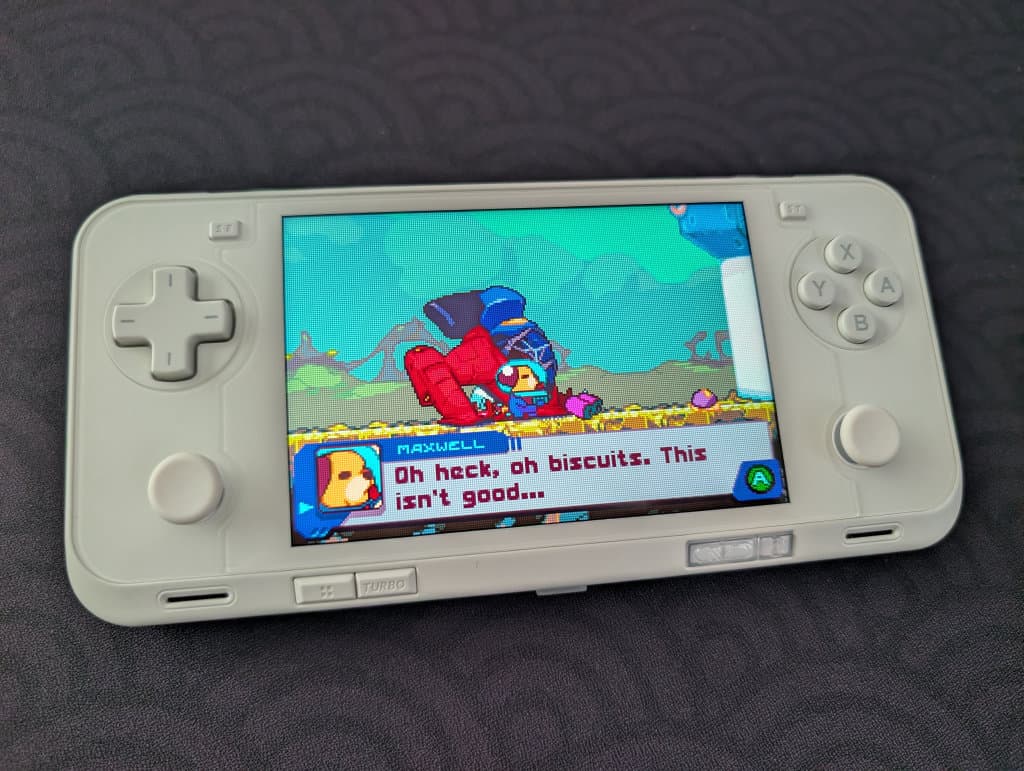
The Game Console XiFan XF40H is the budget option that makes the most sense if you want the NGPC without spending premium money. The guide frames it as a spiritual successor to the Powkiddy RGB30, which tells you exactly why it belongs in this conversation: square handhelds are a natural fit for a library built around compact, low-resolution sprites and crisp arcade-style art.
This is the route for players who care less about collector-grade authenticity and more about getting the games running well on a device that does not feel wasteful. You are not paying for cartridge adapters or premium hardware polish, and that keeps the entry cost down. In practical terms, a budget handheld also makes save states and other emulation conveniences feel less precious, because you are buying the machine to play, experiment, and move on rather than to curate a shrine.
If you want the most comfortable everyday handheld, the TrimUI Brick is the sweet spot
The TrimUI Brick is the best modern answer if your priority is simply making Neo Geo Pocket Color games look right in your hands. Its 1024x768 4:3 display is the key detail here, because it can scale the NGPC’s 160x152 image to a crisp 5x integer size. That is the kind of math that matters with this system: the screen is so small that a clean, proportionally correct upscale does more for the experience than flashy specs ever will.
The Brick also leans into the original hardware’s personality better than most handhelds. Its tactile micro-switch buttons capture some of that SNK-like snap, even if the d-pad is not an exact recreation of the original clicky feel. That is the right compromise for a portable you will actually use every day. You get the closest thing to the NGPC’s arcade-minded control vibe without giving up the convenience of a modern handheld that can run the library cleanly, sit comfortably in the hand, and present the games without the blur that ruins lesser devices.
Which route should you actually pick?
If you want original cartridges and the closest thing to a preservation-first setup, choose Analogue Pocket. If you want the cheapest competent path into the library, choose the XF40H. If you want the best balance of screen clarity, feel, and pure everyday usability, the TrimUI Brick is the one that makes the strongest case for itself.
That is the real NGPC revival story. The system was easy to miss in 1999, easy to outgrow in 2000, and easy to write off for years after that. In 2026, the surprise is that the handheld finally has modern homes that make its tiny 160x152 screen look intentional instead of dated, and once you see it scaled cleanly, the old SNK portable stops feeling like a footnote and starts feeling like a machine that was waiting for the right display all along.
Know something we missed? Have a correction or additional information?
Submit a Tip