Open-source S3-MSX-PC turns ESP32-S3 into an MSX2+ emulator
An ESP32-S3 board is now doing VGA, USB keyboard, and stereo audio as a bare-metal MSX2+ machine. The parts bill is low enough to make the trick feel real.
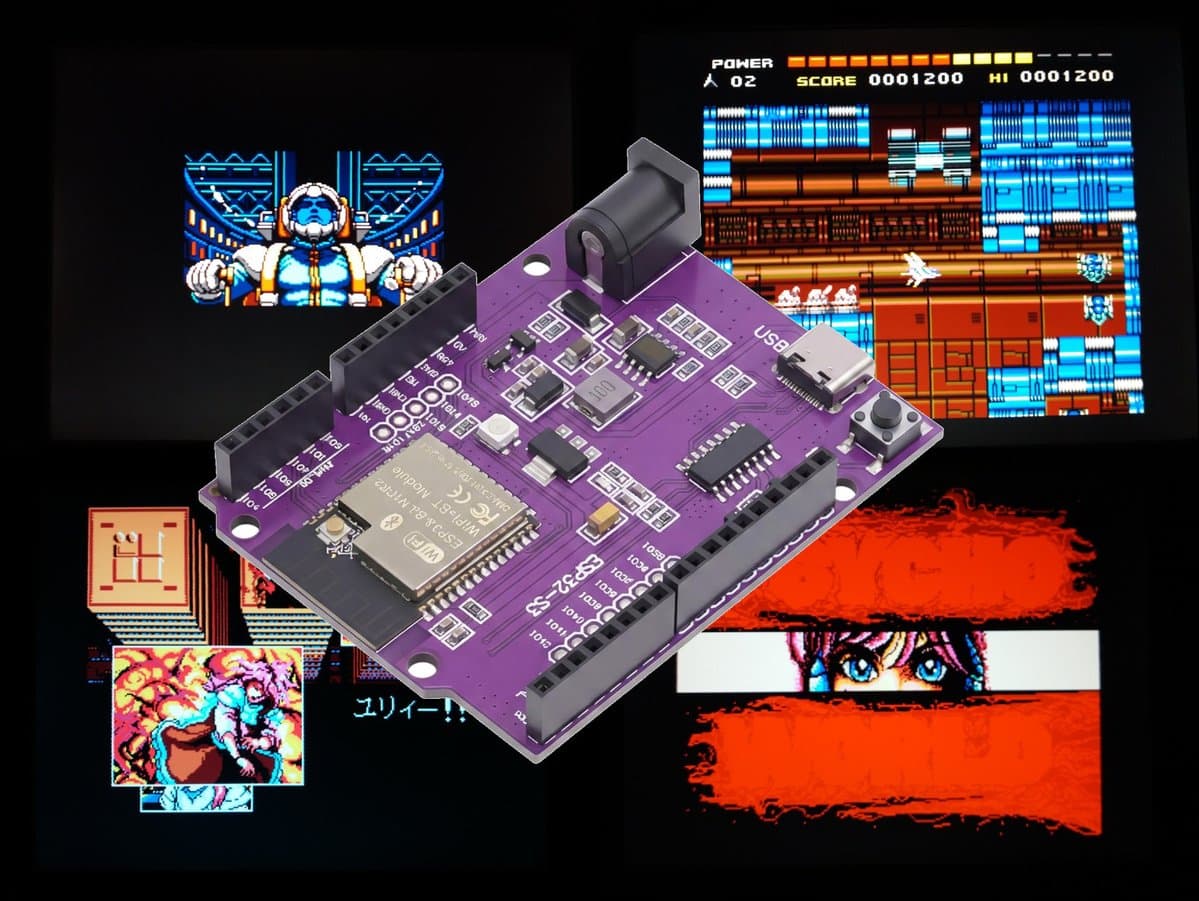
The ESP32-S3 has crossed from neat microcontroller stunt into something that looks uncomfortably close to a tiny retro computer. Ivan Svarkovsky’s open-source S3-MSX-PC boots MSX, MSX2, and MSX2+ bare-metal, drives a real VGA monitor, takes a USB keyboard, and outputs stereo PDM audio without an external video chip or an I2S codec. On paper, that is a lot of 1980s machine for a board that can be built around an ESP32-S3-WROOM-1-N16R8 with 16 MB of flash and 8 MB of PSRAM.
Svarkovsky is refreshingly blunt about the project’s origin. He says he is not a professional programmer and built S3-MSX-PC as a hobby effort while using an ESP32-S3 development board to learn the platform quickly. He also says he never owned an MSX himself, but did play on a Daewoo MSX clone as a child. On the ESP32 Forum, he said he had been building the emulator for several months, which makes the result feel less like a lab demo and more like a stubborn weekend project that got out of hand in the best possible way.

The hardware list is where this turns from clever into practical. The suggested build uses 400-ohm and 800-ohm resistors for the VGA R-2R ladder, RC parts for audio filtering, and simple VGA and USB-A connectors. Svarkovsky puts the cost at under $2 in passives, plus about $4 to $12 for the board itself. The implementation targets 640×480 at 60 Hz through the ESP32-S3 LCD_CAM peripheral, generates 64 colors from six GPIO pins, and pre-shifts the palette during initialization so it does not waste time on runtime bit manipulation. USB keyboard input is described as plug-and-play, with latency around 2 to 4 ms.
That matters because MSX2+ was never a global standard. The MSX format was announced on June 16, 1983, built around Zilog Z80-compatible 8-bit hardware, and MSX2+ machines first launched in Japan on October 21, 1988 with models including the Panasonic FS-A1WX, Panasonic FS-A1FX, and Sony HB-F1XDJ. GitHub shows S3-MSX-PC as a public fork of ducalex/retro-go, created only hours before the coverage and already a few commits ahead of upstream while still thousands of commits behind its history. The result is still a hobbyist build, but it is the rare kind that feels like the start of a usable DIY MSX2+ platform rather than just another bare-metal curiosity.
This article was produced by Prism’s automated news system from verified source data, official records, and press releases, then run through automated quality and moderation checks before publishing. The system is built and supervised by the people who set the standards it runs under. Read our full AI policy.
Did this article answer your question?