Retro Handhelds guide explains BIOS files for RetroArch emulation setup
RetroArch BIOS headaches usually come down to one folder, one filename, and one core choice.
The part that trips people up first
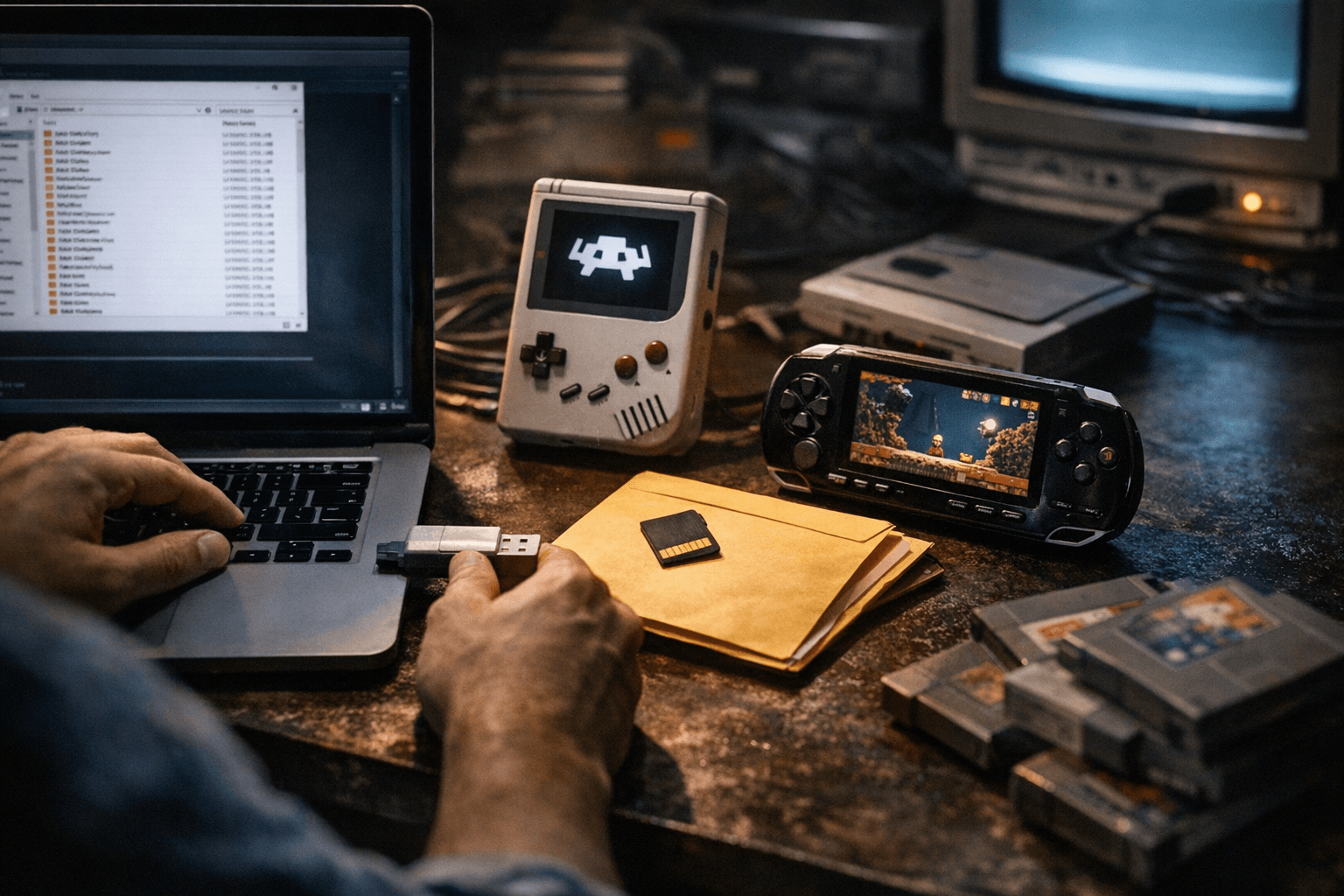
The fastest way to turn a clean RetroArch setup into a black-screen mess is to treat BIOS files like optional clutter. They are firmware images, the original low-level code from the console being emulated, and some cores will limp along without them while others need them to boot or to behave correctly. That split is exactly why BIOS confusion keeps showing up in handheld setups: the files matter a lot, but only for the systems and cores that actually use them.
The useful mental model is simple: BIOS files are not “extra ROMs,” and they are not universal. They are part of the emulated machine itself, so when a core expects one and does not find it, the failure can look like a bad dump, a bad core, or a broken handheld when the real problem is just a missing firmware file in the wrong place. That is the kind of mistake that burns an evening fast.
Which systems actually need BIOS files
This is where the guide earns its keep, because not every system needs the same treatment. Disc-based hardware is where BIOS files become hard to ignore, especially PlayStation, PlayStation 2, and Saturn, which are the sorts of platforms that often need extra firmware files to boot or to act like the original machine. Retro Handhelds also points out that anything beyond the standard RetroArch lane, including PS2, GameCube, Saturn, and Switch, often means additional file placement work.
RetroArch’s own documentation backs up the same basic rule: some cores require BIOS files, while others can run with them optionally. The PlayStation and PSP examples in the directory guide are blunt about it, and the BIOS hub makes clear that the specific core page tells you exactly what is needed, where it should live, and what name it must have.
Not every BIOS story is about disc systems, either. Libretro lists cores such as mGBA and Beetle GBA as using BIOS files that go in the frontend’s system directory, but in those cases the BIOS can be optional depending on configuration. Flycast is another good example: its Dreamcast and NAOMI support uses firmware files in RetroArch’s system directory, with specific files stored in a `dc` subfolder.
Why one core boots fine and another does not
RetroArch cores do not all handle firmware the same way. Some lean on high-level emulation, which lets them get by without a real BIOS file, while others behave more faithfully when the actual firmware is present. Libretro’s docs frame this as a tradeoff between compatibility, accuracy, and convenience, and that is the real reason two cores for the same system can feel totally different during setup.
In practical terms, that means “working” is not always the same as “right.” A core may launch a game without BIOS support and still miss the timing, boot sequence, or hardware behavior that makes the original system feel authentic. If you care about accuracy, save states, or just avoiding weird edge-case bugs, the correct BIOS often matters as much as the core you picked.
Where RetroArch expects the files
RetroArch usually wants BIOS files in its system directory, and the BIOS hub shows the exact path in the frontend under Settings -> Directory -> System/BIOS. That detail matters because the folder layout changes across Windows, Android, Linux, iOS, and dedicated handheld operating systems, so assuming every device uses the same path is a reliable way to waste time.
The official docs also make one point that people miss all the time: some cores need subfolders inside the system directory. Flycast, for example, expects its BIOS files in a `dc` directory under RetroArch’s system folder, and the BIOS hub notes that you may need to create a subfolder for certain cores. If a core says it wants a directory structure, do exactly that instead of flattening everything into one pile.
A concrete example helps here. Beetle GBA lists `gba_bios.bin` as an optional BIOS file, and the docs place it in the frontend’s system directory. mGBA does the same thing, which is useful because it shows how RetroArch handles the same general system across more than one core without changing the basic workflow.
How to tell whether you’ve got the right file
The filename is not a suggestion. Libretro’s BIOS hub says the file name and extension must match the core documentation, and it warns that case sensitivity matters on some operating systems. The hash matters too, because a renamed or corrupted file can still look right while failing the check that the core actually uses.
- Is the file in RetroArch’s system folder, not the ROM folder?
- Does the filename match what the core page expects, exactly?
- Does the MD5 hash match the documentation?
That is why BIOS troubleshooting should start with three checks:
If something still fails to boot, the hash is the first serious clue. The BIOS hub explains that the hash uniquely identifies the file, which means a good filename with a bad hash is still a bad BIOS. That is especially useful when you are dealing with multiple region variants or with files that got copied badly between cards, drives, or handheld storage.
The legal line and the real-world workaround
Retro Handhelds draws the line clearly: it cannot tell readers where to get BIOS files, because copyright law gets in the way. The practical answer is to dump your own hardware or otherwise follow local law, which is the same boring but necessary reality every serious emulation setup runs into sooner or later.
That tension is why BIOS files are such a recurring headache. They are critical for compatibility, often essential for accuracy, and still one of the first things that confuses people building a new library on a handheld, desktop, or phone. Once you understand the pattern, though, the workflow gets much easier: identify the core, confirm whether BIOS is optional or required, place the file in the correct system folder, and verify the name and hash before you blame the emulator.
That is the part worth remembering. BIOS files are not busywork, they are the difference between a setup that merely launches and one that actually behaves like the hardware you are trying to preserve.
This article was produced by Prism’s automated news system from verified source data, official records, and press releases, then run through automated quality and moderation checks before publishing. The system is built and supervised by the people who set the standards it runs under. Read our full AI policy.
Did this article answer your question?