Embedded Rust on RISC-V, a practical guide for bare-metal development
This guide turns bare-metal Rust from a wall of acronyms into a first working RISC-V board, with no_std, HALs, probe-rs, and the right crates in view.
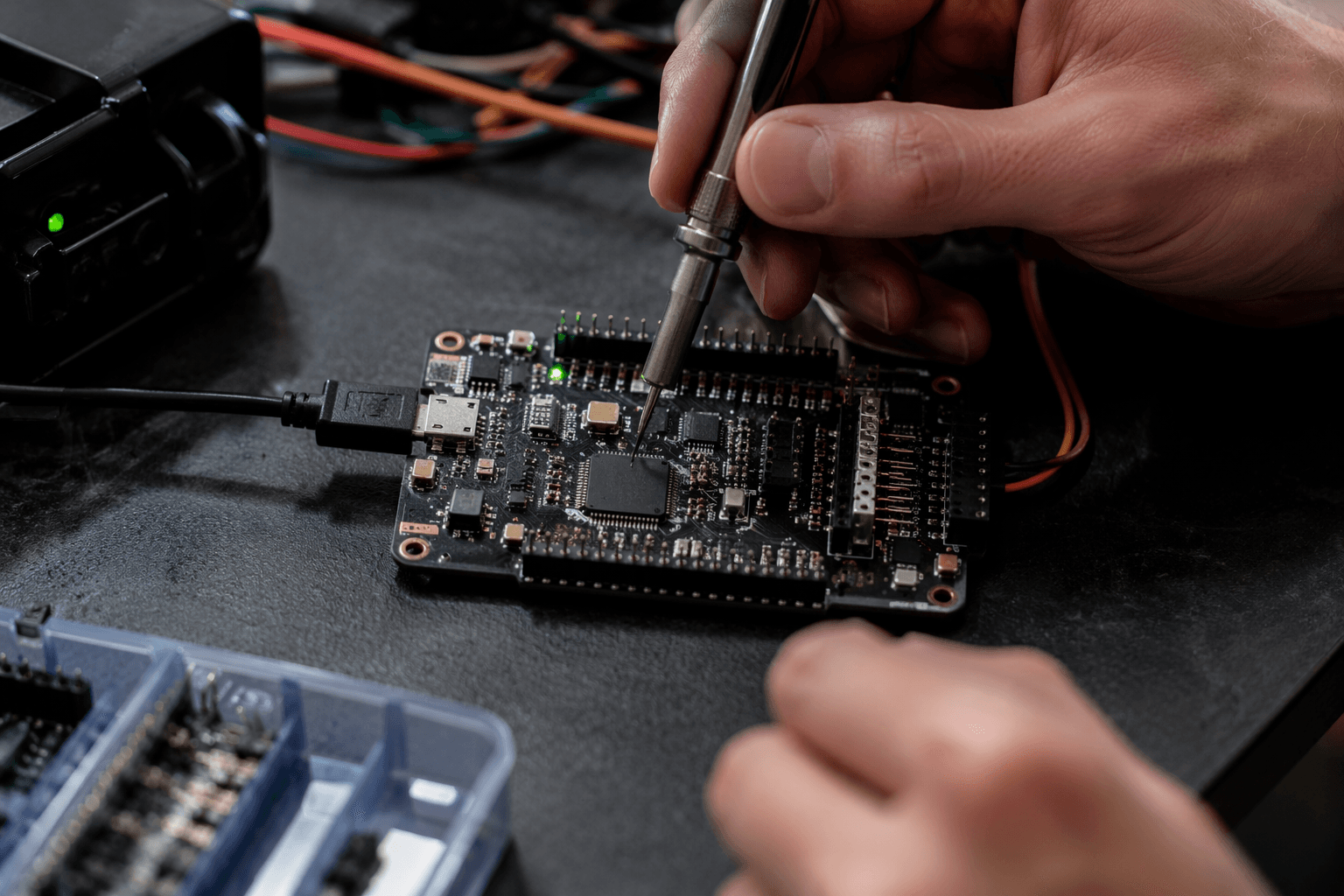
Embedded Rust gets a lot less intimidating when you stop treating it like a separate language and start treating it like a different runtime shape. The cleanest path from desktop Rust to a working RISC-V target is not memorizing every register map on day one, but understanding what changes when there is no operating system, why `no_std` matters, and which crates carry the weight of startup, flashing, and hardware access. That is the real value of a practical guide like this one: it lowers the barrier between “I can write Rust on my laptop” and “I can get a binary onto a board and make something happen.”
Start with the mental model, not the board
The first shift is accepting that embedded programming spans a huge range of devices. The Embedded Rust Book describes the field as everything from tiny 8-bit microcontrollers with only a few kilobytes of RAM and ROM to larger systems like the Raspberry Pi Model B 3+. That range is exactly why newcomers get lost so easily: the same Rust codebase has to make sense in contexts that look nothing alike.
In bare-metal Rust, firmware on a microcontroller runs with no OS underneath it, so you use the core library and lean on crates such as `riscv-rt` for startup. That is the point where desktop habits break and embedded discipline starts. Once you internalize that difference, the rest of the stack becomes less mysterious and more mechanical.
Pick the target you actually need
For a RISC-V board, the right target triple is not a trivia question, it is the entry ticket. A practical guide should help you choose the target that matches the chip and toolchain you are using, then connect that choice to the build artifacts Rust produces. On the embedded side, the important thing is not just compiling successfully, but compiling for the exact environment your board expects.
That is where the guide’s focus pays off. Instead of burying you in theory, it walks through the path from a normal Rust project to a binary that matches the board, the architecture, and the assumptions of a freestanding system. If you have only worked with Cargo for server code or CLI tools, this is the first place where the workflow starts to feel different in a useful way.
Understand what `no_std` really changes
`no_std` is one of those phrases that scares people until they see it in context. It does not mean “Rust becomes smaller and weaker,” it means you are opting out of the full standard library because the target cannot provide the usual operating system services. In practice, that changes how you think about allocation, startup, panic handling, and the boundaries of your program.
That change is not a penalty. It is what makes Rust fit tightly on constrained hardware, where memory safety and deterministic behavior matter even more than they do on a desktop. The point of the guide is to show that this is a manageable shift, not a philosophical cliff.
Use the ecosystem the way it was meant to be used
The embedded Rust ecosystem has matured around a division of labor that makes bare-metal work much more predictable. The Embedded Rust Book says its goals are to get developers up to speed with embedded Rust development and to share current best practices, and the Rust Embedded Working Group has treated embedded as one of Rust’s core focus areas since it was officially announced on February 27, 2018. By August 12, 2018, the working group had already grown to 18 people across six teams, including a RISC-V team. That history matters because it explains why the current tooling feels deliberate instead of improvised.
The key abstraction here is `embedded-hal`, which defines traits that serve as implementation contracts between HALs, drivers, and applications. The Embedded Rust Book’s HAL design-patterns documentation pushes the same idea: interoperability and predictable HAL APIs are not nice-to-haves, they are what keep the ecosystem usable across vendors and boards. When you wire your project around those traits, you are buying portability and reducing the odds that every new board becomes a rewrite.
Know where the RISC-V crates fit
The `rust-embedded/riscv` repository is the part of the stack that makes RISC-V feel concrete instead of abstract. It includes crates for CPU register access, peripheral interfaces, startup code, interrupt handling, semihosting, target parsing, and common traits for PACs. That split is important because embedded work is rarely one monolithic crate doing everything badly. It is a set of focused building blocks that line up with the layers you actually need.
If you are moving from ordinary Rust to a board, this is the simplest way to think about the stack: `riscv-rt` gets you started, the register and peripheral crates help you touch the hardware, and the target-parsing pieces keep the build and debug flow honest. That is a practical architecture, not an academic one.
Flash and debug with the right toolchain
Getting a binary built is only half the win. You still need a reliable way to flash it and see what it is doing, and that is where `probe-rs` earns its place. It describes itself as a modern embedded debugging toolkit for ARM and RISC-V targets, and it supports both flashing and debugging.
That support is what turns embedded Rust from a terminal exercise into a real hardware workflow. The moment you can flash, halt, inspect, and iterate without fighting the toolchain, the barrier drops fast. A guide that gets you to that moment is worth far more than one that only explains syntax.
Why RISC-V and Rust fit together so naturally
The pairing makes sense because RISC-V and Rust share an architectural taste for clarity. RISC-V International describes RISC-V as an open standard ISA that enables processor innovation through open collaboration. That openness matches Rust’s own ecosystem style: small, reusable pieces that are meant to compose.
The hardware story is also becoming more standardized. RISC-V International’s 2025 annual report says the ecosystem rallied around the RVA23 profile, a common baseline for RISC-V application processors running Linux. Even though embedded targets and application processors are different worlds, that kind of baseline helps normalize the architecture across use cases. It makes RISC-V less of a special project and more of a platform people can build around with confidence.
That is why a guide focused on bare-metal development lands so well right now. It does not ask you to become an embedded specialist before you write a line of code. It gives you the first successful path: choose the target, embrace `no_std`, lean on `embedded-hal`, use the RISC-V crates that already exist, and flash with a tool built for the job. Once that path works once, the rest of embedded Rust stops looking like a maze and starts looking like a workflow.
This article was produced by Prism’s automated news system from verified source data, official records, and press releases, then run through automated quality and moderation checks before publishing. The system is built and supervised by the people who set the standards it runs under. Read our full AI policy.
Did this article answer your question?