gRPC releases first preview of gRPC-Rust for Rust developers
gRPC-Rust’s first preview lands as an official grpc crate, but it is client-only, Tokio-only, and still not ready for production.
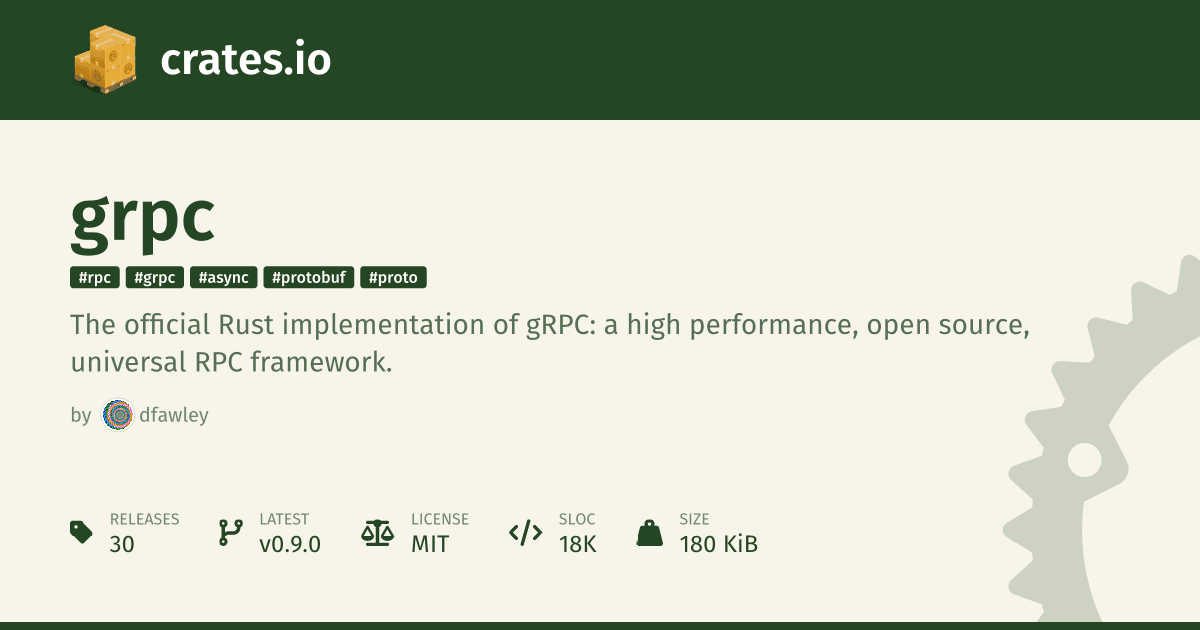
Rust developers who have been living on Tonic and other third-party gRPC stacks finally have an official path to kick the tires. gRPC shipped the first preview of gRPC-Rust on May 28, 2026 as the grpc crate on crates.io, and the timing matters because it follows the project’s move to bring Tonic into the gRPC Project under the CNCF just one week earlier, with the repository renamed grpc/grpc-rust.
The preview is a real starting point, not a toy sample. It includes client APIs for unary and streaming RPCs, generated code support through a protoc plugin, and protobuf support built on Google’s Protobuf-Rust tooling. It also exposes a lower-level RPC API for interceptors and for code that wants to make calls without generated stubs. For now, the runtime story is narrow: Tokio is the only supported runtime in this first cut.

That narrow scope is deliberate, and gRPC is not pretending otherwise. The crate is explicitly not recommended for production use, and all of the APIs are unstable. The Rust basics tutorial makes the gap plain by saying server-side support is not yet available in this version of grpc-Rust. The documentation pages were updated the same day as the preview, with a generated code reference, a quick-start guide and a tutorial that walks through the four RPC types.
For teams deciding whether to experiment now or wait, the line is pretty clear. If you want to shape the API before it hardens, if you need an official gRPC implementation to benchmark against your current stack, or if you are already committed to Tokio, this is the moment to start poking at it. If you need servers today, you still have to hold off. The gRPC roadmap says the biggest item under active development is the server API, and another preview will follow when that lands.
The bigger migration signal is hard to miss. Lucio Franco said Tonic began in 2019 and had grown to more than 12,000 GitHub stars by 2026, which shows just how much real-world Rust traffic the community stack has already handled. gRPC’s new Rust work is meant to close the gaps Tonic users have been pointing at for years, including integrated health checking, retries, zero-copy work and arena optimizations. That makes this preview less like a ceremonial launch and more like the first serious bid for the Rust gRPC center of gravity.
This article was produced by Prism’s automated news system from verified source data, official records, and press releases, then run through automated quality and moderation checks before publishing. The system is built and supervised by the people who set the standards it runs under. Read our full AI policy.
Did this article answer your question?