Oxanus 1.0 debuts as a Redis-backed Rust job processing library
Oxanus 1.0 arrived with real production weight: Redis-only, already running Player.gg and Firstlook.gg, and built for retries, cron jobs, and dashboards.
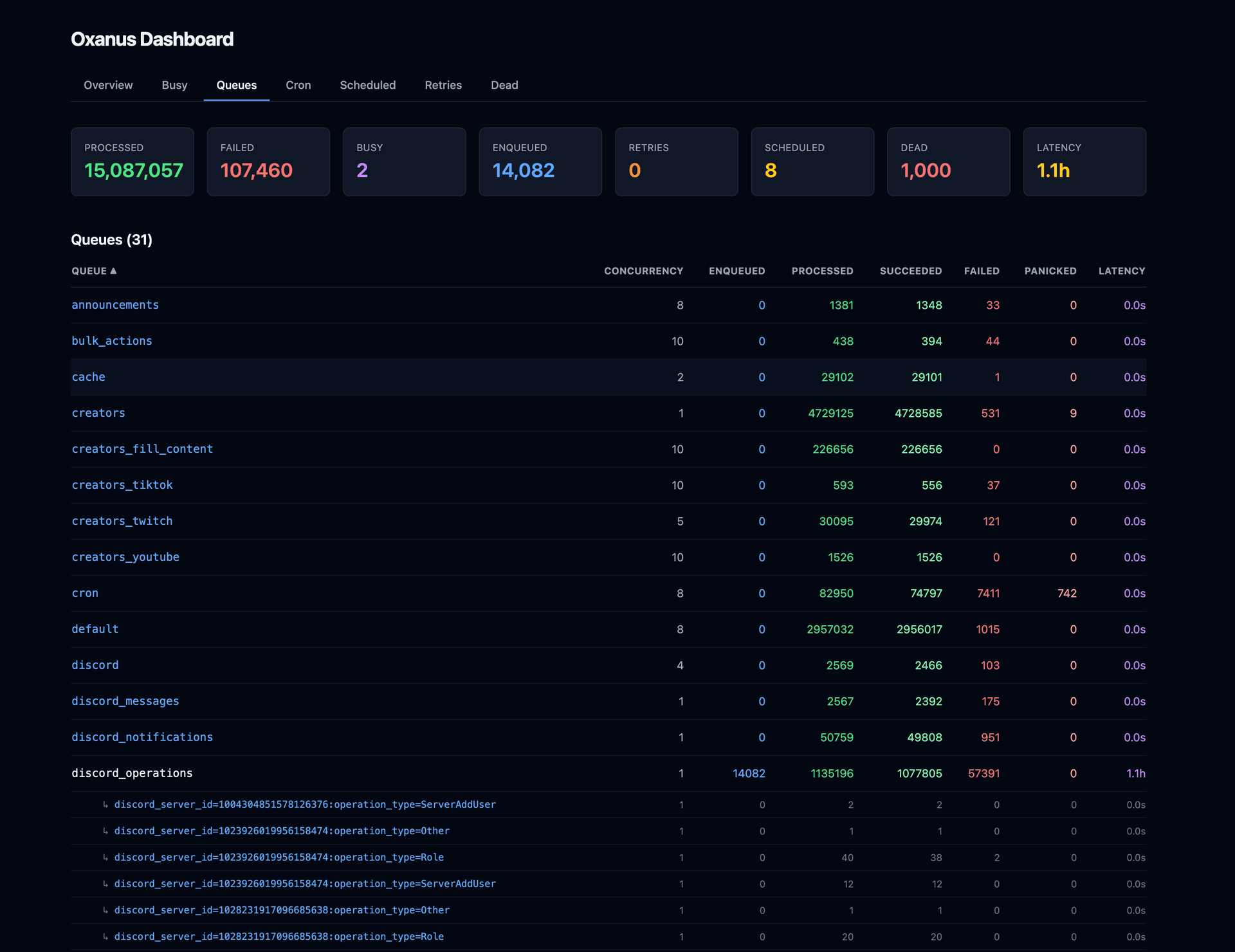
Oxanus crossed into 1.0 with something many Rust job libraries never prove: real production use. The Redis-backed worker system is already powering background jobs for Player.gg and Firstlook.gg, and the repository says it serves hundreds of studios and millions of players. That is the sort of credential that changes how a team evaluates a queue library. It is no longer a toy API or a side project with promise, it is infrastructure that is already carrying load.
That matters because Oxanus is deliberately narrow in scope. Instead of chasing every backend and becoming a thin abstraction layer, it sticks to Redis and tries to do that one job well. For Rust teams that already run Redis, that is a serious simplification. You get isolated queues, retries with configurable backoff, scheduled jobs, cron jobs, dynamic queues, throttling, unique jobs, resumable jobs, graceful shutdown, a built-in web dashboard, and Prometheus metrics. In practice, that means Oxanus is aimed at the daily headaches of background processing, not just the happy path of pushing a task into a queue.

The 1.0 release also signals that the project’s API and direction have settled enough for production-minded users to trust it. Rustcc’s April 22 roundup said the release had been in development for nearly a year and had been announced in the r/rust community. On GitHub, the pragmaplatform repository showed 28 stars, 2 forks, and 385 commits, with recent work including a separate oxanus-web crate, a migration guide from 0.9 to 0.10, a clippy doc_markdown warning fix, Redis hot-path cleanup, and a placeholder api crate. That is not the footprint of a library coasting on hype.
The migration guide shows the team tightening the ergonomics as it matures. Oxanus 0.10 introduced a Job/Worker separation, splitting the serialized job payload from the processing logic, and the default naming convention now strips a Worker suffix so the job type becomes {Name}Job. That kind of change sounds small until you have lived through worker systems with muddy naming and awkward boundaries. It is exactly the sort of detail that makes a library easier to keep in a real service.
Oxanus now sits in a lively corner of the Rust ecosystem alongside apalis, AJ, KioMQ, and background-jobs-tokio, but its pitch is sharper than most. It is not trying to be the universal answer. It is betting that a lot of Rust services do not need a giant framework, they need a Redis-backed worker system they can trust, observe, and keep alive under pressure.
This article was produced by Prism’s automated news system from verified source data, official records, and press releases, then run through automated quality and moderation checks before publishing. The system is built and supervised by the people who set the standards it runs under. Read our full AI policy.
Did this article answer your question?