Profiling, Allocation, and Concurrency Techniques for High-Performance Rust Services
Most Rust performance regressions hide in allocator churn and async lock contention, not the algorithm. Here's how to find and fix them.
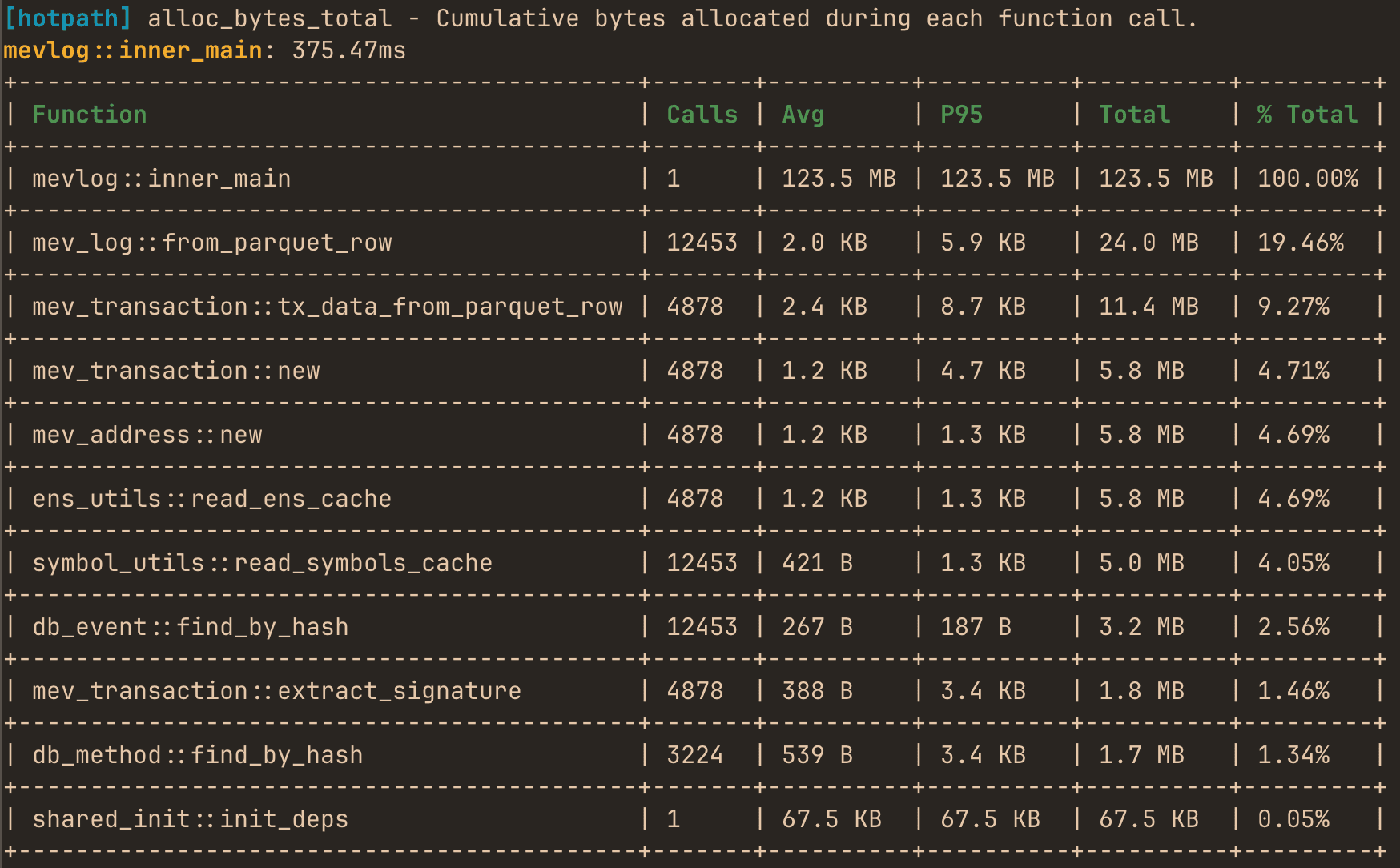
The flamegraph doesn't tell you what you want to hear. It tells you what's actually happening. And for most high-throughput Rust services, what's actually happening is a steady stream of small heap allocations in hot paths, mutexes held across `.await` points, and `Vec` reallocations that nobody benchmarked in release mode. This guide collects community-proven tactics to profile Rust code, reduce allocation overhead, and apply concurrency patterns that preserve safety without sacrificing throughput.
Measure First, Optimize Second
The single most important rule in Rust performance work is also the most ignored: always profile before optimizing. Intuition about bottlenecks is wrong more often than it's right, and Rust's optimizer is aggressive enough that the hotspot you expect frequently isn't the one perf surfaces.
The practical toolchain looks like this. Use `cargo-bench` as the entry point for regression-aware benchmarking and `criterion.rs` for statistically robust microbenchmarks that account for variance across runs. For sampling profiles, `flamegraph` (driven by `perf` on Linux) gives you a visual call-stack breakdown that immediately shows where wall-clock time is accumulating. For lower-level analysis, `callgrind` via Valgrind provides instruction-level counts that are useful when you're chasing cache misses rather than raw CPU time.
Async workloads need their own lens. `tokio-console` is the right tool for async runtime introspection: it surfaces task scheduling delays, waker storms, and long-running futures that would be invisible in a sampling profile. For memory, reach for `heaptrack` or Valgrind's `massif`. The two patterns worth hunting immediately are frequent small allocations and boxed trait object churn, both of which generate pressure that shows up as latency spikes rather than steady-state throughput loss.
One non-negotiable: always benchmark and profile in release builds via `cargo build release`. Debug builds carry overflow checks and disabled optimizations that change behavior enough to make microbenchmarks misleading. LTO and `opt-level` tuning for tight loops belong in the same conversation, and you should be aware that debug assertions can silently alter the shape of microbenchmark results.
Allocation and Data Layout
Allocation strategy is where most Rust performance work pays off fastest. The mental model is simple: every heap allocation in a hot path is a potential latency source, and the goal is to push as much as possible onto the stack or into pre-reserved structures.
Favor small fixed-size arrays and inline structs for hot code paths. For string-heavy read paths, use `&str` and slices rather than `String` copies; when you genuinely need both borrowed and owned variants in the same type, `Cow` is the idiomatic choice that avoids unnecessary cloning. When you know a collection's size upfront, call `Vec::with_capacity` and the equivalent for `HashMap` before filling them. Repeated reallocation on growth is a common source of both allocation pressure and cache disruption.
For workloads that generate many short-lived allocations, bump allocators and arena allocators are worth the additional lifetime discipline. The `bumpalo` crate provides a practical arena: allocations are cheap pointer bumps, and deallocation is a single bulk free when the arena is dropped. This pattern is especially well-suited to request-scoped allocations in services that handle many short-lived contexts per second.
In hot loops specifically, avoid boxed trait object churn. `Box<dyn Trait>` allocates on the heap and introduces an indirect vtable dispatch on every call. Prefer enum-based dispatch or generic monomorphization when you can afford the compile time; reserve dynamic dispatch for non-critical paths where code-size reduction matters more than per-call latency.
Concurrency and Async Patterns
Rust's ownership model makes data races impossible, but it doesn't prevent logical concurrency bugs like priority inversion, lock contention, or the async-specific problem of holding a mutex across an `.await` point.
The rule here is blunt: never hold a standard `Mutex` lock across an `.await` unless you've consciously switched to an async-aware mutex and accepted the additional overhead and semantics. When a future yields at an await point while holding a lock, the thread returns to the runtime and other tasks can be scheduled, but the lock remains held. The result is either a deadlock or severe contention depending on how the scheduler interleaves work.

For actor-style concurrency, message passing through channels is the right default. Shared mutable state should be a deliberate exception, justified only when the latency requirements make channel overhead prohibitive. The separation of concerns that message passing enforces also makes systems easier to profile: contention shows up as channel backpressure rather than as lock wait times buried in a call stack.
For CPU-bound parallel work, Rayon is the pragmatic choice. Its work-stealing scheduler handles data-parallel workloads well and composes naturally with iterator chains. For IO-bound concurrency, non-blocking runtimes like Tokio or async-std are the right layer, and worker thread counts should be tuned against the specific ratio of CPU-bound to blocking work your service performs.
Zero-Cost Abstractions and Inlining
Rust's generic system delivers zero-cost abstractions through monomorphization: each concrete type instantiation gets its own compiled version of a generic function. This is powerful, but it has a cost that only shows at scale: binary size. Heavy use of generics across a large codebase can produce binaries large enough to stress instruction cache, which will show up in profiles as increased cache miss rates.
The practical balance is to use dynamic dispatch via `Box<dyn Trait>` in non-critical paths where the vtable overhead is negligible and the code-size savings are real, while keeping monomorphized generics in the hot paths that need the performance.
On inlining: use `#[inline]` sparingly and trust the compiler's profile-guided decisions in most cases. The exception is tiny functions called inside tight loops, where inlining can yield measurable cycle-count reductions. But sprinkling `#[inline]` across a codebase without measurement is as likely to hurt as to help.
Cache Locality and Struct Layout
Memory layout decisions compound over time. Grouping frequently accessed fields together in a struct improves spatial locality: the CPU fetches cache lines, and if the fields you read together live in the same line, you pay for one fetch instead of several. Use `repr(C)` only when interoperating with foreign APIs; Rust's default layout algorithm makes its own packing decisions, and overriding it without a specific ABI reason typically hurts rather than helps.
Shipping Checklist
Before marking a performance improvement done, work through this sequence:
1. Profile production traffic or a realistic synthetic load, not a toy benchmark.
2. Identify the top CPU hotspots and allocation sources from the profiler output.
3. Apply targeted rewrites: data layout changes, preallocation, dispatch strategy adjustments.
4. Reprofile under the same conditions and verify the regression window closed without opening a new one.
5. Add benchmark tests to guard against future regressions. An optimization without a benchmark test is one refactor away from disappearing.
The tools for this loop are already mature: `criterion.rs` for benchmark infrastructure, `flamegraph` for sampling profiles, `tokio-console` for async diagnostics, and `jemalloc` or `mimalloc` as drop-in allocator replacements when allocation patterns are dominating latency. Swapping the global allocator takes a few lines and can be a fast way to determine whether allocator performance is the ceiling before committing to deeper restructuring.
Rust's core promise is that you don't have to choose between safety and performance. The techniques here don't compromise that guarantee; they work with it. Measurement discipline, allocation awareness, and structured concurrency are how you collect on that promise in production.
This article was produced by Prism’s automated news system from verified source data, official records, and press releases, then run through automated quality and moderation checks before publishing. The system is built and supervised by the people who set the standards it runs under. Read our full AI policy.
Did this article answer your question?