Rust CI guide shows how GitHub Actions parallel steps speed workflows
Parallel steps turn Rust CI’s idle gaps into usable work. Split independent Clippy, feature, and Miri jobs across workers and keep logs readable.
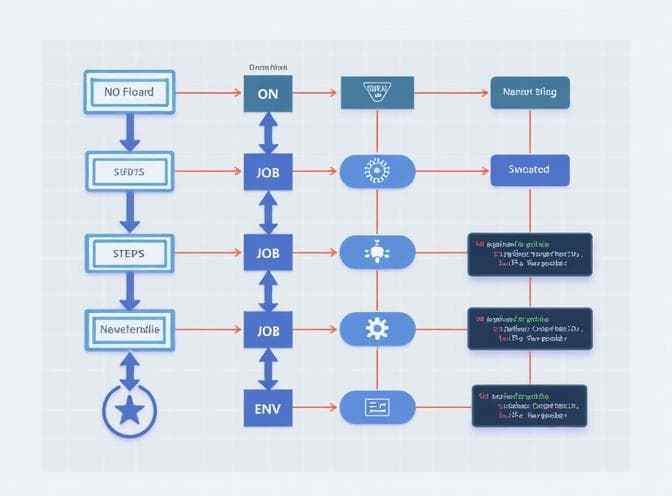
GitHub Actions now lets steps run in parallel. For everyday Rust maintenance, that means independent Clippy passes, feature matrices, and Miri runs can move at the same time instead of waiting for one shell loop to finish before the next command starts.
Why parallel steps fit Rust CI
Cargo already parallelizes compilation, but it only covers part of the validation picture, and that leaves long stretches where a runner is busy doing one thing while other CPUs sit idle. GitHub announced step-level parallel execution on June 25, 2026, giving Rust maintainers a native way to use those idle cycles without leaning on shell backgrounding, which often produced interleaved logs.
That distinction matters because GitHub Actions already allowed jobs and workflow runs to run concurrently by default. What changed is that the parallelism now reaches inside a job, where a lot of Rust CI pain actually lives.
Where Rust workflows usually get stuck
The most obvious candidate is Clippy. It is commonly run with `cargo clippy`, it includes workspace members and path dependencies by default, and its CI guidance recommends turning warnings into failures with `-Dwarnings`. That makes it a real validation pass, not a quick style check, especially in larger workspaces where Clippy’s docs list more than 800 lints.
Cargo itself is not the bottleneck here. `cargo build` compiles the current package and all of its dependencies, and GitHub-hosted runners already come with a tools cache and preinstalled Rust software. Even with that help, a workspace with many crates, multiple feature permutations, or a heavy test matrix can still end up serialized by the workflow design rather than by the work itself.
The before-and-after setup you can copy
The old pattern is familiar: one job, one shell loop, one crate after another. You collect the commands, run them in sequence, and wait for the entire chain to finish before you know whether the first failure is a typo, a lint regression, or a test that only breaks under a specific feature set.
The better pattern is to turn that command list into a queue and fan it out across parallel workers. Each worker takes a slice of the queue, owns its own `CARGO_TARGET_DIR`, and writes a clean log stream that belongs only to that worker. That avoids target-directory collisions, keeps rebuilds from stepping on each other, and makes it easier to rerun only the failed slice instead of the whole job.
A useful way to think about the change is simple:
- Before: one sequential job runs `cargo clippy` or tests crate by crate.
- After: the workflow generates independent commands, splits them across workers, and lets them run at the same time.
- Before: one shared target directory risks cross-talk between builds.
- After: each worker gets its own `CARGO_TARGET_DIR`, so the output stays isolated and readable.
Parallel steps replace brittle shell tricks rather than adding another abstraction. GNU parallel and similar tools can solve the same problem, but they add another dependency to explain, maintain, and debug later. Native Actions parallel steps keep the logic inside the workflow file.
The Rust suites that benefit most
Not every test run deserves this treatment. The sweet spot is work that is independent but still expensive enough to make serialization painful. Workspace-wide linting is a good fit, especially when you want separate Clippy passes per crate or per feature combination. So are matrices built around feature flags, where each combination is a separate question rather than a dependent stage.
Miri-heavy workflows are another strong candidate. Miri catches classes of undefined behavior in Rust programs, and Miri itself is single-threaded, which is exactly the kind of constraint that parallel orchestration can work around. In cases cargo-nextest documents, running Miri tests in parallel can make a run 3x to 4x faster, which is the sort of improvement contributors notice right away when they are waiting on a green check before opening the next PR.
Faster feedback means maintainers see regressions sooner, contributors wait less time for review, and expensive reruns become cheaper because the workflow is broken into independent pieces instead of a single long chain.
How to introduce it without overbuilding the pipeline
Start by identifying checks that do not depend on each other. If one crate’s lint result does not affect another crate’s test selection, they belong in separate workers. If a feature permutation is independent, it should be a separate command in the queue. The rule of thumb is simple: if the next command does not need the output of the previous one, it is a candidate for parallel steps.
Then keep the workflow boring. Use the GitHub-hosted runner cache, stay on the same Rust toolchain that Clippy expects, and keep `-Dwarnings` in CI so the signal stays sharp. Shell backgrounding can scramble the logs, so use the Actions feature that was built for the job instead of simulating parallelism by hand.
This article was produced by Prism’s automated news system from verified source data, official records, and press releases, then run through automated quality and moderation checks before publishing. The system is built and supervised by the people who set the standards it runs under. Read our full AI policy.
Did this article answer your question?