Rust rises as AI reshapes priorities, Python faces scrutiny
The useful story isn’t Rust beating Python; it’s Rust lining up with AI-era priorities like safety, speed, and infrastructure work.
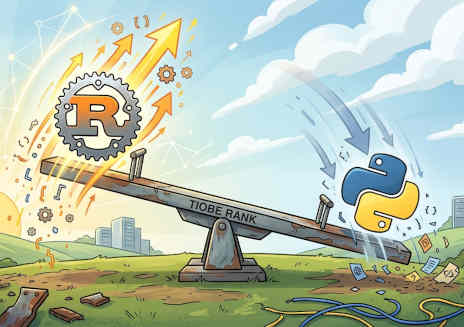
Rust is not suddenly “the answer” to every language debate, and the smartest commentary on the subject does not pretend otherwise. The better read is that AI is changing what gets valued in software, and Rust keeps showing up wherever teams need speed, memory safety, and systems-level control that survives real production pressure.
The headline is doing two jobs at once
The piece that sparked this conversation treats Rust versus Python as an exaggerated comparison, and that is exactly why it is worth reading closely. It is not really claiming that Python is collapsing or that Rust has “won.” It is using the contrast to show how developer attention is being pulled toward infrastructure work, backend services, and code that has to stay fast and safe when the workload gets messy.
That framing matches what many Rust developers already feel on the ground. Rust is no longer just the language people mention when they want to sound serious about systems programming. It is now part of a broader industry story about where engineering effort is going, especially as AI pushes teams to rethink performance, reliability, and the cost of every abstraction layer.
Where Rust is actually gaining ground
Rust’s momentum is strongest in the places where performance and correctness are not nice-to-haves. That means high-performance infrastructure, memory-safe systems code, and tooling that sits closer to the metal or supports critical backend services. In other words, Rust is benefiting from the same pressures that make organizations care more about predictable latency, fewer memory bugs, and better control over failure modes.
This is where the commentary lands better than a generic Rust-versus-Python debate. Rust is not replacing Python as the default language for scripting, data work, or quick application glue. It is gaining ground where teams are asking harder questions about throughput, safety, and operational trust, especially in infrastructure that has to keep working under changing AI-era workload patterns.
AI is the backdrop, not the whole explanation
The most important shift is not that Rust suddenly became an “AI language.” It is that AI changed the surrounding environment. JetBrains’ 2025 developer ecosystem report says 85% of developers now use AI tools and 62% rely on at least one coding assistant, which tells you how deeply AI has already been folded into normal development practice. Once that happens, language choices start getting judged through a new lens: how well a stack supports fast iteration, dependable performance, and fewer expensive mistakes.
Rust’s appeal in that world is practical. The language’s focus on safety and performance maps neatly to systems that power model-serving infrastructure, inference-adjacent services, and the performance-sensitive extension layers that glue AI workloads into real products. Python still matters everywhere it always did, but the conversation around it changes when more of the heavy lifting moves into components that have to be tighter, faster, and harder to break.
The Rust Foundation has also made the AI discussion explicit. Its May 8, 2025 position statement shows that the ecosystem is not treating AI as an outsider trend. It is thinking about how AI should fit into Rust’s future and how to use it responsibly without losing the language’s engineering discipline.
The survey data backs up the shift in attention
The numbers around Rust’s community help explain why the language keeps surfacing in these debates. The 2025 State of Rust Survey ran for 30 days from November 17 to December 17, 2025 and collected 7,156 responses, which is a healthy signal for a language that still gets treated by outsiders as niche. The Rust team also described it as the 10th edition of the survey, which underlines that this is not a one-off burst of enthusiasm.
JetBrains’ Rust ecosystem material adds another useful detail: 65% of respondents use Rust for side or hobby projects, and 52% are currently learning it. That combination matters. It says Rust is still very much a language people pick up for personal projects and skill-building, not only for enterprise architecture decisions. The hobbyist path remains one of Rust’s strongest on-ramps, and that is part of why the ecosystem keeps expanding.
Security is the argument Rust keeps winning
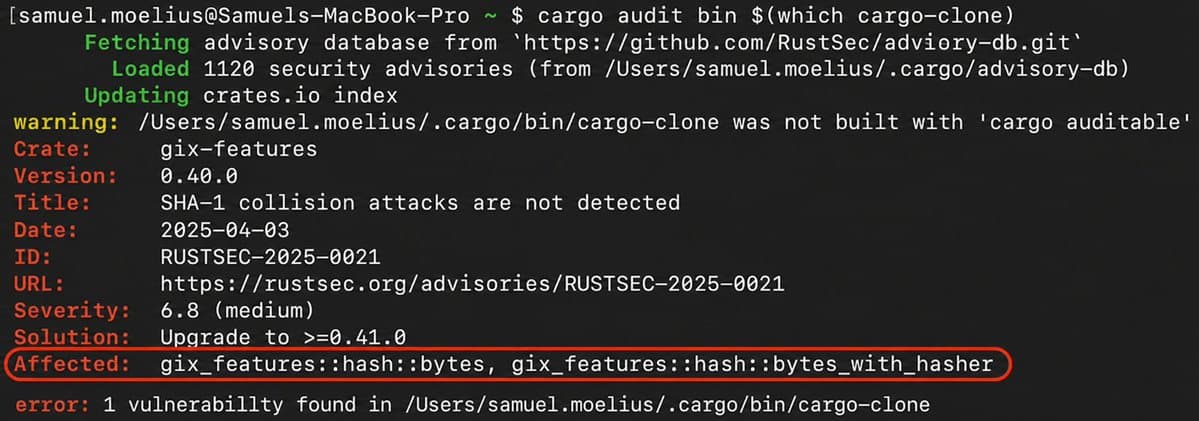
Rust’s rise would be easier to dismiss if security were still a niche concern. It is not. In February 2024, the White House Office of the National Cyber Director said future software should be memory safe. That is an unusually direct policy signal, and it gives Rust a kind of legitimacy that goes well beyond language fandom.
The same theme shows up in Prossimo’s March 6, 2025 Linux kernel update, which said memory safety errors account for a large portion of kernel vulnerabilities. That is the kind of statement that makes Rust-for-Linux more than a curiosity. Rust-for-Linux is specifically about enabling Rust in the Linux kernel, including drivers and other modules, and that places Rust right next to one of the most demanding software environments in use.
What the Rust project is optimizing for
The Rust project’s 2025 goals are also revealing. Improving compilation speed, embedded support, and higher-level Rust usage patterns says a lot about where the language is trying to meet people halfway. Faster compiles matter when you are iterating all day. Better embedded support matters when you want Rust beyond servers. Higher-level usage patterns matter when the language wants to be approachable without giving up the guarantees that made it attractive in the first place.
That is the real story underneath the Rust-versus-Python framing. Rust is not rising because it won an abstract language argument. It is rising because it fits the jobs that are becoming more valuable as AI reshapes software priorities: safer systems, stronger infrastructure, tighter performance budgets, and fewer places for memory bugs to hide.
The headline sounds like a language duel, but the useful signal is more grounded than that. Rust is moving up because the industry is moving toward the kinds of problems Rust was built to solve, and that is a much sturdier trend than any one comparison piece.
This article was produced by Prism’s automated news system from verified source data, official records, and press releases, then run through automated quality and moderation checks before publishing. The system is built and supervised by the people who set the standards it runs under. Read our full AI policy.
Did this article answer your question?