Tokio’s Toasty 0.6.0 adds finer field control, broader scalar support
Toasty 0.6.0 tightened query control and added Vec scalar support just weeks after crates.io, raising the bigger question: momentum or moving too fast?
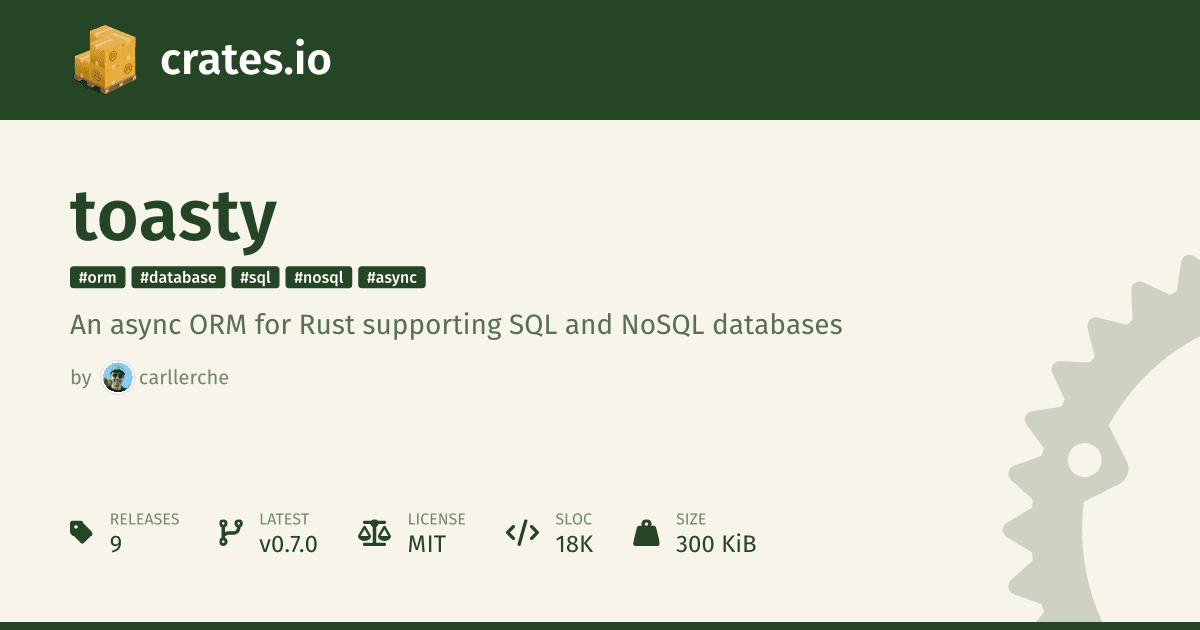
Rust developers have been waiting to see whether Tokio’s Toasty is becoming a serious async ORM or just moving too fast to trust. The 0.6.0 release makes the case for momentum, not drift: Tokio said versions 0.4, 0.5, and 0.6 landed in rapid succession, and this update arrived a little more than a month after Toasty first hit crates.io.
That pace matters because Toasty has always been about more than another database wrapper. Tokio spent more than two years developing it before the initial release, and the pitch has stayed consistent since the October 23, 2024 preview announcement: build an async ORM for Rust that keeps the language’s safety and performance story intact while making higher-level data work less painful. Back then, Toasty was still a preview and not ready for real-world usage, though Tokio had already opened the GitHub repository for feedback and named DynamoDB and Cassandra among its NoSQL targets.

By May 15, Toasty had moved into a much more practical phase. Tokio said the NoSQL side still only worked with DynamoDB for now, with more support hoped for in the coming months, and the current repository README listed SQLite, PostgreSQL, MySQL, and DynamoDB as supported back ends. That broadening matters because Toasty is not trying to flatten every database into the same lowest-common-denominator API. The README says it exposes database features based on the target system rather than hiding them, which is exactly the kind of stance Rust teams tend to like when they care about portability without losing native capabilities.
The biggest additions in 0.6.0 were about control and type coverage. Toasty gained deferred fields and .select(), giving developers finer control over which fields are loaded instead of forcing broad queries that overfetch data or make precise query shaping awkward. It also added support for Vec scalar fields such as Vec<u64>, with storage mapped to each backend’s strengths: PostgreSQL uses arrays, other SQL databases use JSON storage, and DynamoDB uses native list storage.
That is the real signal in this release cadence. Rapid version bumps can look messy when a project is still finding its footing. In Toasty’s case, the faster pace now looks more like a project pushing toward usefulness, and 0.6.0 shows the ORM is starting to look viable for serious experimentation rather than just an interesting preview.
This article was produced by Prism’s automated news system from verified source data, official records, and press releases, then run through automated quality and moderation checks before publishing. The system is built and supervised by the people who set the standards it runs under. Read our full AI policy.
Did this article answer your question?