treVM brings WebAssembly capsules to Rust-powered microcontrollers
treVM pushes WebAssembly past the browser and into tiny Rust microcontrollers, where capsules could make updates safer and devices more modular.
WebAssembly capsules, not browser code, are the point
treVM is interesting because it treats WebAssembly like a deployment format for real devices, not a browser feature. The pitch is simple but consequential: put high-level code capsules on top of a Rust embedded platform, then use them to update fielded hardware without reflashing the whole system. On tiny boards that usually only offer bare-bones APIs and awkward firmware paths, that is a genuine shift in how you can ship and evolve device software.

The paper, titled *Tiny Rust Embedded Virtual Machines with WASM on Variable Resource-Constrained Hardware*, was submitted on April 30, 2026 by Antoine Lavandier, Bastien Buil, Chrystel Gaber, and Emmanuel Baccelli. It points to IEEE DCOSS-IoT 2026 as its venue, which fits the ambition: this is not a hobby demo trapped in one lab board, but an effort aimed at the wider IoT and distributed-systems world.
What treVM is trying to change
The core problem treVM attacks is familiar to anyone who has shipped embedded gear. A lot of microcontroller-based systems are still built around rigid firmware images, limited connectivity, and update mechanisms that are more of an afterthought than a platform feature. That works until you need to change business logic after deployment, support multiple product variants, or patch one customer’s device without disturbing the rest.
treVM’s answer is a generic scheme for hosting WebAssembly code capsules on a general-purpose Rust embedded software platform. In practice, that means the device stays small and resource-constrained, but the software model becomes more modular. Instead of baking every behavior into one monolithic image, you can imagine swapping in focused pieces of logic, pushing secure updates over the network, and experimenting with new behavior without turning each field update into a full firmware event.
That matters because WebAssembly’s real appeal on embedded hardware is not raw speed. It is portability, isolation, and the chance to move logic around more like a managed component than a raw binary blob. For Rust developers, the big story is that Rust is becoming the substrate for that model, not just the language used to write traditional firmware.
Rust is the enabler, not the whole headline
treVM is implemented in Rust on top of Ariel OS, and that detail does a lot of heavy lifting. Ariel OS is described as a library operating system for secure, memory-safe, low-power IoT written in Rust, so treVM is building on a stack that already assumes safety and constrained hardware from the start. The Ariel OS paper was submitted on April 28, 2025, and the project announced a stable-Rust build milestone on May 7, 2025, which means the underlying platform has already crossed a meaningful maturity line.
That background matters because it turns treVM from a one-off runtime experiment into something more like a layer in a broader Rust embedded ecosystem. The repository says the project showcases small Rust embedded virtual machines bolted onto Ariel OS, and it includes open-source examples that run on Cortex-M and RISC-V boards. That is exactly the kind of detail that makes the work feel practical rather than speculative: there is code, there are boards, and the design is meant to survive contact with real hardware.
The hardware reality is still brutal
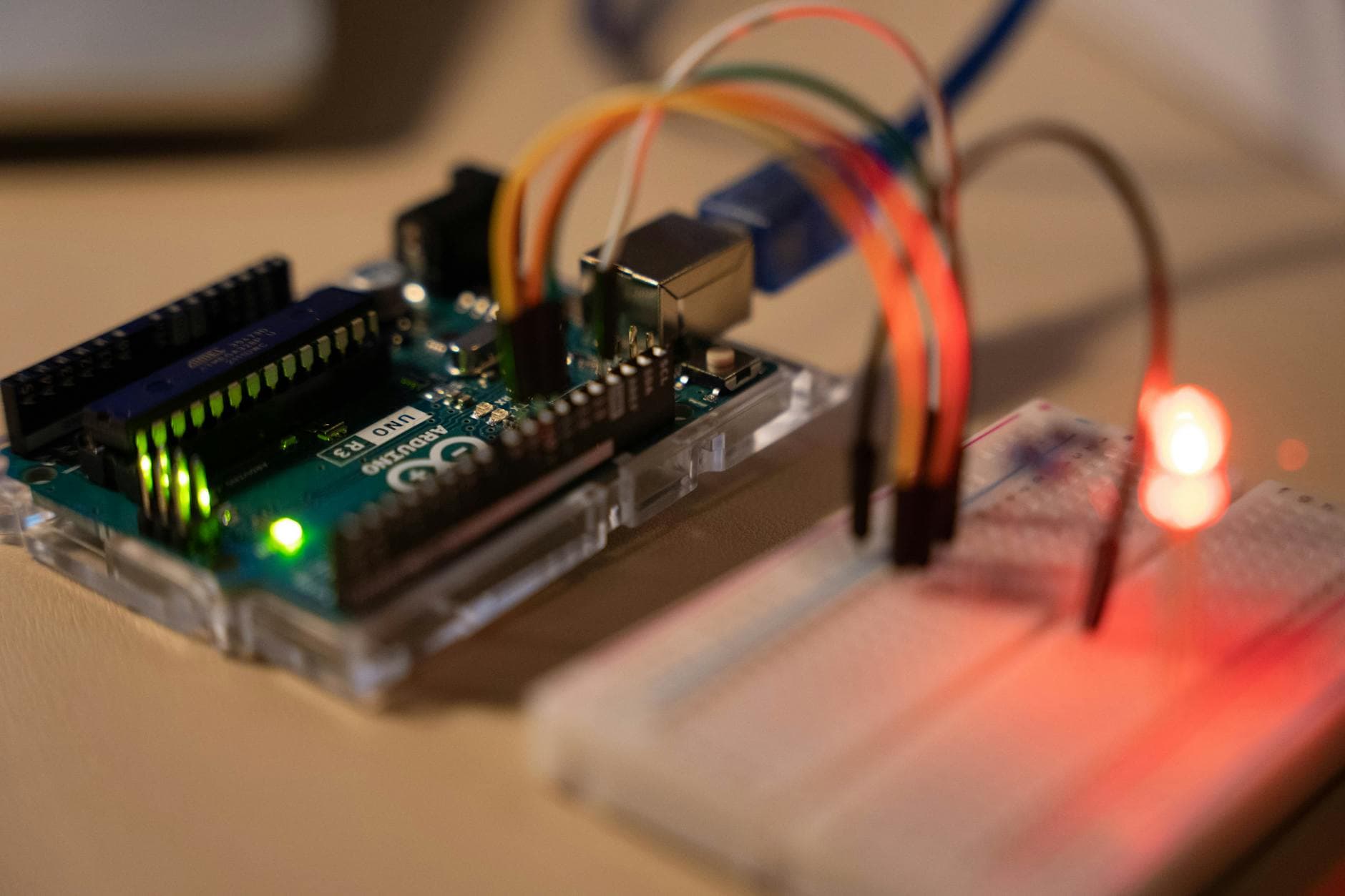
treVM does not pretend microcontrollers suddenly become mini servers. The paper’s framing around variable resource-constrained hardware is the giveaway: you are still operating inside tight memory, CPU, and power budgets. The public evaluation spans Arm Cortex-M, RISC-V, and Xtensa hardware, which is important because it shows the design is not tuned to a single chip family or a friendly benchmark box.
The broader embedded-WebAssembly literature backs up that caution. A 2025 workshop paper tested WASM on Raspberry Pi Pico, ESP32-C6, and nRF5340, then found that native code still beat WASM on speed and energy efficiency. The upside was portability and sandboxing, which is exactly the tradeoff treVM is banking on. A 2025 survey paper on embedded WebAssembly reached a similar conclusion: portability and safety make Wasm increasingly relevant for embedded systems, even if it is not the fastest path on the silicon.
That tradeoff should be clear to anyone considering this approach in practice. You are not buying more raw performance. You are buying a better software boundary.
Why capsules are the practical idea worth watching
The word “capsule” is doing a lot of work here, and rightly so. On a microcontroller, a capsule is a nicer mental model than a full firmware rebuild: a discrete unit of behavior that can be loaded, isolated, replaced, and reused. If treVM and systems like it mature, the practical wins are easy to imagine:
- safer plugin-like updates after deployment
- reusable logic across different boards and product lines
- narrower blast radius when you need to patch one feature
- easier multi-target experimentation across Cortex-M, RISC-V, and other small-device families
That last point is especially important for hobbyists and embedded teams who end up maintaining multiple board variants. If your application logic lives in a portable WebAssembly capsule, the host platform can absorb the ugly hardware differences while the behavior layer stays more consistent. That is a very different workflow from the usual “fork the firmware for every board” routine that eats weekends.
Why this story reaches beyond one repository
The visible value in treVM is not just that Rust can host WebAssembly on microcontrollers. It is that Rust is being used to shape a more flexible embedded software stack, one that looks a little less like sealed firmware and a little more like a modular runtime. That is a meaningful step for a community that has spent years proving Rust can replace unsafe C in firmware and is now starting to ask what else the language can enable.
The venue also sends a signal. DCOSS-IoT 2026 is scheduled for June 22-24, 2026 in Reykjavik, Iceland, hosted by the University of Iceland. That places treVM in a visible research setting where distributed systems, sensors, and IoT deployment problems are front and center, not in a niche corner of embedded tooling.
treVM does not erase the limits of tiny hardware, and it does not need to. Its real promise is narrower and more useful: give constrained devices a safer, more modular way to accept logic updates, and let Rust carry the burden of making that model credible. If that idea sticks, the next wave of embedded software may feel less like flashing firmware and more like shipping components.
This article was produced by Prism’s automated news system from verified source data, official records, and press releases, then run through automated quality and moderation checks before publishing. The system is built and supervised by the people who set the standards it runs under. Read our full AI policy.
Did this article answer your question?