ABYC opens live marine electrical certification course for April 2026
Bad conductor sizing and sloppy grounding can turn a sailboat panel into a fire or shock hazard. ABYC's live class maps the standards behind safer DIY wiring.
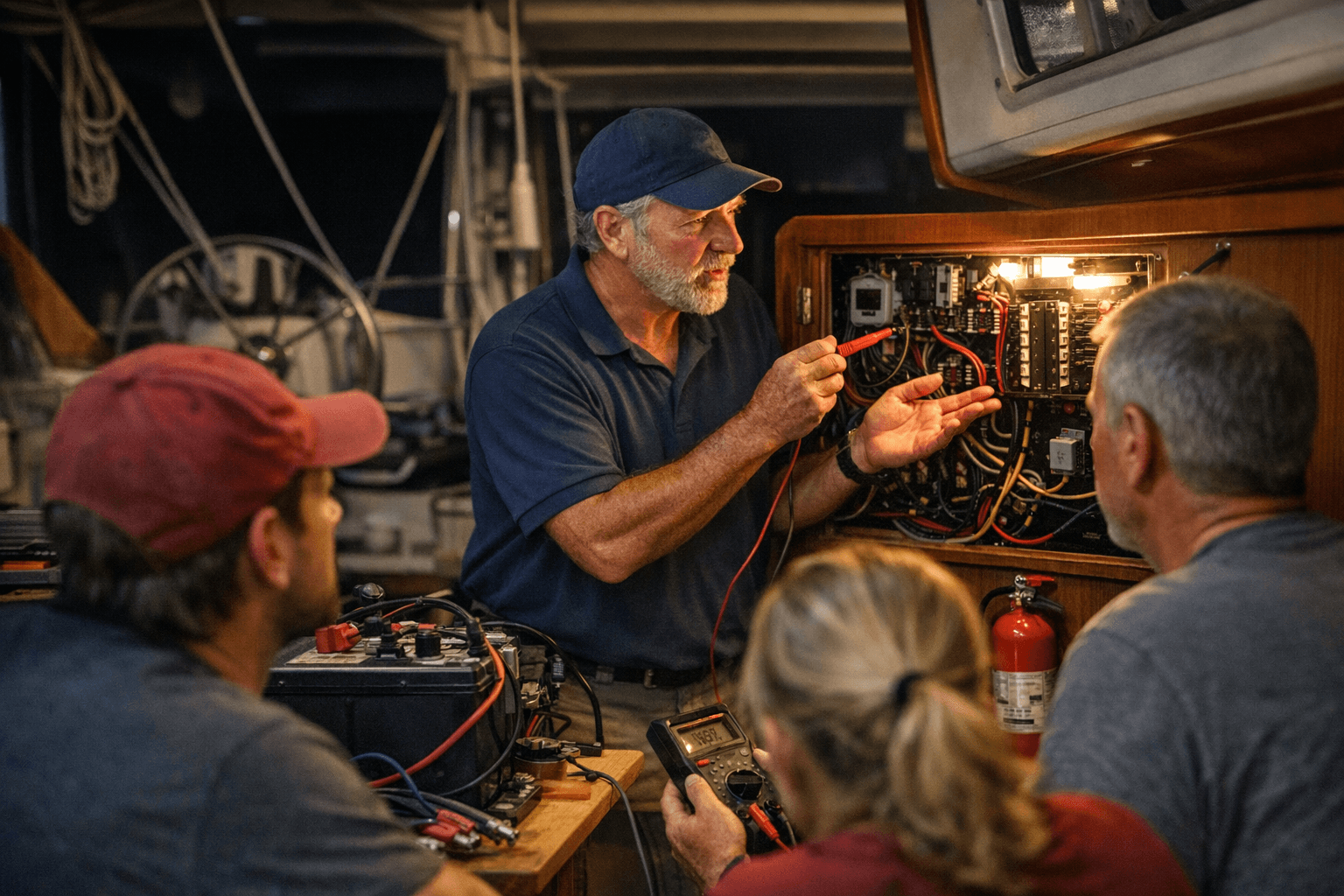
The quickest way to ruin a perfectly good electrical system on a sailboat is to treat it like a house panel in a wet, moving box. Bad conductor sizing, weak grounding decisions, sloppy battery installs, and careless inverter wiring can turn into heat, shock, or fire fast, especially when the loads are buried behind a nav station bulkhead.
That is the context around ABYC’s live Marine Electrical Certification, which ran April 14-30, 2026 as an online class with 90-minute sessions three days a week from 9:00 a.m. to 10:30 a.m. Eastern. ABYC says it is the most recognized and credible demonstration of skill in the marine electrical service and installation field worldwide, and the framing makes sense: this is not a casual seminar, it is standards training built for work that has to survive inspection.
The course is aimed at marine professionals with roughly three to five years of experience in marine electrical system design, installation, or repair, but the subject matter lands squarely in DIY territory. ABYC says the class covers DC and AC systems, electrical fundamentals, multimeter use, grounding and bonding, battery and inverter installation, and AC/DC components. That is the exact stack where a lot of owner refits go sideways, usually because the builder knows just enough to get power flowing, not enough to make the system safe and serviceable.
ABYC’s training matters because marine electrical work punishes shortcuts. A battery bank that is installed without a disciplined plan, a shore-power setup with poor isolation, or a grounding scheme assembled by habit instead of standards can create problems that are expensive to trace and harder to fix once the boat is back in the water. The certification is built around the kind of troubleshooting and installation logic that separates a clean panel from a future salvage job.
The organization says its certification program includes nine specialized certifications, and that each is valid for five years. ABYC also says certified technicians are identified by the public as people qualified to troubleshoot, repair, and install equipment on boats. That is a useful reminder for anyone doing their own wiring: the badge matters because the work demands a repeatable method, not because the label looks good on a resume.
ABYC’s broader advanced electrical curriculum goes further, into alternative charging sources, AC power-conversion equipment, galvanic isolation, three-phase power distribution, and electric propulsion. On modern cruising sailboats, where lithium or other advanced batteries, solar, alternators, inverters, shore power, and monitoring electronics all meet in one system, that extra depth is not academic. It is what keeps a refit from becoming a puzzle of incompatible parts.
ABYC’s April certification calendar also included Marine Engines and Fuel Systems Certification and Marine Systems Certification, showing this was part of a wider spring training slate. For owners who want their wiring to hold up in real use, the message is plain: standards-based electrical knowledge is still the best insurance against expensive mistakes.
This article was produced by Prism’s automated news system from verified source data, official records, and press releases, then run through automated quality and moderation checks before publishing. The system is built and supervised by the people who set the standards it runs under. Read our full AI policy.
Did this article answer your question?